Nigerian Senate Leader says state police bill will advance despite four missing assemblies
Senate Leader Opeyemi Bamidele announced that four state Houses of Assembly have yet to submit resolutions on the state police bill, though the national legislature will proceed regardless.
 🌍Africa
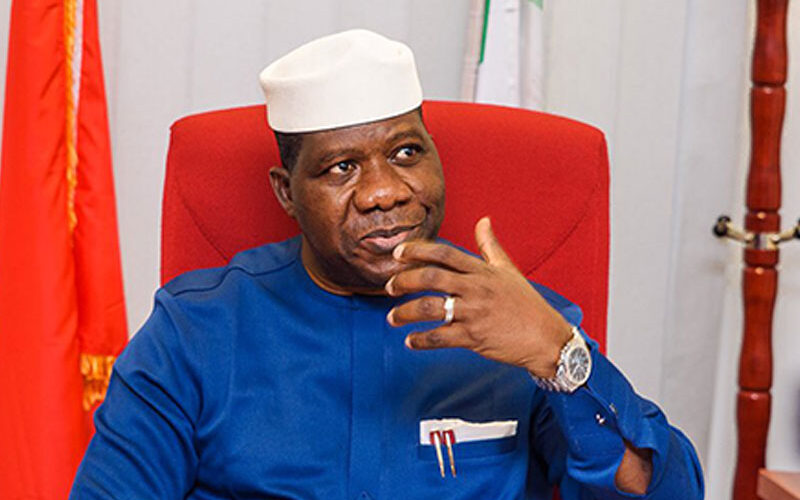
Photo: Premium Times
Key points
- Four state assemblies have yet to submit resolutions on the state police bill.
- The National Assembly holds the required two-thirds state approval to proceed.
- The bill establishes state police forces operating alongside the federal system.
Senate Leader Opeyemi Bamidele stated on Friday that four of Nigeria’s 36 state Houses of Assembly have failed to transmit their resolutions regarding the proposed creation of state police. Speaking in Abuja, Mr. Bamidele indicated that the national legislature expects the remaining reports before lawmakers reconvene on November 17, 2026, though missing submissions will not halt the constitutional amendment process.
The Senate previously established a November 15 deadline for state assemblies to review the constitutional alteration bill, which was initially dispatched for consideration in September. Having already secured the mandatory two-thirds approval threshold from at least 24 states, the National Assembly is positioned to harmonise legislative versions and forward the measure to President Bola Ahmed Tinubu for assent.
The framework establishes state-led, community-anchored policing that would function alongside the existing federal structure. Under the proposal, governors would appoint state police commissioners subject to assembly confirmation, while existing regional security networks remain explicitly barred from exercising police powers or carrying firearms.
The stakes
Proponents gain a decentralized security architecture aimed at addressing localized threats, while critics risk seeing expanded executive powers concentrated in the hands of state governors. If enacted, the reform alters Nigeria's policing landscape by introducing dual state and federal law enforcement agencies.
Two readings
- Supporters read the reform as a vital decentralization measure that equips local authorities to tackle regional insecurity more effectively than a centralized force.
- Critics read the initiative as a dangerous expansion of gubernatorial power that could lead to the creation of partisan state militias.
Source Premium Times — premiumtimesng.com/news/more-news/925402-state-police-four-states-y… ↗
Read next
 ✒️Opinion & Analysis
ICJ Rules Myanmar Military Committed Genocide Against Rohingya
The International Court of Justice has found Myanmar's military guilty of genocide against the Rohingya, a ruling that damages the international standing of both Aung San…
 🕯️Democracy & Rights
Chinese teachers face rising parental pressure over personal life choices
Chinese educators are encountering a surge in unreasonable demands from parents, including complaints regarding teachers' pregnancy and maternity leave.
 🛡️War & Security
Ukraine Restricts Media Coverage of Infrastructure Damage Amid Russian Strikes
President Volodymyr Zelenskyy has issued a decree prohibiting media outlets from reporting on the impact of Russian strikes against critical infrastructure and the status…
 🏮China & Taiwan
Beijing Reaffirms Reunification Stance Following Taiwan Local Election Results
China’s Taiwan Affairs Office declared that the island’s reunification with the mainland remains inevitable, despite recent shifts in Taiwan's local political landscape.
 🇪🇺Europe
US Air Force Repels Unauthorized Drone Incursion at RAF Lakenheath
U.S. security forces at a British air base successfully countered a group of unidentified drones, amid growing concerns over potential foreign state involvement.
 ⚖️Law & Policy
India Government Proposes 50% Increase in Parliamentary Seats and Women's Reservation
The Indian government plans to introduce legislation to expand the Lok Sabha to 850 seats and mandate a 33% reservation for women in legislative bodies.