Somalia Supreme Court Rejects Presidential Term Extension Amid Judicial Crisis
Somalia’s Supreme Court has declared President Hassan Sheikh Mohamud’s term extension unlawful, sparking a constitutional standoff and allegations of military interference in the judiciary.
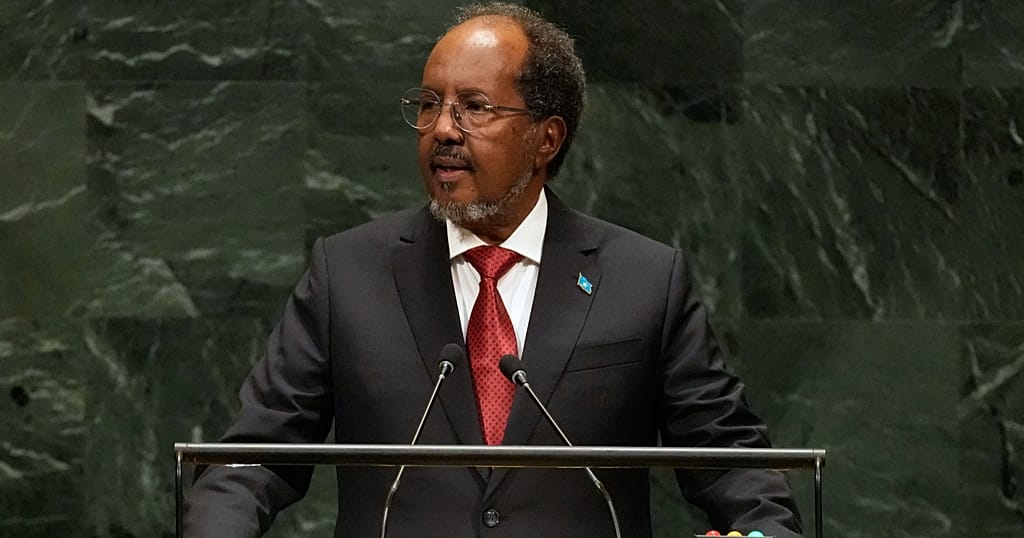 🌍Africa
Photo: Africanews
Key points
- Supreme Court rules presidential term extension unlawful
- President Mohamud attempts to dismiss Chief Justice
- Political instability threatens international security support
Somalia’s Supreme Court ruled on Thursday that President Hassan Sheikh Mohamud’s extension of his term beyond May was unconstitutional. The court ordered political parties to reach a new consensus within 30 days and mandated that fresh elections be conducted within 90 days. The ruling challenges the president’s claim that parliamentary amendments permitted him to remain in office to oversee the transition to direct democratic elections in 2027.
The judicial decision has triggered an immediate escalation in political tensions. Shortly before the ruling was finalized, the president’s office announced the dismissal of Chief Justice Bashe Yusuf Ahmed, citing a need for judicial efficiency. The court rejected this move as an illegal attempt to obstruct justice. Former Prime Minister Hassan Ali Khaire accused the administration of launching an assault on the judiciary, alleging that military forces were deployed to the court premises to intimidate legal officials.
This political instability occurs as the Somali government struggles to maintain international support in its ongoing conflict with the Islamist insurgent group Al-Shabaab. Donors have expressed growing frustration with the domestic power struggles, leading to significant funding cuts for international military missions. Uganda, a primary troop contributor, recently confirmed plans to withdraw its forces by 2027, further complicating the nation’s security outlook.
The stakes
The ruling leaves President Mohamud’s legitimacy in question and forces a confrontation between the executive and judicial branches. If the president refuses to comply, Somalia risks further internal fragmentation and a potential collapse of the rule of law. Conversely, adherence to the court’s timeline could force a rapid, and potentially chaotic, shift in the country’s electoral process, impacting both domestic stability and international military cooperation.
Two readings
- Supporters of the court argue that the ruling is a vital defense of constitutionalism and a necessary check against a unilateral power grab by the executive.
- Critics of the ruling contend that the judiciary is obstructing essential democratic reforms intended to replace the traditional clan-based system with nationwide elections.
Source Africanews — africanews.com/2026/11/07/somalia-faces-political-turmoil-after-cour… ↗
Read next
 ✒️Opinion & Analysis
ICJ Rules Myanmar Military Committed Genocide Against Rohingya
The International Court of Justice has found Myanmar's military guilty of genocide against the Rohingya, a ruling that damages the international standing of both Aung San…
 🕯️Democracy & Rights
Chinese teachers face rising parental pressure over personal life choices
Chinese educators are encountering a surge in unreasonable demands from parents, including complaints regarding teachers' pregnancy and maternity leave.
 🛡️War & Security
Ukraine Restricts Media Coverage of Infrastructure Damage Amid Russian Strikes
President Volodymyr Zelenskyy has issued a decree prohibiting media outlets from reporting on the impact of Russian strikes against critical infrastructure and the status…
 🏮China & Taiwan
Beijing Reaffirms Reunification Stance Following Taiwan Local Election Results
China’s Taiwan Affairs Office declared that the island’s reunification with the mainland remains inevitable, despite recent shifts in Taiwan's local political landscape.
 🇪🇺Europe
US Air Force Repels Unauthorized Drone Incursion at RAF Lakenheath
U.S. security forces at a British air base successfully countered a group of unidentified drones, amid growing concerns over potential foreign state involvement.
 ⚖️Law & Policy
India Government Proposes 50% Increase in Parliamentary Seats and Women's Reservation
The Indian government plans to introduce legislation to expand the Lok Sabha to 850 seats and mandate a 33% reservation for women in legislative bodies.