South Africa rushes to replant ancient baobabs saved from illegal export
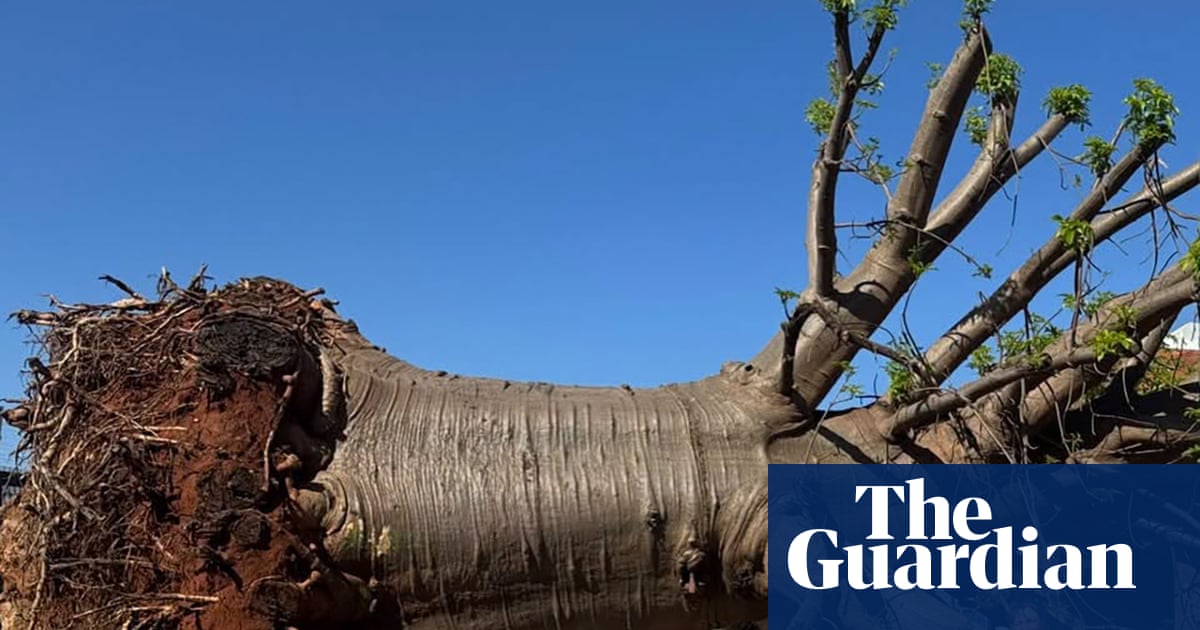
South African environmentalists are working to replant five centuries-old baobabs after authorities intercepted them en route to Georgia without the required permits.
 🌍Africa
Photo: Guardian Africa
Key points
- Five centuries-old baobabs were replanted in Timbavati after being intercepted in Durban.
- The trees were illegally harvested without permits and destined for an unnamed buyer in Georgia.
- A criminal case has been opened against the owner of the landscaping company responsible.
Conservationists in South Africa have begun the delicate process of replanting five ancient baobabs at a reserve in Timbavati, located in the country's north-east. The 20-tonne trees arrived on Wednesday following months stranded in a Durban warehouse after South African authorities intercepted them last July. The Department of Forestry, Fisheries and the Environment confirmed the specimens were bound for an unnamed buyer in Georgia.
Under South African law, baobabs are strictly protected species, meaning official permits are mandatory to disturb or cut them. Law enforcement agencies have already opened a criminal case against the owner of a landscaping firm suspected of orchestrating the unlawful harvesting and transit of the massive specimens. Experts note that international trade in living baobabs as ornamentals remains exceptionally rare due to the immense difficulty of safely extracting and re-establishing them.
Experts spearheading the conservation effort indicate that the trees, estimated to be between 200 and 300 years old, stand a reasonable chance of survival if stabilized promptly. The specimens are being secured with supportive cables and protected by electric fencing to deter wildlife from damaging them during the recovery phase.
The stakes
The successful rehabilitation of these biodiversity anchors preserves crucial ecosystems and cultural heritage within South Africa, while the ongoing criminal investigation serves as a regulatory test for enforcing environmental protections against illicit botanical trafficking.
Two readings
- Supporters view the operation as a critical victory for biodiversity protection and the strict enforcement of national environmental permits against illicit trafficking.
- Critics or observers of similar international cases point to enforcement loopholes that allow powerful foreign buyers to attempt the removal of indigenous flora.
Source Guardian Africa — theguardian.com/environment/2026/nov/19/baobab-five-trees-south-afr… ↗
Read next
 ✒️Opinion & Analysis
ICJ Rules Myanmar Military Committed Genocide Against Rohingya
The International Court of Justice has found Myanmar's military guilty of genocide against the Rohingya, a ruling that damages the international standing of both Aung San…
 🕯️Democracy & Rights
Chinese teachers face rising parental pressure over personal life choices
Chinese educators are encountering a surge in unreasonable demands from parents, including complaints regarding teachers' pregnancy and maternity leave.
 🛡️War & Security
Ukraine Restricts Media Coverage of Infrastructure Damage Amid Russian Strikes
President Volodymyr Zelenskyy has issued a decree prohibiting media outlets from reporting on the impact of Russian strikes against critical infrastructure and the status…
 🏮China & Taiwan
Beijing Reaffirms Reunification Stance Following Taiwan Local Election Results
China’s Taiwan Affairs Office declared that the island’s reunification with the mainland remains inevitable, despite recent shifts in Taiwan's local political landscape.
 🇪🇺Europe
US Air Force Repels Unauthorized Drone Incursion at RAF Lakenheath
U.S. security forces at a British air base successfully countered a group of unidentified drones, amid growing concerns over potential foreign state involvement.
 ⚖️Law & Policy
India Government Proposes 50% Increase in Parliamentary Seats and Women's Reservation
The Indian government plans to introduce legislation to expand the Lok Sabha to 850 seats and mandate a 33% reservation for women in legislative bodies.