Johannesburg Utility Battles Vandalism After Substation Explosion Leaves Inner City Dark
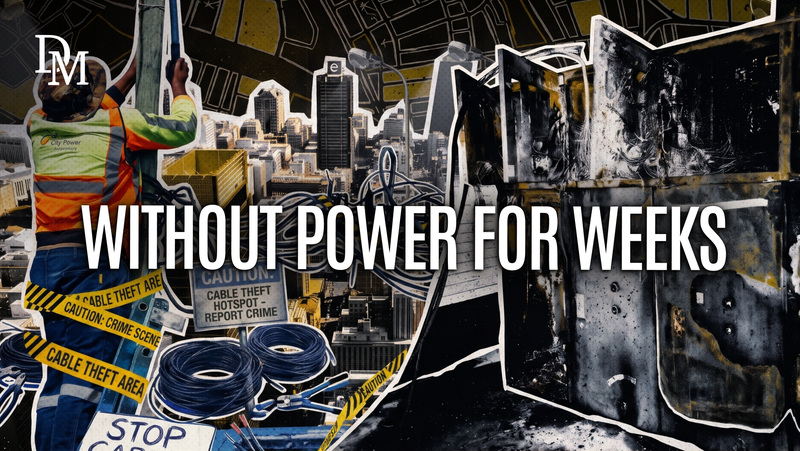
Weeks of power outages in Johannesburg's inner city have highlighted severe infrastructure vulnerability following a substation explosion and persistent cable theft.
 🌍Africa
Photo: Daily Maverick
Key points
- Substation explosion and cable theft trigger weeks of power outages in Johannesburg's inner city.
- Building vacancy rates surge from 3% to 20% amid mounting costs for backup generators and diesel.
- City Power implements 24-hour armed guards and replaces copper with aluminum to deter persistent thieves.
Extended power outages have left large sections of Johannesburg's inner city without electricity for weeks, crippling local businesses and forcing residents to rely on generators, diesel, and emergency water supplies. City Power officials guided property owners underground into the Central Substation to inspect the damage firsthand, revealing stolen cabling, vulnerable tunnel access points, and an aging 1980s feeder board that caught fire and exploded on October 14.
Angela Rivers, head of the Johannesburg Property Owners and Managers Association, noted that vacancy rates in affected buildings have surged from roughly three percent to twenty percent as tenants abandon dark properties. Property managers have reported spending millions of rand on backup power and emergency provisions, while caretakers face verbal and physical threats from frustrated residents.
City Power maintains that security remains a monumental challenge, revealing that thieves continue attempting to breach the Central Substation even under 24-hour armed guard while repair crews work. In response to the endemic theft, the utility has substituted vulnerable copper wiring with aluminum on rebuilt networks and coordinated with police, private security, and the Hawks, while reportedly seeking assistance from the Defence Ministry.
The stakes
Property owners and local businesses bear the immediate financial burden of prolonged blackouts through soaring vacancy rates and expensive emergency infrastructure, while municipal authorities risk severe political fallout over failing public utilities and compromised urban safety.
Two readings
- Supporters view the transparency tours and deployment of armed guards as proof that municipal utility management is actively confronting deep-seated infrastructure decay and organized criminal syndicates.
- Critics argue that chronic blackouts expose severe municipal governance failures, slow emergency response times, and an inability to secure critical public assets against rampant criminality.
Source Daily Maverick — dailymaverick.co.za/video/2026-11-22-watch-why-johannesburgs-inner-… ↗
Read next
 ✒️Opinion & Analysis
ICJ Rules Myanmar Military Committed Genocide Against Rohingya
The International Court of Justice has found Myanmar's military guilty of genocide against the Rohingya, a ruling that damages the international standing of both Aung San…
 🕯️Democracy & Rights
Chinese teachers face rising parental pressure over personal life choices
Chinese educators are encountering a surge in unreasonable demands from parents, including complaints regarding teachers' pregnancy and maternity leave.
 🛡️War & Security
Ukraine Restricts Media Coverage of Infrastructure Damage Amid Russian Strikes
President Volodymyr Zelenskyy has issued a decree prohibiting media outlets from reporting on the impact of Russian strikes against critical infrastructure and the status…
 🏮China & Taiwan
Beijing Reaffirms Reunification Stance Following Taiwan Local Election Results
China’s Taiwan Affairs Office declared that the island’s reunification with the mainland remains inevitable, despite recent shifts in Taiwan's local political landscape.
 🇪🇺Europe
US Air Force Repels Unauthorized Drone Incursion at RAF Lakenheath
U.S. security forces at a British air base successfully countered a group of unidentified drones, amid growing concerns over potential foreign state involvement.
 ⚖️Law & Policy
India Government Proposes 50% Increase in Parliamentary Seats and Women's Reservation
The Indian government plans to introduce legislation to expand the Lok Sabha to 850 seats and mandate a 33% reservation for women in legislative bodies.