Ethiopian Social Enterprise Tackles Menstrual Poverty and School Absenteeism
An Addis Ababa initiative produces affordable reusable sanitary pads to help Ethiopian girls stay in school and challenge deep-rooted stigmas surrounding menstruation.
 🌍Africa
Photo: Africanews
Key points
- Addis Ababa workshop produces reusable cotton sanitary pads.
- High costs of imported disposable products force many girls to miss school.
- Project aims to eliminate menstrual stigma through education and open dialogue.
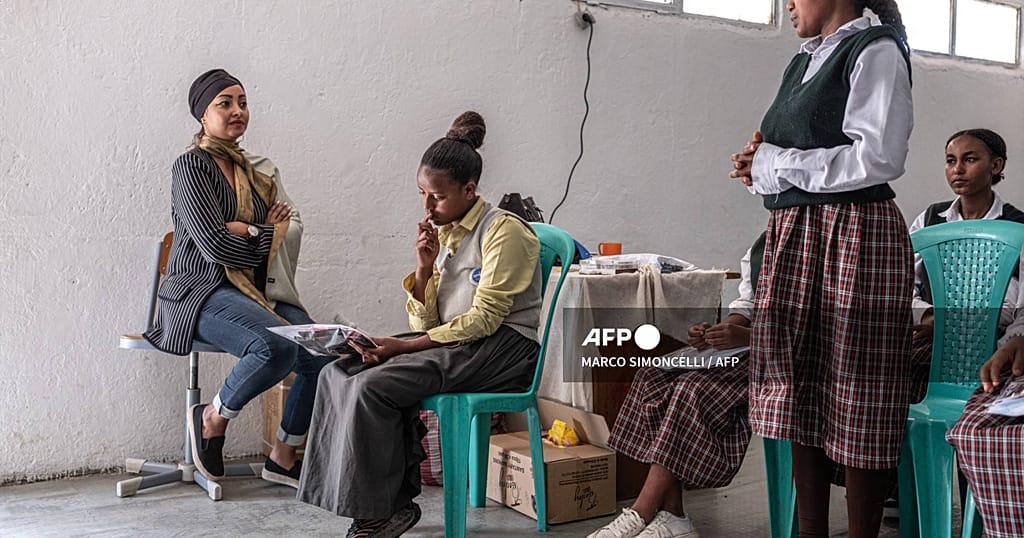
A local enterprise in Addis Ababa is manufacturing washable cotton sanitary pads to address the widespread issue of menstrual poverty and educational absenteeism across Ethiopia. Founded by Hanan Ahmed in 2021, the workshop produces approximately one thousand reusable pads daily, which are largely distributed free of charge to students through corporate sponsorships. Because Ethiopia relies entirely on imported disposable hygiene products, high costs frequently prevent women and girls from accessing them, leading many to miss days of school or work.
Ahmed established the initiative following her own experiences with heavy flows and the associated stigma during her schooling. Beyond providing physical supplies designed to last for up to two years, the project incorporates educational outreach within schools. Teachers emphasize early preparation for young students to alleviate fear and prevent isolation, while community advocates urge open dialogue to combat the traditional exclusion of menstruating girls in rural areas.
While urban centers like the capital have seen gradual improvements in awareness, cultural taboos remain prevalent in outlying regions. Advocates stress that dismantling these barriers requires sustained public conversation, starting within family households and expanding across social media and community platforms to ensure young women can participate fully in public life without shame.
The stakes
The expansion of locally produced hygiene products and educational campaigns directly impacts educational retention rates for adolescent girls in East Africa. If scaled successfully, the initiative reduces economic burdens on families reliant on imported goods while gradually shifting social attitudes toward a natural biological process, though deeply entrenched rural traditions present a persistent challenge.
Two readings
- Supporters view the enterprise as an essential grassroots solution that tackles both economic exclusion and cultural taboos, empowering young women to remain in the classroom.
- Critics or skeptics might argue that small-scale local workshops cannot substitute for systemic government healthcare and educational interventions nationwide.
Source Africanews — africanews.com/2026/11/09/ethiopia-reusable-sanitary-pads-help-girls… ↗
Read next
 ✒️Opinion & Analysis
ICJ Rules Myanmar Military Committed Genocide Against Rohingya
The International Court of Justice has found Myanmar's military guilty of genocide against the Rohingya, a ruling that damages the international standing of both Aung San…
 🕯️Democracy & Rights
Chinese teachers face rising parental pressure over personal life choices
Chinese educators are encountering a surge in unreasonable demands from parents, including complaints regarding teachers' pregnancy and maternity leave.
 🛡️War & Security
Ukraine Restricts Media Coverage of Infrastructure Damage Amid Russian Strikes
President Volodymyr Zelenskyy has issued a decree prohibiting media outlets from reporting on the impact of Russian strikes against critical infrastructure and the status…
 🏮China & Taiwan
Beijing Reaffirms Reunification Stance Following Taiwan Local Election Results
China’s Taiwan Affairs Office declared that the island’s reunification with the mainland remains inevitable, despite recent shifts in Taiwan's local political landscape.
 🇪🇺Europe
US Air Force Repels Unauthorized Drone Incursion at RAF Lakenheath
U.S. security forces at a British air base successfully countered a group of unidentified drones, amid growing concerns over potential foreign state involvement.
 ⚖️Law & Policy
India Government Proposes 50% Increase in Parliamentary Seats and Women's Reservation
The Indian government plans to introduce legislation to expand the Lok Sabha to 850 seats and mandate a 33% reservation for women in legislative bodies.