Former SARS Chief Kieswetter Proposes New Metrics to Combat South Africa's Illicit Economy
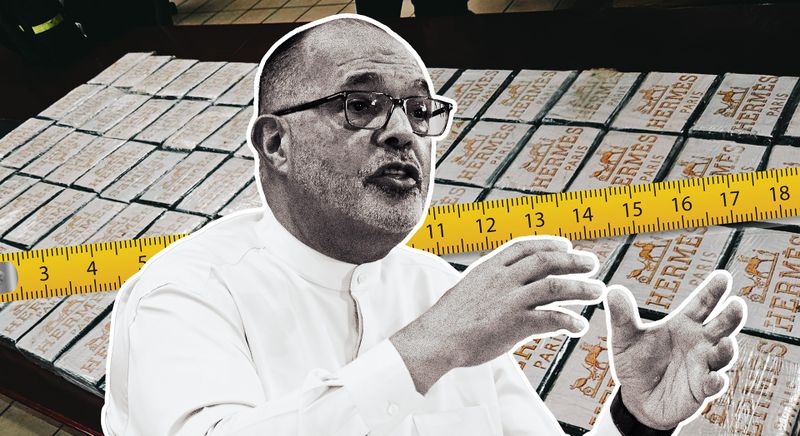
Former tax commissioner Edward Kieswetter has proposed a new framework to quantify and dismantle South Africa's vast illicit economy while testifying before the Madlanga Commission.
 🌍Africa
Photo: Daily Maverick
Key points
- Former SARS chief Edward Kieswetter proposes quantifying the illicit economy to better target criminal syndicates.
- Recommendations include a centralized border monitoring center and improved institutional coordination.
- The Madlanga Commission is investigating the 'Big Five' cartel's alleged infiltration of the South African government.
Edward Kieswetter, the former head of the South African Revenue Service (SARS), has urged the Madlanga Commission of Inquiry to adopt a rigorous measurement-based framework to combat the nation's sprawling illicit economy. Testifying on November 25 and 26, 2026, Kieswetter argued that the state currently lacks the necessary metrics to define what success looks like in the fight against organized crime, which he estimates is valued between R800-billion and R1.2-trillion.
Kieswetter, who currently chairs a Police Advisory Panel, emphasized that criminal networks almost invariably involve tax or customs violations. To address this, he proposed the establishment of a centralized command center to monitor land, sea, and air borders, allowing various agencies to share intelligence and trade data in real time. He further recommended a structural redesign of state institutions to ensure they remain independent while functioning as a cohesive ecosystem under presidential oversight.
The commission is currently investigating allegations that a powerful cartel, known as the "Big Five," has infiltrated the country’s political, private, and law enforcement sectors. Kieswetter also called for a comprehensive review of covert funding mechanisms and the oversight of Crime Intelligence, citing these areas as critical vulnerabilities that have enabled corruption.
The stakes
If implemented, these recommendations could significantly improve inter-agency cooperation and financial transparency, potentially curbing the influence of cartels. However, the success of such measures remains contingent on the government's ability to eliminate internal corruption and maintain the independence of its institutions.
Two readings
- Supporters argue that quantifying the illicit economy and centralizing intelligence will provide the necessary data and coordination to finally dismantle entrenched criminal syndicates.
- Critics contend that the proposals are overly academic and may fail to address the immediate, violent reality of organized crime or the deep-rooted political interference within state security agencies.
Source Daily Maverick — dailymaverick.co.za/article/2026-11-26-kieswetters-size-matters-pla… ↗
Read next
 ✒️Opinion & Analysis
ICJ Rules Myanmar Military Committed Genocide Against Rohingya
The International Court of Justice has found Myanmar's military guilty of genocide against the Rohingya, a ruling that damages the international standing of both Aung San…
 🕯️Democracy & Rights
Chinese teachers face rising parental pressure over personal life choices
Chinese educators are encountering a surge in unreasonable demands from parents, including complaints regarding teachers' pregnancy and maternity leave.
 🛡️War & Security
Ukraine Restricts Media Coverage of Infrastructure Damage Amid Russian Strikes
President Volodymyr Zelenskyy has issued a decree prohibiting media outlets from reporting on the impact of Russian strikes against critical infrastructure and the status…
 🏮China & Taiwan
Beijing Reaffirms Reunification Stance Following Taiwan Local Election Results
China’s Taiwan Affairs Office declared that the island’s reunification with the mainland remains inevitable, despite recent shifts in Taiwan's local political landscape.
 🇪🇺Europe
US Air Force Repels Unauthorized Drone Incursion at RAF Lakenheath
U.S. security forces at a British air base successfully countered a group of unidentified drones, amid growing concerns over potential foreign state involvement.
 ⚖️Law & Policy
India Government Proposes 50% Increase in Parliamentary Seats and Women's Reservation
The Indian government plans to introduce legislation to expand the Lok Sabha to 850 seats and mandate a 33% reservation for women in legislative bodies.