Mauritanian opposition leader Biram Dah Abeid resigns from parliament
Prominent human rights activist Biram Dah Abeid has resigned from Mauritania's parliament, citing systemic corruption and the futility of legislative debate.
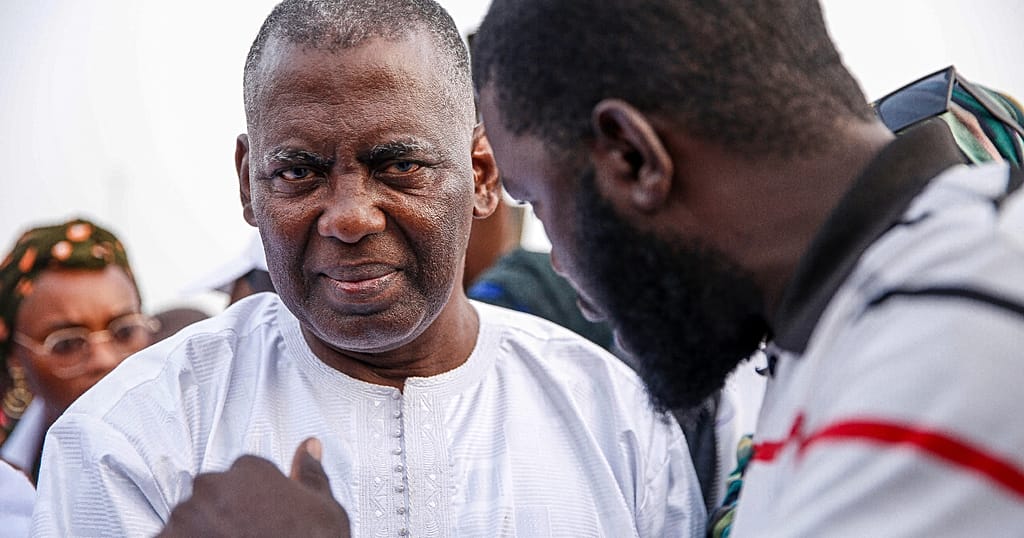 🌍Africa
Photo: Africanews
Key points
- Biram Dah Abeid resigns from Mauritanian parliament citing corruption
- Abeid leads the anti-slavery movement IRA
- Opposition leader vows to continue struggle outside of government
Biram Dah Abeid, a leading Mauritanian anti-slavery activist and opposition lawmaker, announced his resignation from the National Assembly on Monday. During a televised plenary session, Abeid declared that his departure was a direct protest against what he described as pervasive mismanagement and corruption within the government of President Mohamed Ould Cheikh El Ghazouani.
Abeid, who leads the Initiative for the Resurgence of the Abolitionist Movement (IRA), has been a vocal critic of the state's failure to address the legacy of slavery. Despite Mauritania having outlawed the practice, the government maintains that only historical after-effects remain, a position Abeid and his supporters vehemently contest. During his final address to the chamber, he criticized the administration for a lack of accountability, noting that no officials have been imprisoned despite widespread allegations of graft.
First elected to parliament in 2018 while incarcerated, Abeid has served as a prominent voice for marginalized groups, particularly descendants of black slaves in a political landscape historically dominated by Arab and Berber elites. He confirmed that while he is stepping down from his legislative seat, he intends to continue his political opposition through grassroots activism and legal channels, arguing that parliamentary discourse has become ineffective under the current regime.
The stakes
Abeid’s resignation removes a high-profile opposition voice from the legislative process, potentially signaling a shift toward more confrontational street-level activism. For the Ghazouani administration, the move highlights ongoing tensions regarding governance and human rights, while the opposition loses its most prominent platform for challenging the executive branch from within the halls of power.
Two readings
- Supporters view the resignation as a principled stand against a corrupt system that ignores the needs of marginalized populations and renders parliamentary debate meaningless.
- Critics within the government may interpret the move as a tactical retreat following multiple electoral defeats, suggesting that Abeid is attempting to regain political momentum outside of institutional constraints.
Source Africanews — africanews.com/2026/11/10/mauritanian-anti-slavery-activist-biram-da… ↗
Read next
 ✒️Opinion & Analysis
ICJ Rules Myanmar Military Committed Genocide Against Rohingya
The International Court of Justice has found Myanmar's military guilty of genocide against the Rohingya, a ruling that damages the international standing of both Aung San…
 🕯️Democracy & Rights
Chinese teachers face rising parental pressure over personal life choices
Chinese educators are encountering a surge in unreasonable demands from parents, including complaints regarding teachers' pregnancy and maternity leave.
 🛡️War & Security
Ukraine Restricts Media Coverage of Infrastructure Damage Amid Russian Strikes
President Volodymyr Zelenskyy has issued a decree prohibiting media outlets from reporting on the impact of Russian strikes against critical infrastructure and the status…
 🏮China & Taiwan
Beijing Reaffirms Reunification Stance Following Taiwan Local Election Results
China’s Taiwan Affairs Office declared that the island’s reunification with the mainland remains inevitable, despite recent shifts in Taiwan's local political landscape.
 🇪🇺Europe
US Air Force Repels Unauthorized Drone Incursion at RAF Lakenheath
U.S. security forces at a British air base successfully countered a group of unidentified drones, amid growing concerns over potential foreign state involvement.
 ⚖️Law & Policy
India Government Proposes 50% Increase in Parliamentary Seats and Women's Reservation
The Indian government plans to introduce legislation to expand the Lok Sabha to 850 seats and mandate a 33% reservation for women in legislative bodies.