Salvadoran Troops Deploy to Haiti to Combat Gang Violence
Salvadoran military forces have deployed to Port-au-Prince to establish an operational base at the city's main stadium, drawing a mixed reaction from local residents facing severe gang control.
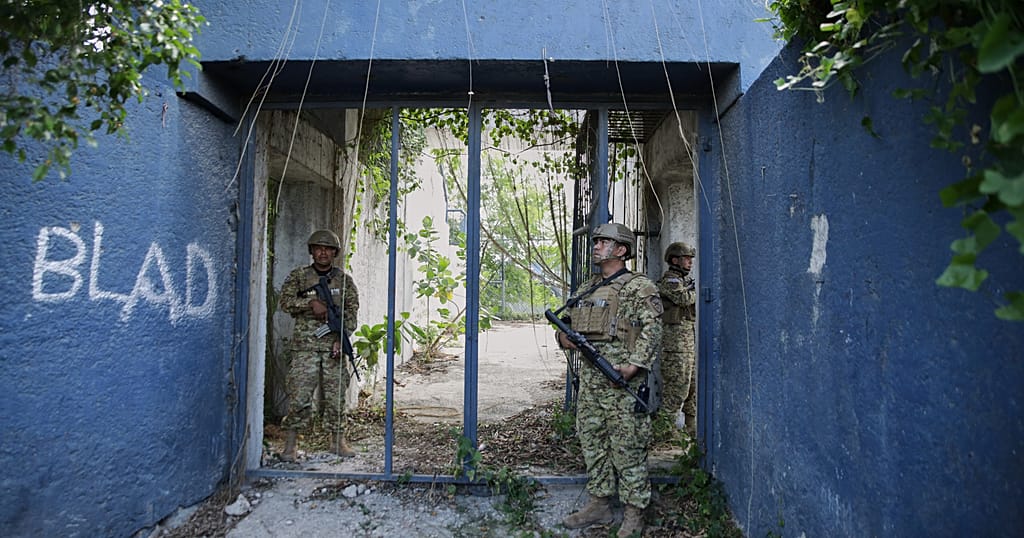 🌎Americas
Photo: Africanews
Key points
- Salvadoran troops deploy to Port-au-Prince to combat gangs
- Forces secure the capital's main stadium as an operational base
- Deployment operates outside formal UN-backed frameworks
Haitian residents have expressed cautious optimism following the deployment of Salvadoran troops tasked with assisting local security forces in combating rampant gang violence in Port-au-Prince. Salvadoran President Nayib Bukele announced that approximately 2,000 soldiers have taken up positions to guard the city's primary sports stadium, which national security forces recaptured on Thursday after criminal groups held the facility for two years.
President Bukele stated that the reclaimed stadium will serve as the operational staging ground for an upcoming military offensive against the armed factions. In a public message directed at local gangs, Bukele warned that individuals choosing to remain and fight the incoming forces will face severe consequences. The deployment follows an initial order by the Salvadoran leader to dispatch personnel to locate four missing Salvadoran soldiers caught in a Port-au-Prince ambush.
The deployment operates outside the formal structure of the UN-backed Gang Suppression Force. While international human rights monitors have previously raised concerns regarding Bukele's domestic security strategies, many displaced Haitians suffering under extreme violence have welcomed the external intervention as a necessary measure to restore public order.
The stakes
The intervention carries significant consequences for the sovereignty and security of Haiti, determining whether foreign hardline tactics can successfully dismantle entrenched criminal networks or spark further conflict. If the operation succeeds, displaced citizens may finally return to their homes and allow public infrastructure, such as national sports venues, to resume normal functions. Conversely, an escalation outside official UN frameworks risks complicating international oversight and accountability.
Two readings
- Supporters view the deployment as a vital, decisive intervention that brings much-needed tactical strength to a desperate population abandoned by traditional international peacekeeping efforts.
- Critics argue that deploying foreign troops without strict multilateral oversight risks exacerbating human rights concerns and bypassing legitimate democratic governance structures in Haiti.
Source Africanews — africanews.com/2026/11/15/haitians-welcome-deployment-of-salvadoran-… ↗
Read next
 ✒️Opinion & Analysis
ICJ Rules Myanmar Military Committed Genocide Against Rohingya
The International Court of Justice has found Myanmar's military guilty of genocide against the Rohingya, a ruling that damages the international standing of both Aung San…
 🕯️Democracy & Rights
Chinese teachers face rising parental pressure over personal life choices
Chinese educators are encountering a surge in unreasonable demands from parents, including complaints regarding teachers' pregnancy and maternity leave.
 🛡️War & Security
Ukraine Restricts Media Coverage of Infrastructure Damage Amid Russian Strikes
President Volodymyr Zelenskyy has issued a decree prohibiting media outlets from reporting on the impact of Russian strikes against critical infrastructure and the status…
 🏮China & Taiwan
Beijing Reaffirms Reunification Stance Following Taiwan Local Election Results
China’s Taiwan Affairs Office declared that the island’s reunification with the mainland remains inevitable, despite recent shifts in Taiwan's local political landscape.
 🇪🇺Europe
US Air Force Repels Unauthorized Drone Incursion at RAF Lakenheath
U.S. security forces at a British air base successfully countered a group of unidentified drones, amid growing concerns over potential foreign state involvement.
 ⚖️Law & Policy
India Government Proposes 50% Increase in Parliamentary Seats and Women's Reservation
The Indian government plans to introduce legislation to expand the Lok Sabha to 850 seats and mandate a 33% reservation for women in legislative bodies.