Yucatán Museum Opens to Examine Legacy of Controversial Colonial Bishop
A new museum in Yucatán dedicated to Spanish friar Diego de Landa explores his complex and violent colonial legacy alongside his preservation of Maya history.
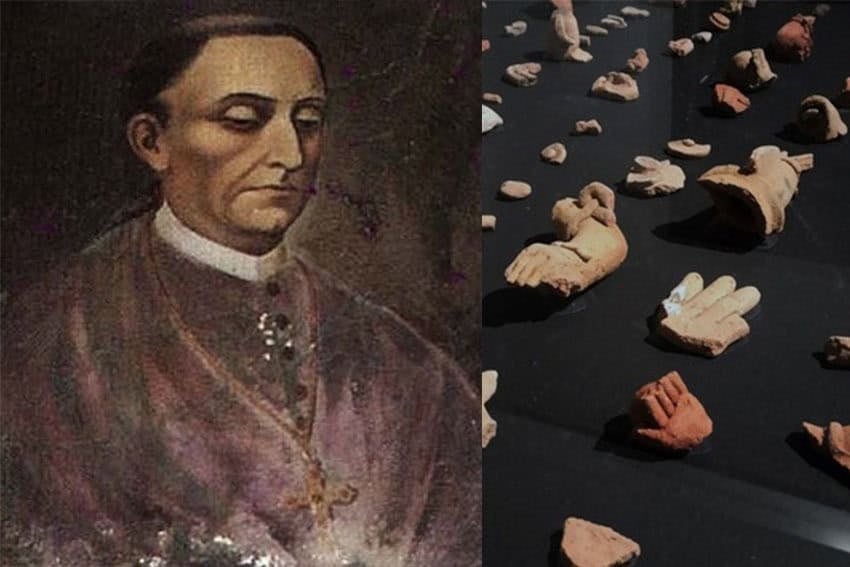 🌎Americas
Photo: Mexico News Daily
Key points
- Museum dedicated to Spanish friar Diego de Landa opens in Maní, Yucatán.
- Exhibition covers Landa's suppression of Maya religion and his preservation of their history.
- Curated by historian John F. Chuchiak IV, the project is hosted in a former convent.
Yucatán state has opened a permanent museum inside a former convent in Maní to examine the contested legacy of Diego de Landa, a 16th-century Spanish friar and bishop who launched brutal campaigns against indigenous religious practices.
Housed in a modest parish room in the former San Miguel Arcángel convent, the exhibition titled "Friar Diego de Landa: The Bishop and His Legacy" features nine display panels, a painting, and a 25-minute video detailing his life from Spain to his tenure in Mexico. The project was organized through the parish and the Archdiocese of Yucatán, with historical research and curation led by Missouri State University historian John F. Chuchiak IV.
Landa, who arrived in the region in 1549, is infamous for the July 12, 1562, auto-da-fé in Maní, where countless Maya codices, sacred images, and manuscripts were destroyed. While historian Chuchiak noted at the opening that records show the fire consumed objects rather than people, Encyclopaedia Britannica documents indicate that thousands of Maya endured torture and hundreds died during Landa's broader suppression campaign. Conversely, the exhibition also highlights documents suggesting Landa later opposed forced labor and compiled the "Relación de las cosas de Yucatán," an invaluable text for understanding ancient Maya civilization.
The stakes
The new exhibition sparks renewed cultural debate over how local institutions manage colonial history, potentially influencing tourism and historical education in the region by confronting both the violent suppression of indigenous peoples and the preservation of their heritage.
Two readings
- Supporters view the museum as an educational resource that offers a balanced, transparent look at a complex historical figure without ignoring the realities of colonization.
- Critics worry that dedicating physical exhibition space to a figure responsible for destroying sacred indigenous texts risks glorifying or softening a brutal colonial oppressor.
Source Mexico News Daily — mexiconewsdaily.com/culture/new-museum-yucatan-controversial-figure-fri… ↗
Read next
 ✒️Opinion & Analysis
ICJ Rules Myanmar Military Committed Genocide Against Rohingya
The International Court of Justice has found Myanmar's military guilty of genocide against the Rohingya, a ruling that damages the international standing of both Aung San…
 🕯️Democracy & Rights
Chinese teachers face rising parental pressure over personal life choices
Chinese educators are encountering a surge in unreasonable demands from parents, including complaints regarding teachers' pregnancy and maternity leave.
 🛡️War & Security
Ukraine Restricts Media Coverage of Infrastructure Damage Amid Russian Strikes
President Volodymyr Zelenskyy has issued a decree prohibiting media outlets from reporting on the impact of Russian strikes against critical infrastructure and the status…
 🏮China & Taiwan
Beijing Reaffirms Reunification Stance Following Taiwan Local Election Results
China’s Taiwan Affairs Office declared that the island’s reunification with the mainland remains inevitable, despite recent shifts in Taiwan's local political landscape.
 🇪🇺Europe
US Air Force Repels Unauthorized Drone Incursion at RAF Lakenheath
U.S. security forces at a British air base successfully countered a group of unidentified drones, amid growing concerns over potential foreign state involvement.
 ⚖️Law & Policy
India Government Proposes 50% Increase in Parliamentary Seats and Women's Reservation
The Indian government plans to introduce legislation to expand the Lok Sabha to 850 seats and mandate a 33% reservation for women in legislative bodies.