Pope Leo XIV Urges Argentine President Milei to Prioritize People Over Austerity
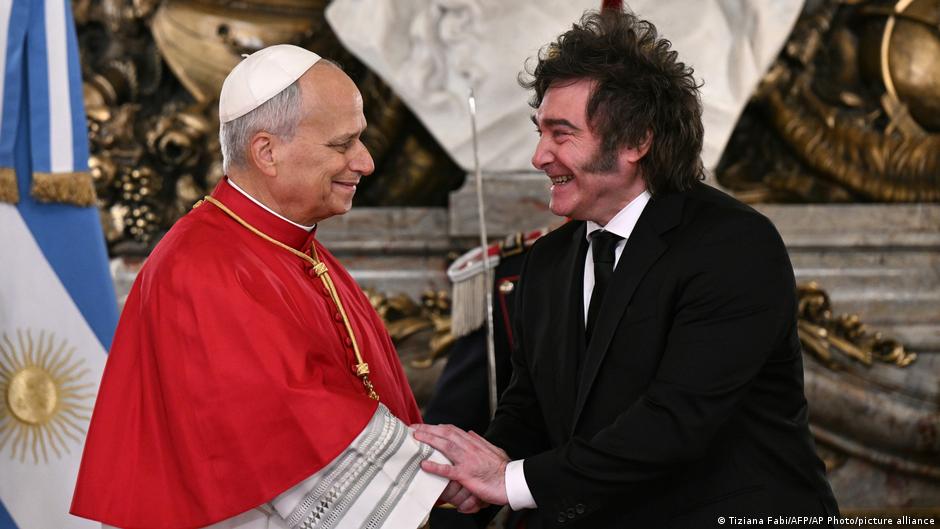
Pope Leo XIV arrived in Buenos Aires on Sunday, urging President Javier Milei to ensure economic growth benefits the poor and warning that democracy must be actively safeguarded.
 🌎Americas
Photo: DW English
Key points
- Pope Leo XIV arrived in Buenos Aires on Sunday for the first papal visit to Argentina since 1987.
- The pontiff urged President Javier Milei to ensure economic growth benefits the poor and protects democracy.
- Milei defended his severe austerity cuts as vital for curbing inflation, despite widespread public pressure.
Pope Leo XIV used the opening of his historic visit to Argentina on Sunday to deliver a pointed message regarding economic justice and democratic governance to President Javier Milei and government officials. Arriving in Buenos Aires for the first papal trip to the country in nearly forty years, the 71-year-old pontiff emphasized that financial systems must serve the citizenry rather than demanding sacrifice from them.
While avoiding explicit references to the libertarian administration's aggressive austerity measures, the pope highlighted the struggles of working households unable to make ends meet. He further underscored the importance of protecting democratic norms, reminding officials that authority carries a duty of prudence and a commitment to the entire community. The visit carries substantial political weight as Argentina looks toward the 2027 presidential election, where Milei intends to seek a second term amid ongoing societal friction over public-sector layoffs and steep spending cuts.
President Milei defended his administration's fiscal policies as essential for stabilizing the national economy and reducing inflation, which has dropped significantly from over 200 percent to roughly 33 percent. Although past friction existed between the executive branch and religious leadership, Milei adopted a conciliatory posture during Sunday's proceedings, praising the papacy while the pontiff simultaneously called for restrained political rhetoric and a renewed willingness to listen across partisan divides.
The stakes
If the papal intervention shifts domestic political discourse, vulnerable communities might secure stronger social protections, though any reversal of fiscal discipline risks undermining the administration's progress against inflation.
Two readings
- Supporters read the papal visit as a timely moral reminder to shield impoverished families from the harsh human costs of necessary economic stabilization.
- Critics read the intervention as an unwarranted religious intrusion into legitimate fiscal reforms aimed at curing decades of structural decline.
Source DW English — dw.com/en/pope-urges-argentina-s-milei-to-put-people-before-economy… ↗
Read next
 ✒️Opinion & Analysis
ICJ Rules Myanmar Military Committed Genocide Against Rohingya
The International Court of Justice has found Myanmar's military guilty of genocide against the Rohingya, a ruling that damages the international standing of both Aung San…
 🕯️Democracy & Rights
Chinese teachers face rising parental pressure over personal life choices
Chinese educators are encountering a surge in unreasonable demands from parents, including complaints regarding teachers' pregnancy and maternity leave.
 🛡️War & Security
Ukraine Restricts Media Coverage of Infrastructure Damage Amid Russian Strikes
President Volodymyr Zelenskyy has issued a decree prohibiting media outlets from reporting on the impact of Russian strikes against critical infrastructure and the status…
 🏮China & Taiwan
Beijing Reaffirms Reunification Stance Following Taiwan Local Election Results
China’s Taiwan Affairs Office declared that the island’s reunification with the mainland remains inevitable, despite recent shifts in Taiwan's local political landscape.
 🇪🇺Europe
US Air Force Repels Unauthorized Drone Incursion at RAF Lakenheath
U.S. security forces at a British air base successfully countered a group of unidentified drones, amid growing concerns over potential foreign state involvement.
 ⚖️Law & Policy
India Government Proposes 50% Increase in Parliamentary Seats and Women's Reservation
The Indian government plans to introduce legislation to expand the Lok Sabha to 850 seats and mandate a 33% reservation for women in legislative bodies.