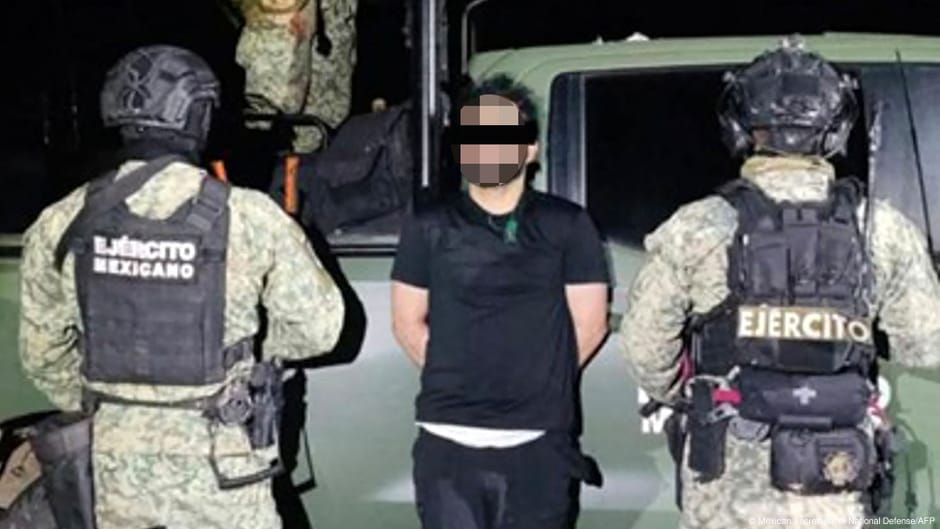
Mexican Special Forces Capture Wanted Drug Kingpin 'Chapo Isidro'
Mexican special forces have apprehended high-profile drug kingpin Fausto Isidro Meza F. in a strategic raid in Sinaloa, following intelligence cooperation with U.S. agencies.
 🌎Americas
Photo: DW English
Key points
- Fausto Isidro Meza F. captured in Guasave, Sinaloa
- Suspect is a top FBI fugitive linked to the Beltran Leyva network
- Operation involved coordination between Mexican and U.S. intelligence agencies
Mexican military special forces detained Fausto Isidro Meza F., widely known as "Chapo Isidro," during an overnight operation in the city of Guasave, Sinaloa. The 44-year-old, identified as a leader within the Beltran Leyva drug trafficking network, was taken into custody following a coordinated intelligence effort between Mexican authorities and U.S. law enforcement agencies. Following his capture, the suspect was transported to Mexico City to face organized crime charges.
The arrest marks a significant development in international anti-narcotics efforts, as the suspect is one of the FBI's ten most wanted fugitives. The U.S. government has long accused his organization of trafficking massive quantities of fentanyl, heroin, and other illicit substances across the border, placing a $5 million bounty on his capture. While Mexican officials confirmed the arrest, they have not yet clarified if the suspect will face extradition to the United States.
The operation triggered immediate retaliatory violence, with reports of cartel members establishing roadblocks and military helicopters engaging ground targets near a public baseball game. The incident underscores the ongoing security challenges facing the administration of President Claudia Sheinbaum, who is currently managing intense diplomatic pressure from the United States regarding the presence of cartels on Mexican soil.
The stakes
The arrest serves as a high-profile test for the Sheinbaum administration's security policy, balancing domestic stability against U.S. demands for aggressive cartel suppression. While a successful prosecution demonstrates state capacity, the resulting violence highlights the risk of destabilization in regions where cartels maintain deep-rooted influence, potentially forcing the government to choose between further militarization or alternative security strategies.
Two readings
- Supporters view the arrest as a vital victory for the rule of law and a necessary step in strengthening bilateral security cooperation with the United States.
- Critics argue that such high-profile captures often lead to short-term spikes in violence and power vacuums that fail to dismantle the broader systemic infrastructure of the drug trade.
Source DW English — dw.com/en/mexican-special-forces-arrest-drug-kingpin-chapo-isidro/a… ↗
Read next
 ✒️Opinion & Analysis
ICJ Rules Myanmar Military Committed Genocide Against Rohingya
The International Court of Justice has found Myanmar's military guilty of genocide against the Rohingya, a ruling that damages the international standing of both Aung San…
 🕯️Democracy & Rights
Chinese teachers face rising parental pressure over personal life choices
Chinese educators are encountering a surge in unreasonable demands from parents, including complaints regarding teachers' pregnancy and maternity leave.
 🛡️War & Security
Ukraine Restricts Media Coverage of Infrastructure Damage Amid Russian Strikes
President Volodymyr Zelenskyy has issued a decree prohibiting media outlets from reporting on the impact of Russian strikes against critical infrastructure and the status…
 🏮China & Taiwan
Beijing Reaffirms Reunification Stance Following Taiwan Local Election Results
China’s Taiwan Affairs Office declared that the island’s reunification with the mainland remains inevitable, despite recent shifts in Taiwan's local political landscape.
 🇪🇺Europe
US Air Force Repels Unauthorized Drone Incursion at RAF Lakenheath
U.S. security forces at a British air base successfully countered a group of unidentified drones, amid growing concerns over potential foreign state involvement.
 ⚖️Law & Policy
India Government Proposes 50% Increase in Parliamentary Seats and Women's Reservation
The Indian government plans to introduce legislation to expand the Lok Sabha to 850 seats and mandate a 33% reservation for women in legislative bodies.