Brazilian Forensics Lead Effort to Identify Migrants from Atlantic 'Ghost Ships'
Brazilian forensic scientist Alexandre Deitos has led a cross-continental effort to identify West African migrants whose bodies washed ashore on South American and Caribbean coasts after their vessels drifted across the Atlantic.
 🌎Americas
Photo: Africanews
Key points
- Brazilian forensic team identifies West African migrants from an Atlantic 'ghost ship'.
- Investigator travels across the Sahara Desert to collect DNA samples from families.
- Families overcome severe legal and bureaucratic limbo following formal identification.
Brazilian criminal forensic scientist Alexandre Deitos has spearheaded an initiative to identify nine bodies recovered from a 13-metre fishing boat that drifted across the Atlantic Ocean after steering off course toward Spain's Canary Islands. Examining 28 mobile phones and two identity cards left aboard the vessel, investigators concluded the craft departed from West Africa before becoming stranded on a sandbank, joining a series of similar 'ghost ship' incidents along Latin American shores.
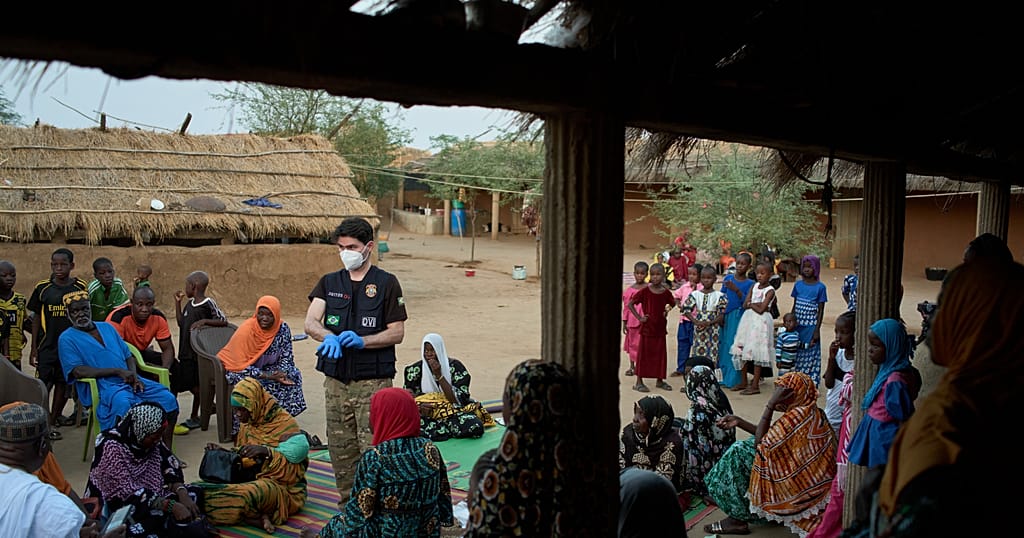
Faced with uncooperative institutional channels, Deitos undertook a 10-day journey covering more than 1,500 kilometres across the Sahara Desert to gather DNA samples from 85 individuals. The investigation successfully linked recovered remains to families across the region, including relatives of missing travelers from Mauritania and Mali, providing closure to households enduring years of legal and emotional uncertainty.
The absence of formal death certificates routinely traps surviving relatives, particularly spouses, in bureaucratic limbo, barring them from property inheritance, bank accounts, and educational registration for children. Deitos asserted that the ongoing maritime migration crisis constitutes an international disaster demanding heightened global attention and standardized cross-border investigative frameworks.
The stakes
Families of missing migrants secure legal closure, inheritance rights, and administrative access, while governments face mounting pressure to address deadly Atlantic migration routes and improve international forensic cooperation.
Two readings
- Supporters view the independent forensic investigation as a vital humanitarian breakthrough that restores dignity to victims and provides essential legal closure for grieving families.
- Critics argue that decentralized humanitarian efforts underscore systemic governmental failures by both origin and destination states to manage maritime migration security and missing persons protocols.
Source Africanews — africanews.com/2026/11/26/brazilian-forensic-scientist-identifies-mi… ↗
Read next
 ✒️Opinion & Analysis
ICJ Rules Myanmar Military Committed Genocide Against Rohingya
The International Court of Justice has found Myanmar's military guilty of genocide against the Rohingya, a ruling that damages the international standing of both Aung San…
 🕯️Democracy & Rights
Chinese teachers face rising parental pressure over personal life choices
Chinese educators are encountering a surge in unreasonable demands from parents, including complaints regarding teachers' pregnancy and maternity leave.
 🛡️War & Security
Ukraine Restricts Media Coverage of Infrastructure Damage Amid Russian Strikes
President Volodymyr Zelenskyy has issued a decree prohibiting media outlets from reporting on the impact of Russian strikes against critical infrastructure and the status…
 🏮China & Taiwan
Beijing Reaffirms Reunification Stance Following Taiwan Local Election Results
China’s Taiwan Affairs Office declared that the island’s reunification with the mainland remains inevitable, despite recent shifts in Taiwan's local political landscape.
 🇪🇺Europe
US Air Force Repels Unauthorized Drone Incursion at RAF Lakenheath
U.S. security forces at a British air base successfully countered a group of unidentified drones, amid growing concerns over potential foreign state involvement.
 ⚖️Law & Policy
India Government Proposes 50% Increase in Parliamentary Seats and Women's Reservation
The Indian government plans to introduce legislation to expand the Lok Sabha to 850 seats and mandate a 33% reservation for women in legislative bodies.