Central Bank Museum in Buenos Aires Displays Argentina's Turbulent Monetary Past
The Central Bank Museum in Buenos Aires showcases Argentina's centuries-long struggle with hyperinflation, frequent currency replacements, and government overspending.
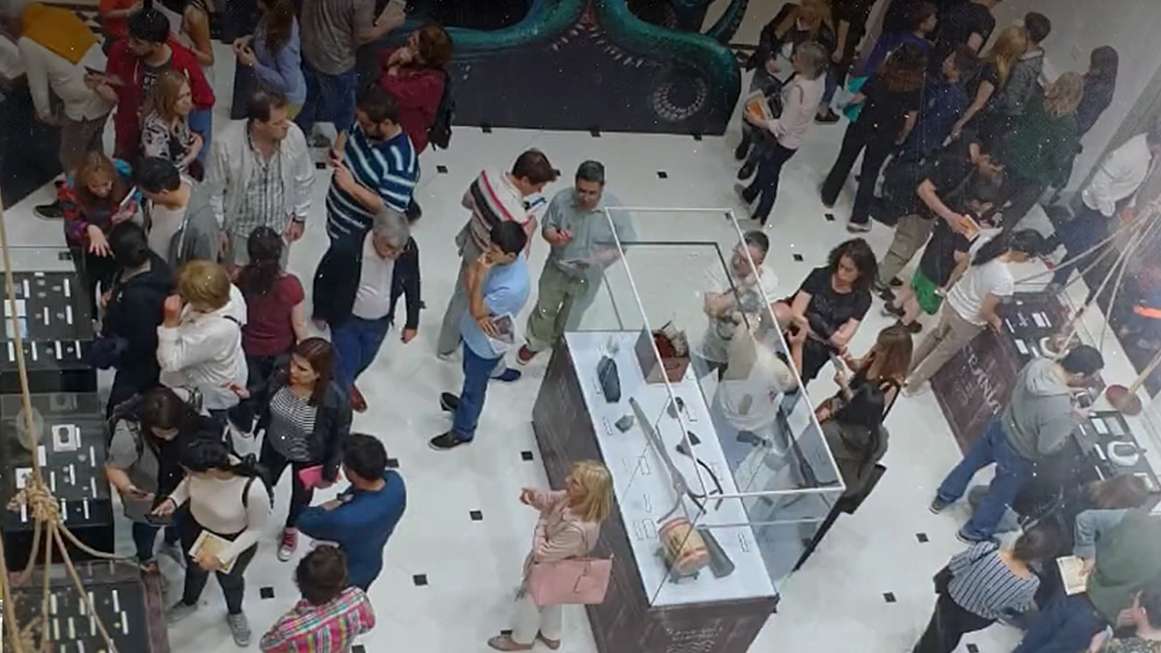 🌎Americas
Photo: Reason
Key points
- Museum in Buenos Aires showcases Argentina's monetary history
- Exhibits trace repeated currency failures from the colonial era to modern times
- Displays highlight how government spending and money creation drove hyperinflation
The Héctor Carlos Janson Historical and Numismatic Museum, situated near the Central Bank of Argentina in Buenos Aires, displays the tumultuous fiscal history of a nation repeatedly undone by inflation. Spanning six permanent rooms, the exhibition charts the evolution of exchange from pre-European cocoa beans and colonial-era coins minted in Bolivia to modern bank notes scarred by severe devaluation.
Exhibits detailing the nineteenth and twentieth centuries reveal how recurring deficits and loose monetary policies destabilized the national currency. Historical displays note that under President Juan Perón, state expenditures surged, forcing the Central Bank to expand the money supply and accelerate inflation. Successive administrations similarly relied on foreign borrowing and excessive money printing to mask structural fiscal imbalances.
Over the decades, successive regimes repeatedly attempted to restore stability by rebranding and replacing the national currency. The country cycled through the peso moneda nacional, the peso ley, the peso argentino, and the austral before establishing a fixed peg to the United States dollar in 1992, which ultimately collapsed a decade later after prolonged overspending.
The stakes
The museum exhibition underscores the enduring political consequences of fiscal mismanagement and state control over currency. If contemporary governments fail to heed these historical lessons on debt and inflation, citizens continue to bear the brunt of recurring economic instability and eroding purchasing power.
Two readings
- Supporters view the museum as an essential educational institution that transparently preserves the harsh lessons of past government failures and fiscal overreach.
- Critics suggest that highlighting historical monetary chaos without offering modern structural solutions risks normalizing economic volatility as an inevitable part of national governance.
Source Reason — reason.com/2026/11/27/the-central-bank-museum/ ↗
Read next
 ✒️Opinion & Analysis
ICJ Rules Myanmar Military Committed Genocide Against Rohingya
The International Court of Justice has found Myanmar's military guilty of genocide against the Rohingya, a ruling that damages the international standing of both Aung San…
 🕯️Democracy & Rights
Chinese teachers face rising parental pressure over personal life choices
Chinese educators are encountering a surge in unreasonable demands from parents, including complaints regarding teachers' pregnancy and maternity leave.
 🛡️War & Security
Ukraine Restricts Media Coverage of Infrastructure Damage Amid Russian Strikes
President Volodymyr Zelenskyy has issued a decree prohibiting media outlets from reporting on the impact of Russian strikes against critical infrastructure and the status…
 🏮China & Taiwan
Beijing Reaffirms Reunification Stance Following Taiwan Local Election Results
China’s Taiwan Affairs Office declared that the island’s reunification with the mainland remains inevitable, despite recent shifts in Taiwan's local political landscape.
 🇪🇺Europe
US Air Force Repels Unauthorized Drone Incursion at RAF Lakenheath
U.S. security forces at a British air base successfully countered a group of unidentified drones, amid growing concerns over potential foreign state involvement.
 ⚖️Law & Policy
India Government Proposes 50% Increase in Parliamentary Seats and Women's Reservation
The Indian government plans to introduce legislation to expand the Lok Sabha to 850 seats and mandate a 33% reservation for women in legislative bodies.