Manila Summit Puts ASEAN Neutrality to the Test as Global Leaders Gather
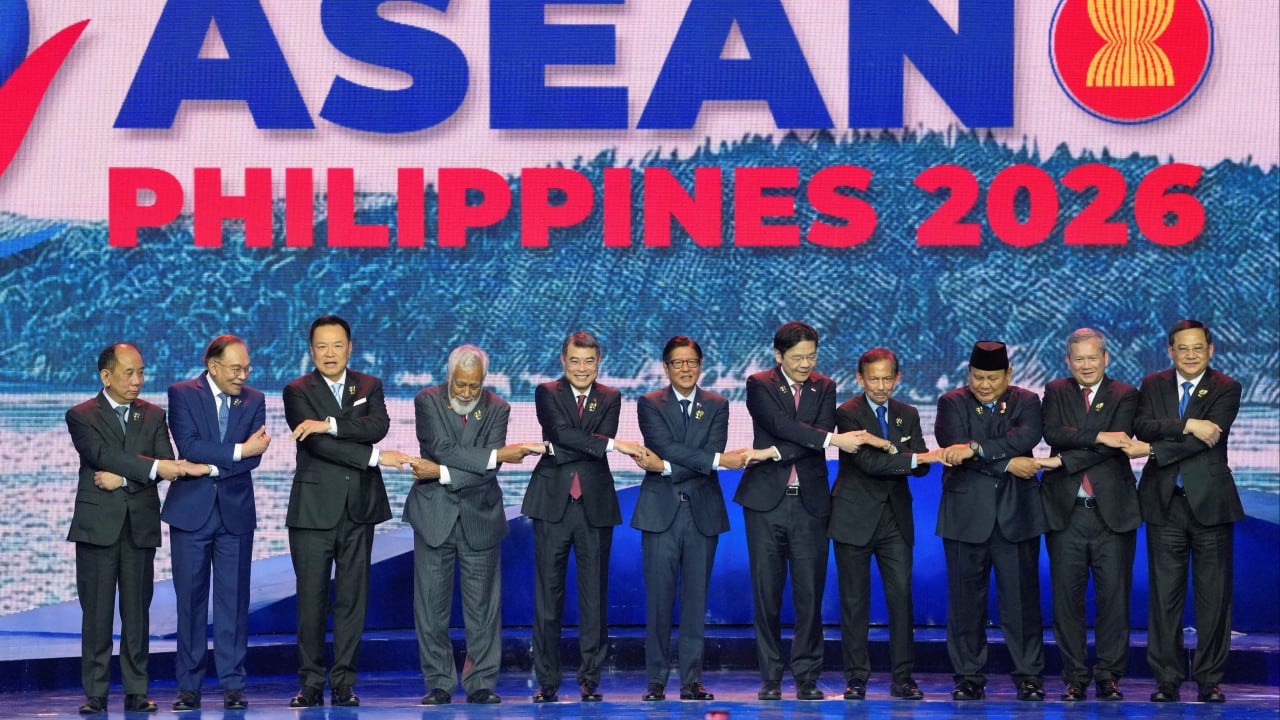
Global leaders including US President Donald Trump and Chinese Premier Li Qiang arrive in Manila for the ASEAN summit, testing the regional bloc's neutrality amid shifting geopolitical dynamics.
 🌏Asia-Pacific
Photo: SCMP Asia
Key points
- Global leaders converge in Manila for the ASEAN summit.
- High-profile attendees include US President Donald Trump and Chinese Premier Li Qiang.
- The summit tests ASEAN's diplomatic neutrality amid major power competition.
High-ranking officials from around the globe descended on Manila on Sunday for the Association of Southeast Asian Nations summit, thrusting the eleven-member collective into the spotlight as a burgeoning economic powerhouse. Representing a combined population of 700 million and a $4.4 trillion economy projected to rank as the world's fourth largest by 2030, the bloc faces intensified diplomatic scrutiny over its strategic alignment.
Among the key figures traveling to the Philippines are Canadian Prime Minister Mark Carney and Brazilian President Luiz Inacio Lula da Silva, alongside Chinese Premier Li Qiang. US President Donald Trump is additionally scheduled to join the proceedings on Tuesday, raising the stakes for multilateral engagement and bilateral friction in the Indo-Pacific arena.
The convergence of major power rivals underscores the delicate diplomatic balancing act required of ASEAN member states. Maintaining consensus and strategic autonomy remains a central challenge as external actors vie for influence across Southeast Asian markets and maritime routes.
The stakes
Member states risk internal division and loss of diplomatic leverage if they fail to uphold collective neutrality under pressure from competing superpowers. Conversely, a unified stance allows the bloc to secure economic partnerships and security guarantees from multiple global players without subordination.
Two readings
- Supporters read the high-level attendance as validation of ASEAN's central role in regional architecture and multilateral diplomacy.
- Critics read the competing superpower presence as an escalation of polarization that threatens to sideline local interests and fracture consensus.
Source SCMP Asia — scmp.com/week-asia/politics/article/3374395/aseans-neutrality-set-b… ↗
Read next
 ✒️Opinion & Analysis
ICJ Rules Myanmar Military Committed Genocide Against Rohingya
The International Court of Justice has found Myanmar's military guilty of genocide against the Rohingya, a ruling that damages the international standing of both Aung San…
 🕯️Democracy & Rights
Chinese teachers face rising parental pressure over personal life choices
Chinese educators are encountering a surge in unreasonable demands from parents, including complaints regarding teachers' pregnancy and maternity leave.
 🛡️War & Security
Ukraine Restricts Media Coverage of Infrastructure Damage Amid Russian Strikes
President Volodymyr Zelenskyy has issued a decree prohibiting media outlets from reporting on the impact of Russian strikes against critical infrastructure and the status…
 🏮China & Taiwan
Beijing Reaffirms Reunification Stance Following Taiwan Local Election Results
China’s Taiwan Affairs Office declared that the island’s reunification with the mainland remains inevitable, despite recent shifts in Taiwan's local political landscape.
 🇪🇺Europe
US Air Force Repels Unauthorized Drone Incursion at RAF Lakenheath
U.S. security forces at a British air base successfully countered a group of unidentified drones, amid growing concerns over potential foreign state involvement.
 ⚖️Law & Policy
India Government Proposes 50% Increase in Parliamentary Seats and Women's Reservation
The Indian government plans to introduce legislation to expand the Lok Sabha to 850 seats and mandate a 33% reservation for women in legislative bodies.