Malaysia Faces Constitutional Tension Over Najib Razak’s Proposed House Arrest
A legal dispute regarding the house arrest of former Prime Minister Najib Razak has created friction between the Malaysian monarchy and the attorney general’s office.
 🌏Asia-Pacific
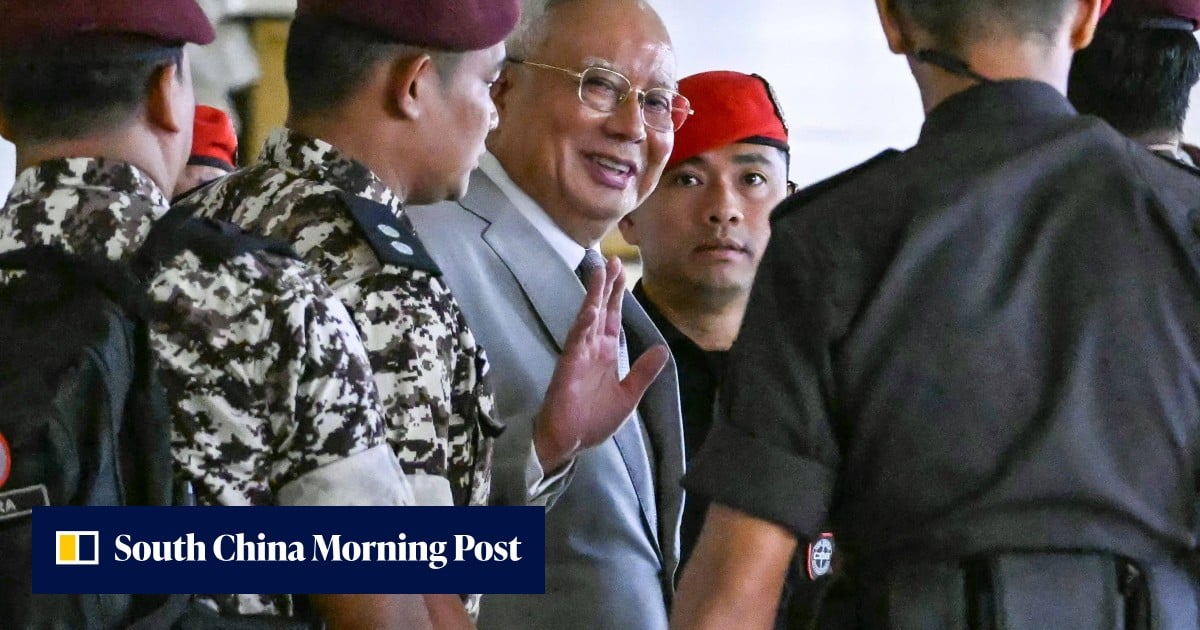
Photo: SCMP Asia
Key points
- Najib Razak's potential house arrest follows a royal pardon and a 50 million ringgit fine payment.
- The dispute highlights potential constitutional friction between the monarchy and the attorney general.
- Legal experts view the situation as a test of the boundaries between royal prerogative and judicial procedure.
A deepening controversy surrounding the potential house arrest of former Malaysian Prime Minister Najib Razak has sparked a debate over the scope of executive and judicial authority. The 73-year-old former leader was expected to transition from Kajang Prison to his residence in Kuala Lumpur this past Friday, following his political party, Umno, settling a 50 million ringgit (US$12.3 million) fine—a prerequisite established by a royal pardon granted in September.
The situation has intensified as the attorney general’s office faces scrutiny over its capacity to manage the conditions of the pardon, leading to concerns regarding a constitutional confrontation. While legal observers note that the current friction does not constitute a full-scale institutional collapse, it highlights the delicate balance between the royal prerogative and the established legal framework of the state.
The uncertainty stems from the procedural requirements needed to formalize the transition from incarceration to house arrest. As the government navigates the legal complexities, the case continues to test the boundaries between the influence of the palace and the administrative duties of the public prosecutor.
The stakes
The resolution of this case will determine whether the royal pardon holds absolute authority over the judicial process or if it must be strictly reconciled with existing penal regulations. If Najib successfully moves to house arrest, it signals the significant political leverage of the Umno party; conversely, a delay or denial could provoke a rare public rift between the government and the monarchy.
Two readings
- Supporters of the move argue that the royal pardon is a supreme act of mercy that must be honored immediately to uphold the integrity of the monarch's decision.
- Critics contend that the rule of law must remain paramount, arguing that the attorney general must ensure all procedural conditions are met without political interference.
Source SCMP Asia — scmp.com/week-asia/people/article/3373784/malaysia-najibs-house-arr… ↗
Read next
 ✒️Opinion & Analysis
ICJ Rules Myanmar Military Committed Genocide Against Rohingya
The International Court of Justice has found Myanmar's military guilty of genocide against the Rohingya, a ruling that damages the international standing of both Aung San…
 🕯️Democracy & Rights
Chinese teachers face rising parental pressure over personal life choices
Chinese educators are encountering a surge in unreasonable demands from parents, including complaints regarding teachers' pregnancy and maternity leave.
 🛡️War & Security
Ukraine Restricts Media Coverage of Infrastructure Damage Amid Russian Strikes
President Volodymyr Zelenskyy has issued a decree prohibiting media outlets from reporting on the impact of Russian strikes against critical infrastructure and the status…
 🏮China & Taiwan
Beijing Reaffirms Reunification Stance Following Taiwan Local Election Results
China’s Taiwan Affairs Office declared that the island’s reunification with the mainland remains inevitable, despite recent shifts in Taiwan's local political landscape.
 🇪🇺Europe
US Air Force Repels Unauthorized Drone Incursion at RAF Lakenheath
U.S. security forces at a British air base successfully countered a group of unidentified drones, amid growing concerns over potential foreign state involvement.
 ⚖️Law & Policy
India Government Proposes 50% Increase in Parliamentary Seats and Women's Reservation
The Indian government plans to introduce legislation to expand the Lok Sabha to 850 seats and mandate a 33% reservation for women in legislative bodies.