South Korean Unification Nominee Hong Ihk-pyo Promises Pragmatic North Korea Policy
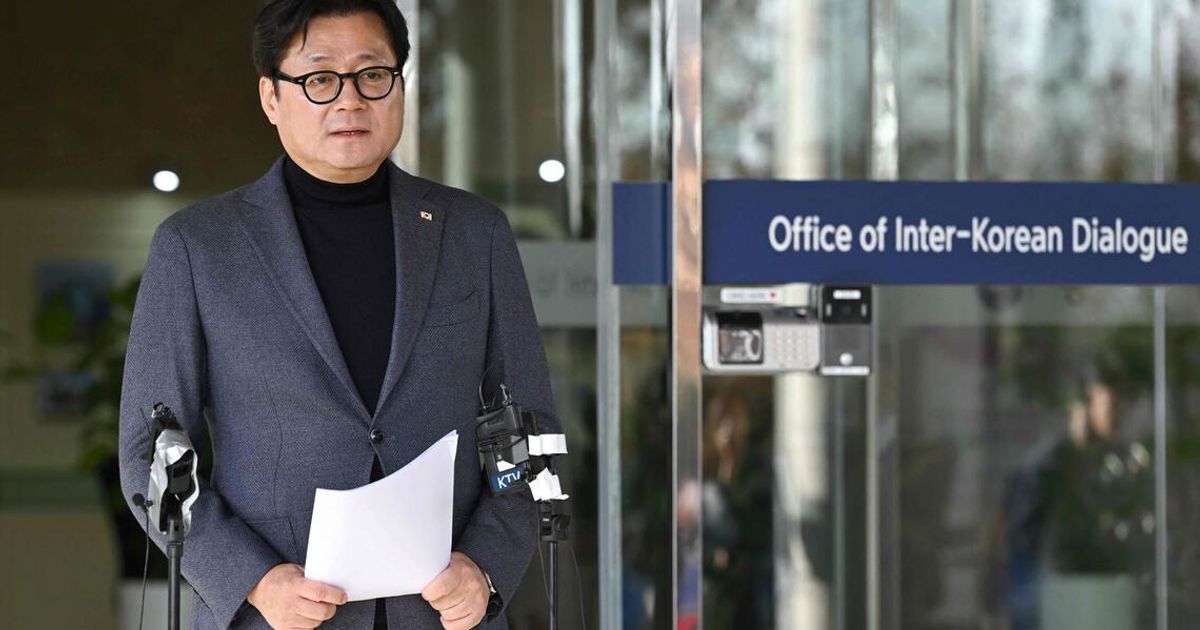
South Korea's unification minister nominee Hong Ihk-pyo has pledged a realistic approach to inter-Korean relations, moving away from high-level dialogue in favor of incremental progress.
 🌏Asia-Pacific
Photo: Straits Times Asia
Key points
- Hong Ihk-pyo nominated as South Korea's new unification minister.
- New policy focus shifts from high-level dialogue to realistic, incremental engagement.
- Reshuffle follows internal government friction and concerns over relations with the U.S.
South Korea’s nominee for unification minister, Hong Ihk-pyo, announced on November 26 his intention to adopt a pragmatic strategy for managing relations with North Korea. The appointment follows a surprise Cabinet reshuffle by President Lee Jae Myung, which saw significant changes to key national security positions.
Addressing the current state of regional tensions, Hong emphasized that he would prioritize "realistic and feasible" methods to shift the status quo. He signaled a departure from ambitious high-level diplomatic efforts, suggesting that small-scale, incremental engagement is more appropriate given the current geopolitical climate on the Korean Peninsula.
The nominee also addressed the controversy surrounding his predecessor, Chung Dong-young, whose tenure was marked by internal government friction and public disagreements with the foreign ministry. While acknowledging that policy debates are natural, Hong stressed the necessity of inter-agency cooperation to effectively implement the administration's agenda. He further noted that he remains open to adjusting existing policies to better align with public consensus.
The stakes
The shift in leadership is intended to stabilize Seoul's approach to Pyongyang and mend potential fractures in the government's security apparatus. By moving toward a more cautious and unified policy, the administration hopes to avoid the diplomatic friction that previously strained relations with both North Korea and the United States.
Two readings
- Supporters view the shift as a necessary pivot toward stability, arguing that a realistic, low-key approach reduces the risk of diplomatic missteps and internal discord.
- Critics worry that abandoning high-level dialogue signals a lack of ambition, potentially leaving the administration without a clear path to resolve long-standing nuclear and security issues.
Source Straits Times Asia — straitstimes.com/asia/east-asia/south-korea-unification-minister-no… ↗
Read next
 ✒️Opinion & Analysis
ICJ Rules Myanmar Military Committed Genocide Against Rohingya
The International Court of Justice has found Myanmar's military guilty of genocide against the Rohingya, a ruling that damages the international standing of both Aung San…
 🕯️Democracy & Rights
Chinese teachers face rising parental pressure over personal life choices
Chinese educators are encountering a surge in unreasonable demands from parents, including complaints regarding teachers' pregnancy and maternity leave.
 🛡️War & Security
Ukraine Restricts Media Coverage of Infrastructure Damage Amid Russian Strikes
President Volodymyr Zelenskyy has issued a decree prohibiting media outlets from reporting on the impact of Russian strikes against critical infrastructure and the status…
 🏮China & Taiwan
Beijing Reaffirms Reunification Stance Following Taiwan Local Election Results
China’s Taiwan Affairs Office declared that the island’s reunification with the mainland remains inevitable, despite recent shifts in Taiwan's local political landscape.
 🇪🇺Europe
US Air Force Repels Unauthorized Drone Incursion at RAF Lakenheath
U.S. security forces at a British air base successfully countered a group of unidentified drones, amid growing concerns over potential foreign state involvement.
 ⚖️Law & Policy
India Government Proposes 50% Increase in Parliamentary Seats and Women's Reservation
The Indian government plans to introduce legislation to expand the Lok Sabha to 850 seats and mandate a 33% reservation for women in legislative bodies.