Sindh Chief Minister Murad Orders Official Suspensions Following Karachi Building Collapse
Sindh Chief Minister Murad Ali Shah ordered the removal and suspension of multiple senior officials and municipal regulators following a fatal building collapse in Karachi.
 🌏Asia-Pacific
Photo: Dawn
Key points
- Sindh Chief Minister Murad Ali Shah ordered suspensions of 16 SBCA officers.
- The collapse of the illegal Baloch Colony building resulted in three deaths and multiple injuries.
- Authorities issued arrest orders for the owner and builder while launching a formal inquiry.
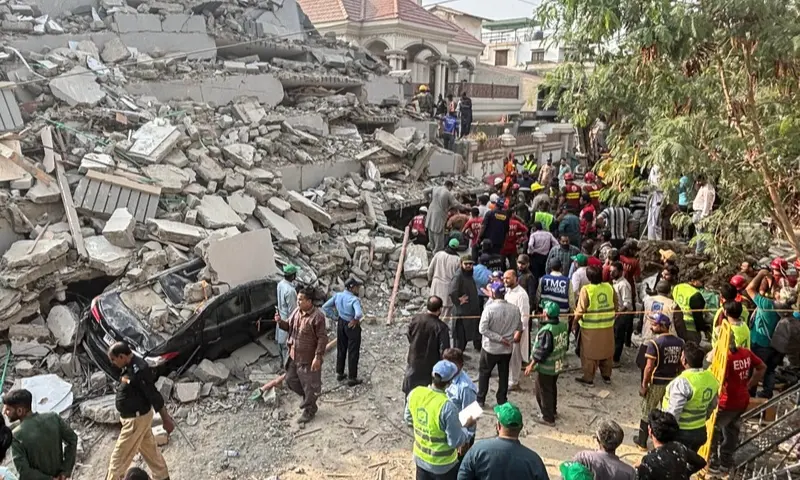
Sindh Chief Minister Murad Ali Shah ordered sweeping administrative penalties on Thursday, including the removal of senior local government figures and the suspension of 16 municipal building control officers, following the collapse of an unauthorized building in Karachi's Baloch Colony.
The incident involved a ground-plus-five-storey structure built on a residential plot that caved in while over twenty workers were on site, resulting in at least three fatalities and fourteen injuries, alongside ongoing rescue operations for individuals still unaccounted for.
During a high-level administrative meeting, Chief Minister Murad directed the removal of local government secretary and Sindh Building Control Authority (SBCA) director general Waseem Shamshad, alongside East Deputy Commissioner Nasrullah Abbasi and Senior Superintendent of Police East Zubair Sheikh, citing administrative negligence.
Authorities were further instructed to immediately apprehend the building owner, Salman Tahir, and builder Zeeshan, while incorporating the project's architect and structural engineer into a formal inquiry to evaluate adherence to municipal regulations and safety codes.
The stakes
The provincial administration faces intense pressure to reform lax urban planning enforcement that repeatedly compromises public safety in major metropolitan centers. If these accountability measures persist, municipal regulators and local developers could face stricter compliance mandates, though systemic corruption and bureaucratic oversight remain formidable challenges.
Two readings
- Supporters read the swift suspensions and arrest directives as a necessary assertion of state authority and a clear signal that administrative negligence and illegal construction will face immediate political accountability.
- Critics read the measures as a reactive public relations response that deflects broader institutional complicity within municipal bodies responsible for monitoring unauthorized constructions across the city.
Source Dawn — dawn.com/news/2047189/cm-murad-orders-removal-of-senior-officials-s… ↗
Read next
 ✒️Opinion & Analysis
ICJ Rules Myanmar Military Committed Genocide Against Rohingya
The International Court of Justice has found Myanmar's military guilty of genocide against the Rohingya, a ruling that damages the international standing of both Aung San…
 🕯️Democracy & Rights
Chinese teachers face rising parental pressure over personal life choices
Chinese educators are encountering a surge in unreasonable demands from parents, including complaints regarding teachers' pregnancy and maternity leave.
 🛡️War & Security
Ukraine Restricts Media Coverage of Infrastructure Damage Amid Russian Strikes
President Volodymyr Zelenskyy has issued a decree prohibiting media outlets from reporting on the impact of Russian strikes against critical infrastructure and the status…
 🏮China & Taiwan
Beijing Reaffirms Reunification Stance Following Taiwan Local Election Results
China’s Taiwan Affairs Office declared that the island’s reunification with the mainland remains inevitable, despite recent shifts in Taiwan's local political landscape.
 🇪🇺Europe
US Air Force Repels Unauthorized Drone Incursion at RAF Lakenheath
U.S. security forces at a British air base successfully countered a group of unidentified drones, amid growing concerns over potential foreign state involvement.
 ⚖️Law & Policy
India Government Proposes 50% Increase in Parliamentary Seats and Women's Reservation
The Indian government plans to introduce legislation to expand the Lok Sabha to 850 seats and mandate a 33% reservation for women in legislative bodies.