Election Commission of Pakistan Rejects Power to Dictate Women Candidacy Seats
The Election Commission of Pakistan stated it lacks the legal authority to force political parties to assign female candidates to winnable constituencies.
 🌏Asia-Pacific
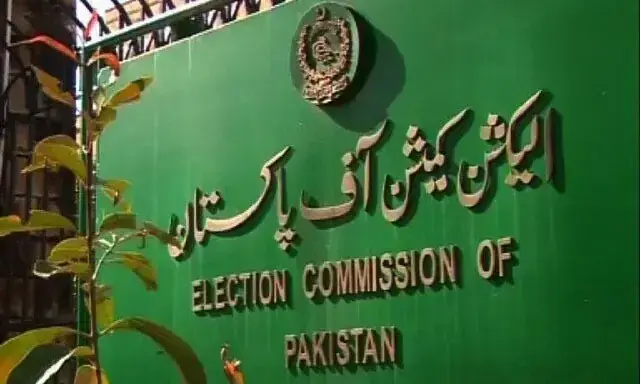
Photo: Dawn
Key points
- Election Commission of Pakistan states it cannot dictate ticket allocation
- National Assembly panel urged commission to ensure women run in winnable seats
- Existing electoral law requires only a five percent quota without defining winnability
The Election Commission of Pakistan announced on Friday that ticket distribution remains an internal affair for political parties and declared it has no legal mandate to intervene. The statement responded to a directive issued by a National Assembly panel urging the electoral body to ensure that the five percent quota for women on general seats translates into guaranteed victories.
Under Section 206 of the Elections Act, 2017, parties must allocate a minimum of five percent of their general seat tickets to women. While civil society and parliamentarians have repeatedly highlighted that parties frequently assign women to difficult or unwinnable constituencies, the commission maintained that current legislation grants it no power to assess constituency winnability or dictate candidate placement.
The electoral authority emphasized that enforcing candidate allocation on specific competitive seats would require legislative intervention by Parliament to amend the existing framework. During the same briefing, the commission addressed hundreds of vacant local government seats, noting that elections could not proceed because no female candidates had submitted nomination papers.
The stakes
Political parties retain full control over their candidate selections under the current setup, while female politicians risk remaining relegated to challenging electoral districts. If Parliament chooses not to amend the electoral laws, the five percent quota may continue to fall short of producing meaningful representation.
Two readings
- Supporters of the commission's stance argue that electoral bodies must adhere strictly to existing statutory limits without overreaching into the internal decisions of political organizations.
- Critics contend that without enforceable rules regarding constituency competitiveness, the statutory quota for women remains a token gesture rather than an effective tool for political empowerment.
Source Dawn — dawn.com/news/2047464/ecp-says-it-cannot-force-parties-to-field-wom… ↗
Read next
 ✒️Opinion & Analysis
ICJ Rules Myanmar Military Committed Genocide Against Rohingya
The International Court of Justice has found Myanmar's military guilty of genocide against the Rohingya, a ruling that damages the international standing of both Aung San…
 🕯️Democracy & Rights
Chinese teachers face rising parental pressure over personal life choices
Chinese educators are encountering a surge in unreasonable demands from parents, including complaints regarding teachers' pregnancy and maternity leave.
 🛡️War & Security
Ukraine Restricts Media Coverage of Infrastructure Damage Amid Russian Strikes
President Volodymyr Zelenskyy has issued a decree prohibiting media outlets from reporting on the impact of Russian strikes against critical infrastructure and the status…
 🏮China & Taiwan
Beijing Reaffirms Reunification Stance Following Taiwan Local Election Results
China’s Taiwan Affairs Office declared that the island’s reunification with the mainland remains inevitable, despite recent shifts in Taiwan's local political landscape.
 🇪🇺Europe
US Air Force Repels Unauthorized Drone Incursion at RAF Lakenheath
U.S. security forces at a British air base successfully countered a group of unidentified drones, amid growing concerns over potential foreign state involvement.
 ⚖️Law & Policy
India Government Proposes 50% Increase in Parliamentary Seats and Women's Reservation
The Indian government plans to introduce legislation to expand the Lok Sabha to 850 seats and mandate a 33% reservation for women in legislative bodies.