Japan Initiates Process to Designate Secondary Capital for Disaster Resilience
Japan has passed legislation to establish a secondary capital to ensure government continuity, with Osaka emerging as the leading candidate to reduce the nation's reliance on Tokyo.
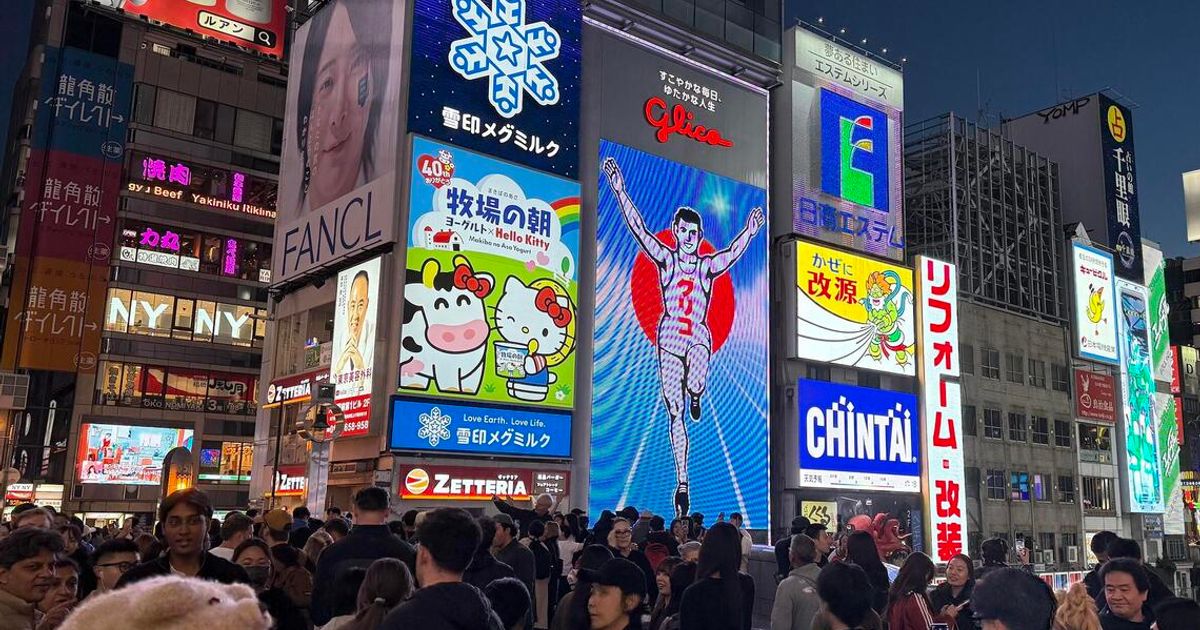 🌏Asia-Pacific
Photo: Straits Times Asia
Key points
- Japan will designate at least one secondary capital by late 2027.
- The initiative aims to ensure government continuity in the event of a major disaster in Tokyo.
- Osaka, Hokkaido, Aichi, and Fukuoka are the only regions currently eligible for the status.
The Japanese government has officially moved to decentralize national functions by establishing a secondary capital, a policy shift intended to safeguard the country against catastrophic events that could paralyze Tokyo. Following the passage of landmark legislation in July, the Cabinet finalized criteria in October that limit potential candidates to Hokkaido, Aichi, Osaka, and Fukuoka. These prefectures must meet specific economic and population benchmarks while remaining outside the primary risk zones for major seismic activity or volcanic eruptions in the Tokyo region.
The initiative, which is set to begin in the 2028 fiscal year, was heavily championed by the Osaka-based Japan Innovation Party (JIP). By securing a partnership with the ruling Liberal Democratic Party, the JIP successfully pushed the measure onto the national agenda. Osaka Governor Hirofumi Yoshimura has framed the project as a vital step toward national resilience, arguing that decentralizing government and business functions is essential for long-term stability.
The government plans to begin accepting applications from interested prefectures in June, with official designations expected by the end of 2027. Selected regions will be granted specific regulatory and tax authorities to function as regional economic engines. Governor Yoshimura emphasized that the goal is not to replicate Tokyo, but to utilize Osaka’s existing infrastructure—which already hosts backup operations for the Bank of Japan and the Tokyo Stock Exchange—to strengthen the national framework.
The stakes
The establishment of a secondary capital represents a major shift in Japanese governance, potentially curbing the decades-long overconcentration of power in Tokyo. If successful, it provides a critical safety net for national leadership during disasters, though it also risks reigniting domestic political tensions regarding municipal restructuring, particularly the JIP’s long-standing desire to reorganize Osaka into a metropolitan government similar to Tokyo.
Two readings
- Supporters view the secondary capital as a necessary evolution for national security, arguing that disaster preparedness requires a functional alternative to the capital in the event of a major earthquake.
- Critics contend the project is a political maneuver by the Japan Innovation Party to revive controversial local administrative reforms and consolidate regional power under the guise of national resilience.
Source Straits Times Asia — straitstimes.com/asia/east-asia/not-a-mini-tokyo-osaka-bids-to-beco… ↗
Read next
 ✒️Opinion & Analysis
ICJ Rules Myanmar Military Committed Genocide Against Rohingya
The International Court of Justice has found Myanmar's military guilty of genocide against the Rohingya, a ruling that damages the international standing of both Aung San…
 🕯️Democracy & Rights
Chinese teachers face rising parental pressure over personal life choices
Chinese educators are encountering a surge in unreasonable demands from parents, including complaints regarding teachers' pregnancy and maternity leave.
 🛡️War & Security
Ukraine Restricts Media Coverage of Infrastructure Damage Amid Russian Strikes
President Volodymyr Zelenskyy has issued a decree prohibiting media outlets from reporting on the impact of Russian strikes against critical infrastructure and the status…
 🏮China & Taiwan
Beijing Reaffirms Reunification Stance Following Taiwan Local Election Results
China’s Taiwan Affairs Office declared that the island’s reunification with the mainland remains inevitable, despite recent shifts in Taiwan's local political landscape.
 🇪🇺Europe
US Air Force Repels Unauthorized Drone Incursion at RAF Lakenheath
U.S. security forces at a British air base successfully countered a group of unidentified drones, amid growing concerns over potential foreign state involvement.
 ⚖️Law & Policy
India Government Proposes 50% Increase in Parliamentary Seats and Women's Reservation
The Indian government plans to introduce legislation to expand the Lok Sabha to 850 seats and mandate a 33% reservation for women in legislative bodies.