Punjab CM Maryam Nawaz Says Performance Trumps Political Attacks
Punjab Chief Minister Maryam Nawaz asserted that political rhetoric holds a limited shelf life and that electoral success depends strictly on governance and development.
 🌏Asia-Pacific
Photo: Dawn
Key points
- Punjab Chief Minister Maryam Nawaz stated political narratives have a limited shelf life.
- She defended provincial development spending and challenged critics within the government.
- New educational and healthcare infrastructure projects were announced for multiple districts.
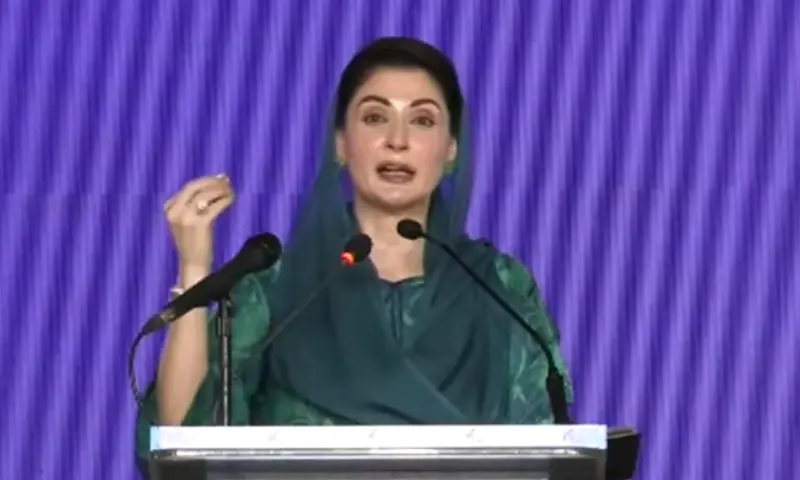
Punjab Chief Minister Maryam Nawaz stated on Tuesday that political rhetoric and allegations hold a limited shelf life, emphasizing that public service ultimately dictates electoral outcomes. Speaking at a laptop distribution and scholarship event in Jhelum, she argued that voters evaluate parties based on tangible performance rather than verbal claims, pointing to recent local government victories by the PML-N in Sahiwal and Gujranwala despite opposition alliances.
Addressing recent graft accusations directed at the provincial administration by Minister for Overseas Pakistanis Chaudhry Salik, the chief executive challenged critics within the cabinet to resign if they held genuine objections. She defended the transparency of trillions of rupees spent on provincial development over the past three years, noting that her administration actively pursues accountability and investigates corruption allegations daily.
Highlighting infrastructure and social initiatives, the chief minister pointed to the expansion of public transport, the establishment of Nawaz Sharif Schools of Eminence featuring modern laboratory facilities, and upcoming cardiac and cancer treatment centers across multiple districts. She stated that development spending has expanded beyond major urban centers to benefit smaller municipalities throughout the province.
The stakes
The political positioning directly impacts the internal stability of the ruling coalition in Punjab and sets the narrative tone ahead of future electoral contests. If the provincial administration successfully ties its survival to infrastructure delivery, opposition parties will face pressure to pivot from rhetoric to alternative policy platforms.
Two readings
- Supporters read the remarks as a resolute defense of clean governance, targeted development outside major cities, and an unyielding focus on public welfare.
- Critics view the statements as a defensive maneuver designed to deflect internal cabinet dissent and suppress legitimate allegations of corruption.
Source Dawn — dawn.com/news/2043500/political-narratives-and-allegations-have-a-l… ↗
Read next
 ✒️Opinion & Analysis
ICJ Rules Myanmar Military Committed Genocide Against Rohingya
The International Court of Justice has found Myanmar's military guilty of genocide against the Rohingya, a ruling that damages the international standing of both Aung San…
 🕯️Democracy & Rights
Chinese teachers face rising parental pressure over personal life choices
Chinese educators are encountering a surge in unreasonable demands from parents, including complaints regarding teachers' pregnancy and maternity leave.
 🛡️War & Security
Ukraine Restricts Media Coverage of Infrastructure Damage Amid Russian Strikes
President Volodymyr Zelenskyy has issued a decree prohibiting media outlets from reporting on the impact of Russian strikes against critical infrastructure and the status…
 🏮China & Taiwan
Beijing Reaffirms Reunification Stance Following Taiwan Local Election Results
China’s Taiwan Affairs Office declared that the island’s reunification with the mainland remains inevitable, despite recent shifts in Taiwan's local political landscape.
 🇪🇺Europe
US Air Force Repels Unauthorized Drone Incursion at RAF Lakenheath
U.S. security forces at a British air base successfully countered a group of unidentified drones, amid growing concerns over potential foreign state involvement.
 ⚖️Law & Policy
India Government Proposes 50% Increase in Parliamentary Seats and Women's Reservation
The Indian government plans to introduce legislation to expand the Lok Sabha to 850 seats and mandate a 33% reservation for women in legislative bodies.