Trump, Xi, and Putin to hold first trilateral summit in Shenzhen
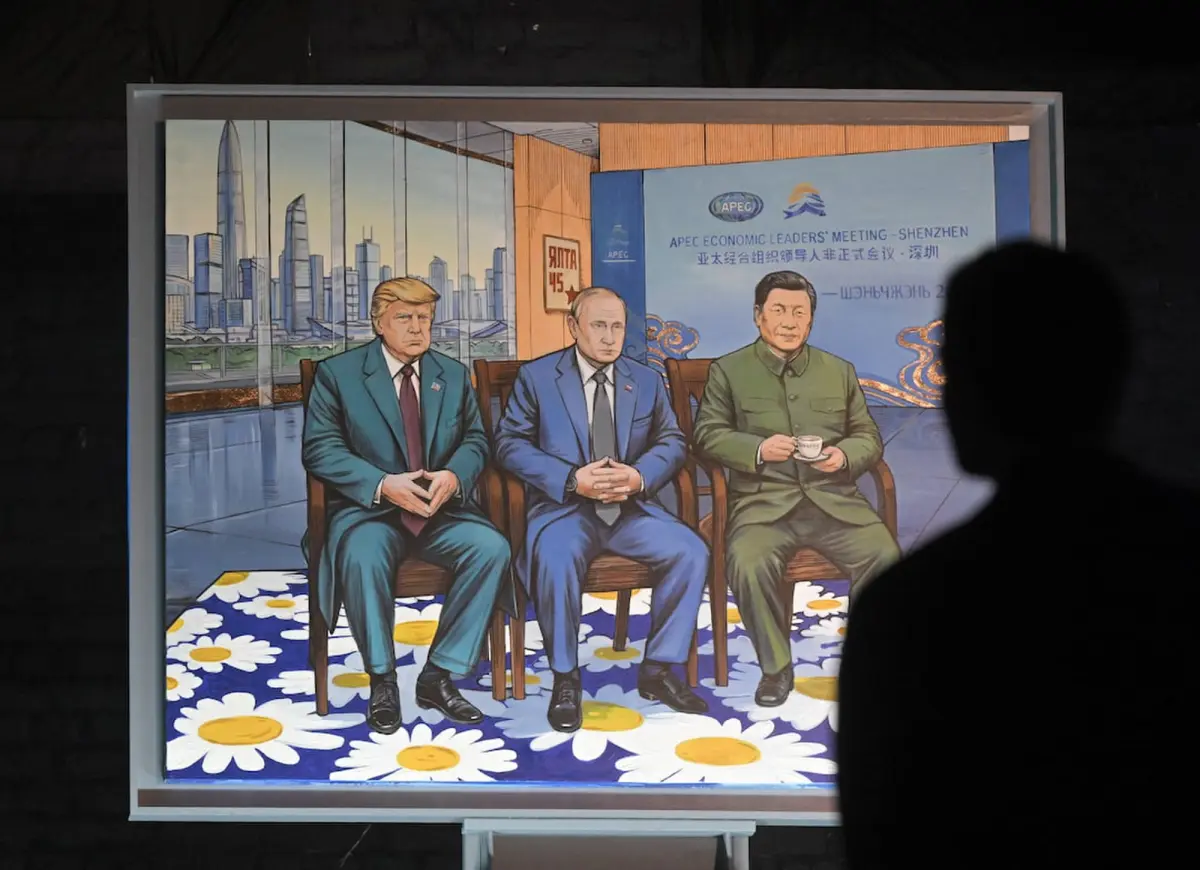
The White House announced that Donald Trump, Vladimir Putin, and Xi Jinping will hold a historic three-way meeting next week in China to discuss nuclear arsenals and the conflict in Iran.
 🏮China & Taiwan
Photo: Dawn
Key points
- First trilateral meeting between Trump, Xi, and Putin set for Shenzhen.
- Agenda includes nuclear arms reduction and Iran, but excludes Ukraine.
- Ukrainian leadership has raised concerns over potential spheres of influence.
The White House confirmed on Friday that United States President Donald Trump, Chinese President Xi Jinping, and Russian President Vladimir Putin will convene for a historic trilateral meeting in Shenzhen next week. According to administration officials, the leaders will meet on the sidelines of the Asia-Pacific Economic Cooperation summit on Thursday to address global nuclear arms reduction and the ongoing conflict in Iran.
White House spokeswoman Olivia Wales told reporters that the American leader considers global nuclear proliferation highly dangerous. While the talks will touch upon Middle Eastern security, anonymous US officials clarified that the war in Ukraine will be excluded from the agenda. Washington maintains a separate diplomatic track regarding Ukraine involving Kyiv and Moscow, which does not include Beijing.
The upcoming gathering has drawn comparisons to the 1945 Yalta summit where Allied leaders shaped the postwar order. Ukrainian President Volodymyr Zelensky has expressed concern that the Shenzhen talks could result in a modern redistribution of spheres of influence. Alongside the trilateral discussion, Trump is scheduled to hold a separate bilateral working lunch with Xi, though no one-on-one session with Putin is planned.
Administration officials also noted that recent controversies involving American technology executives and export controls on sensitive chip technology would remain off the table during the meetings. Tesla and SpaceX chief Elon Musk will accompany the US delegation to Asia but will not participate in the trilateral discussions.
The stakes
If this trilateral framework moves forward, the United States, Russia, and China could establish a new informal mechanism for managing global security, potentially sidelining traditional allies and international bodies. Proponents stand to gain a direct line of communication on major geopolitical flashpoints, while smaller nations and countries like Ukraine risk losing leverage if great powers negotiate regional outcomes behind closed doors.
Two readings
- Supporters read the story as a pragmatic and necessary return to high-level great power diplomacy capable of addressing critical nuclear proliferation risks and stabilizing international flashpoints.
- Critics read the story as a dangerous reversion to a 20th-century sphere-of-influence model that bypasses multilateral norms and undermines the sovereignty of smaller nations.
Source Dawn — dawn.com/news/2044481/trump-xi-putin-to-hold-historic-meeting-in-ch… ↗
Read next
 ✒️Opinion & Analysis
ICJ Rules Myanmar Military Committed Genocide Against Rohingya
The International Court of Justice has found Myanmar's military guilty of genocide against the Rohingya, a ruling that damages the international standing of both Aung San…
 🕯️Democracy & Rights
Chinese teachers face rising parental pressure over personal life choices
Chinese educators are encountering a surge in unreasonable demands from parents, including complaints regarding teachers' pregnancy and maternity leave.
 🛡️War & Security
Ukraine Restricts Media Coverage of Infrastructure Damage Amid Russian Strikes
President Volodymyr Zelenskyy has issued a decree prohibiting media outlets from reporting on the impact of Russian strikes against critical infrastructure and the status…
 🇪🇺Europe
US Air Force Repels Unauthorized Drone Incursion at RAF Lakenheath
U.S. security forces at a British air base successfully countered a group of unidentified drones, amid growing concerns over potential foreign state involvement.
 ⚖️Law & Policy
India Government Proposes 50% Increase in Parliamentary Seats and Women's Reservation
The Indian government plans to introduce legislation to expand the Lok Sabha to 850 seats and mandate a 33% reservation for women in legislative bodies.
 ⚖️Law & Policy
India’s ruling alliance nears two-thirds majority for sweeping parliamentary expansion and delimitation bills
The National Democratic Alliance is nearing a two-thirds majority in Parliament to pass landmark legislation expanding the Lok Sabha by 50 percent and implementing a 33 p…