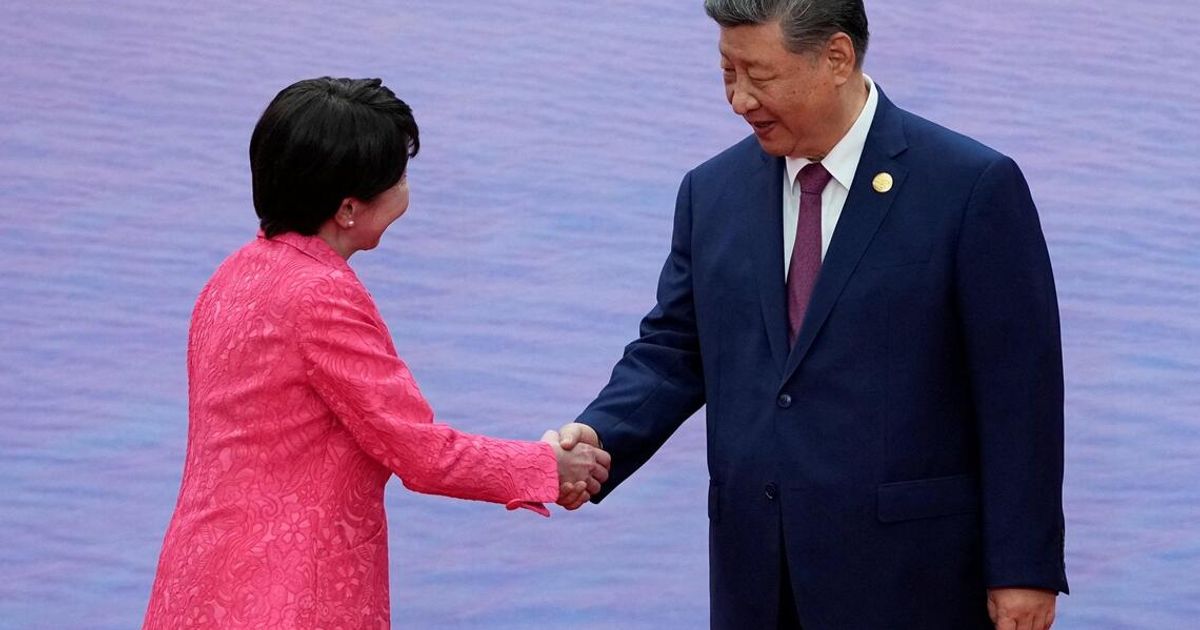
China's Xi and Japan's Takaichi exchange handshake amid frozen bilateral relations
Chinese President Xi Jinping and Japanese Prime Minister Sanae Takaichi shook hands during an APEC summit banquet in Shenzhen, marking their first official interaction since diplomatic ties plunged over Taiwan remarks.
 🏮China & Taiwan
Photo: Straits Times Asia
Key points
- Xi Jinping and Sanae Takaichi exchanged a handshake at an APEC banquet in Shenzhen.
- It marks the first high-level interaction since ties froze in late 2025 over Taiwan remarks.
- Bilateral relations remain strained by economic restrictions, defence disputes, and differing regional security stances.
Chinese President Xi Jinping and Japanese Prime Minister Sanae Takaichi exchanged a brief handshake and a few words on November 18 at a welcome banquet for the Asia-Pacific Economic Cooperation summit in Shenzhen. The interaction represents the initial formal contact between the two leaders following a severe diplomatic rift that began in late 2025 after Prime Minister Takaichi stated in parliament that a Chinese military action against Taiwan could threaten Japan's national survival.
While Japanese diplomatic officials had previously sought assurances that Tokyo's delegation would receive standard treatment during the summit, signs of lingering frost remained. Upon arriving in Shenzhen, Prime Minister Takaichi was greeted by a former foreign ministry official in a scaled-down ceremony compared to receptions granted to other regional counterparts. Japanese Foreign Ministry press secretary Toshihiro Kitamura later characterized the leaders' brief exchange as ordinary diplomatic protocol rather than a breakthrough.
Relations between Beijing and Tokyo have remained deeply strained over the past year, marked by minimal high-level communications, rare-earth export restrictions imposed by China on Japanese industries, and Chinese accusations of Japanese neo-militarism surrounding increased defence spending. Despite the tensions, Japanese authorities maintain that channels for dialogue remain available as both nations navigate their complex regional security landscape.
The stakes
Stability in East Asia and bilateral economic ties hang in the balance; if formal communication channels fully reopen, trade restrictions and supply chain pressures may ease, whereas a continued freeze risks military escalation over territorial security disputes.
Two readings
- Supporters read the handshake as a pragmatic opening for de-escalation and necessary regional diplomacy amid high geopolitical tensions.
- Critics read the encounter as a superficial gesture that masks unrelenting Chinese pressure and unresolved territorial friction.
Source Straits Times Asia — straitstimes.com/asia/east-asia/chinas-xi-shakes-hands-with-takaich… ↗
Read next
 ✒️Opinion & Analysis
ICJ Rules Myanmar Military Committed Genocide Against Rohingya
The International Court of Justice has found Myanmar's military guilty of genocide against the Rohingya, a ruling that damages the international standing of both Aung San…
 🕯️Democracy & Rights
Chinese teachers face rising parental pressure over personal life choices
Chinese educators are encountering a surge in unreasonable demands from parents, including complaints regarding teachers' pregnancy and maternity leave.
 🛡️War & Security
Ukraine Restricts Media Coverage of Infrastructure Damage Amid Russian Strikes
President Volodymyr Zelenskyy has issued a decree prohibiting media outlets from reporting on the impact of Russian strikes against critical infrastructure and the status…
 🇪🇺Europe
US Air Force Repels Unauthorized Drone Incursion at RAF Lakenheath
U.S. security forces at a British air base successfully countered a group of unidentified drones, amid growing concerns over potential foreign state involvement.
 ⚖️Law & Policy
India Government Proposes 50% Increase in Parliamentary Seats and Women's Reservation
The Indian government plans to introduce legislation to expand the Lok Sabha to 850 seats and mandate a 33% reservation for women in legislative bodies.
 ⚖️Law & Policy
India’s ruling alliance nears two-thirds majority for sweeping parliamentary expansion and delimitation bills
The National Democratic Alliance is nearing a two-thirds majority in Parliament to pass landmark legislation expanding the Lok Sabha by 50 percent and implementing a 33 p…