PLA Debates Decentralizing Command to Counter AI and Drone Warfare
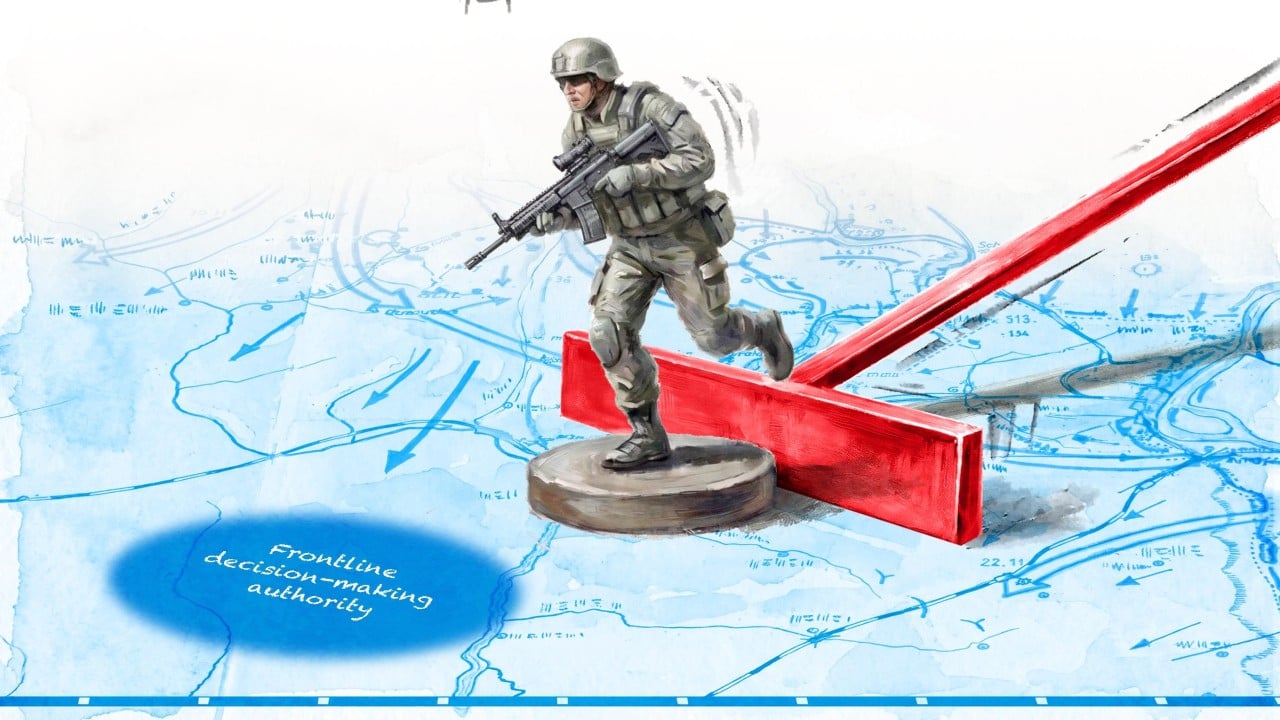
Chinese military commentators are advocating for increased tactical autonomy for frontline commanders to address the rapid pace of modern, AI-driven combat.
 🏮China & Taiwan
Photo: SCMP China
Key points
- PLA Daily advocates for decentralized tactical command.
- Lessons from the Ukraine war drive the push for flexibility.
- Integration of AI and drones necessitates faster battlefield decision-making.
Chinese military analysts are increasingly advocating for a shift in command structure, proposing that frontline officers be granted greater authority to make independent battlefield decisions. Recent commentaries published in the PLA Daily, the official newspaper of the People’s Liberation Army, suggest that the rapid evolution of drone technology and artificial intelligence requires a more flexible approach to tactical operations.
The push for reform stems from observations of the ongoing conflict in Ukraine, where the speed of engagement has rendered traditional, top-down decision-making processes increasingly obsolete. Military experts argue that waiting for orders from central command during high-intensity combat creates dangerous delays, potentially allowing adversaries to exploit gaps in response time. The proposed model seeks a balance between maintaining centralized control over strategic objectives while empowering field commanders to react instantly to localized threats.
This internal debate highlights a significant challenge for the PLA, which has historically relied on a rigid, hierarchical structure. By integrating AI-assisted intelligence with decentralized decision-making, Beijing aims to modernize its military doctrine to maintain parity with global technological advancements in warfare.
The stakes
If implemented, these reforms would represent a major shift in Chinese military culture, potentially increasing the PLA's agility on the battlefield. Success could grant China a tactical edge in regional conflicts, while failure to adapt could leave the military vulnerable to faster, more decentralized adversaries who leverage drone swarms and automated systems more effectively.
Two readings
- Supporters argue that decentralization is a necessary evolution to survive the high-speed, lethal environment of modern, AI-integrated warfare.
- Critics within the military establishment may fear that granting tactical autonomy could undermine the Communist Party's absolute control over the armed forces.
Source SCMP China — scmp.com/news/china/military/article/3375250/can-chinas-top-down-mi… ↗
Read next
 ✒️Opinion & Analysis
ICJ Rules Myanmar Military Committed Genocide Against Rohingya
The International Court of Justice has found Myanmar's military guilty of genocide against the Rohingya, a ruling that damages the international standing of both Aung San…
 🕯️Democracy & Rights
Chinese teachers face rising parental pressure over personal life choices
Chinese educators are encountering a surge in unreasonable demands from parents, including complaints regarding teachers' pregnancy and maternity leave.
 🛡️War & Security
Ukraine Restricts Media Coverage of Infrastructure Damage Amid Russian Strikes
President Volodymyr Zelenskyy has issued a decree prohibiting media outlets from reporting on the impact of Russian strikes against critical infrastructure and the status…
 🇪🇺Europe
US Air Force Repels Unauthorized Drone Incursion at RAF Lakenheath
U.S. security forces at a British air base successfully countered a group of unidentified drones, amid growing concerns over potential foreign state involvement.
 ⚖️Law & Policy
India Government Proposes 50% Increase in Parliamentary Seats and Women's Reservation
The Indian government plans to introduce legislation to expand the Lok Sabha to 850 seats and mandate a 33% reservation for women in legislative bodies.
 ⚖️Law & Policy
India’s ruling alliance nears two-thirds majority for sweeping parliamentary expansion and delimitation bills
The National Democratic Alliance is nearing a two-thirds majority in Parliament to pass landmark legislation expanding the Lok Sabha by 50 percent and implementing a 33 p…