Taiwan Prepares for 2026 Local Elections Shaping National Politics
Taiwanese voters will head to the polls on November 28, 2026, to elect over 11,000 local officials in a contest widely seen as a crucial midterm evaluation of President Lai Ching-te's administration.
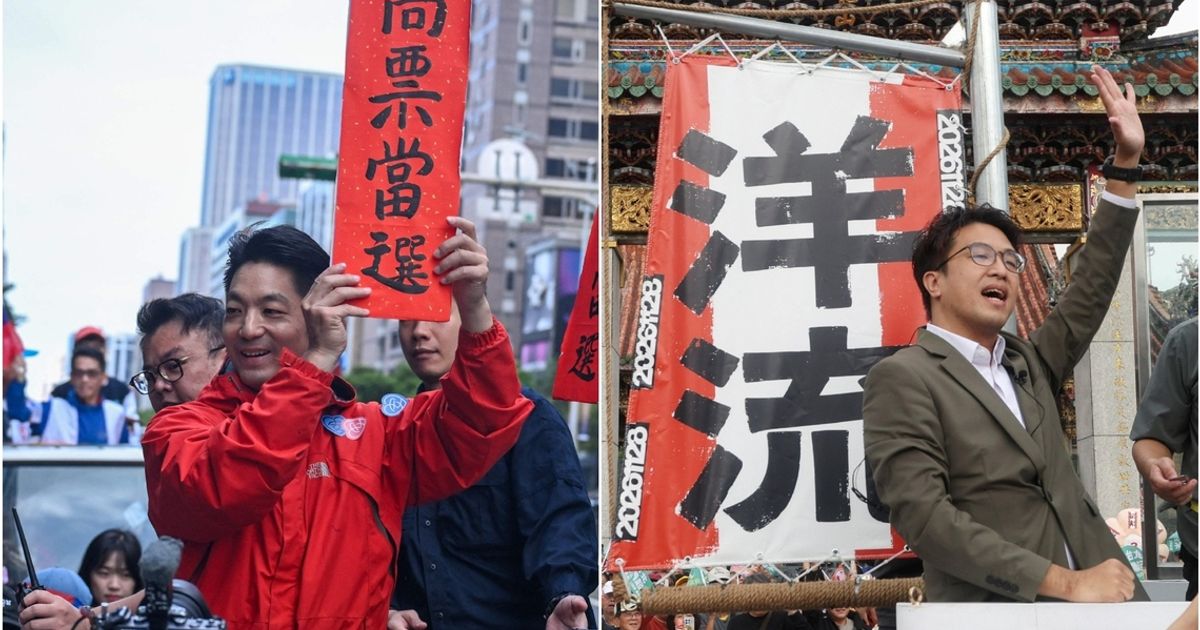 🏮China & Taiwan
Photo: Straits Times Asia
Key points
- Taiwan holds nine-in-one local elections on Nov 28, 2026
- Contest serves as a midterm evaluation for President Lai Ching-te
- Taipei and New Taipei mayoral races remain tightly contested toss-ups
Voters across Taiwan are gearing up for nine-in-one local elections scheduled for November 28, 2026, where they will cast ballots for eleven thousand and fifty-one public officials, including mayors, city councillors, and borough heads. While municipal concerns such as transport, food safety, and urban renewal dominate voter priorities, analysts note the contest will serve as a referendum on the ruling Democratic Progressive Party after a decade in power.
President Lai Ching-te is not personally on the ballot, but the outcome will function as a midterm gauge of his administration and help determine political momentum ahead of the 2028 presidential race. The opposition Kuomintang currently controls fifteen of the twenty-two local governments up for grabs, while the ruling DPP holds five, with independents holding the remainder.
Attention is heavily focused on the six special municipalities, particularly the traditional Kuomintang strongholds of Taipei and New Taipei, which analysts now view as closely contested toss-ups. Securing these northern urban centers would provide a major breakthrough for the DPP and challenge the long-standing geographical divide in Taiwanese voting patterns.
The stakes
The ruling DPP stands to gain a stronger foothold in northern urban centers and validate a decade of executive leadership, while a poor showing could weaken President Lai's administration. Conversely, the opposition Kuomintang risks losing its critical advantage in local governance, which could deepen internal party divisions and undermine its leadership's approach toward Beijing.
Two readings
- Supporters read the local elections as a vital democratic check on central authority and an opportunity for municipal renewal.
- Critics view the high-stakes races as a destabilizing proxy battle for the 2028 presidency that overshadows local governance.
Source Straits Times Asia — straitstimes.com/asia/east-asia/taiwans-2026-local-elections-could-… ↗
Read next
 ✒️Opinion & Analysis
ICJ Rules Myanmar Military Committed Genocide Against Rohingya
The International Court of Justice has found Myanmar's military guilty of genocide against the Rohingya, a ruling that damages the international standing of both Aung San…
 🕯️Democracy & Rights
Chinese teachers face rising parental pressure over personal life choices
Chinese educators are encountering a surge in unreasonable demands from parents, including complaints regarding teachers' pregnancy and maternity leave.
 🛡️War & Security
Ukraine Restricts Media Coverage of Infrastructure Damage Amid Russian Strikes
President Volodymyr Zelenskyy has issued a decree prohibiting media outlets from reporting on the impact of Russian strikes against critical infrastructure and the status…
 🇪🇺Europe
US Air Force Repels Unauthorized Drone Incursion at RAF Lakenheath
U.S. security forces at a British air base successfully countered a group of unidentified drones, amid growing concerns over potential foreign state involvement.
 ⚖️Law & Policy
India Government Proposes 50% Increase in Parliamentary Seats and Women's Reservation
The Indian government plans to introduce legislation to expand the Lok Sabha to 850 seats and mandate a 33% reservation for women in legislative bodies.
 ⚖️Law & Policy
India’s ruling alliance nears two-thirds majority for sweeping parliamentary expansion and delimitation bills
The National Democratic Alliance is nearing a two-thirds majority in Parliament to pass landmark legislation expanding the Lok Sabha by 50 percent and implementing a 33 p…