Taiwan Voters Cast Ballots in Local Elections Monitored Closely by Beijing
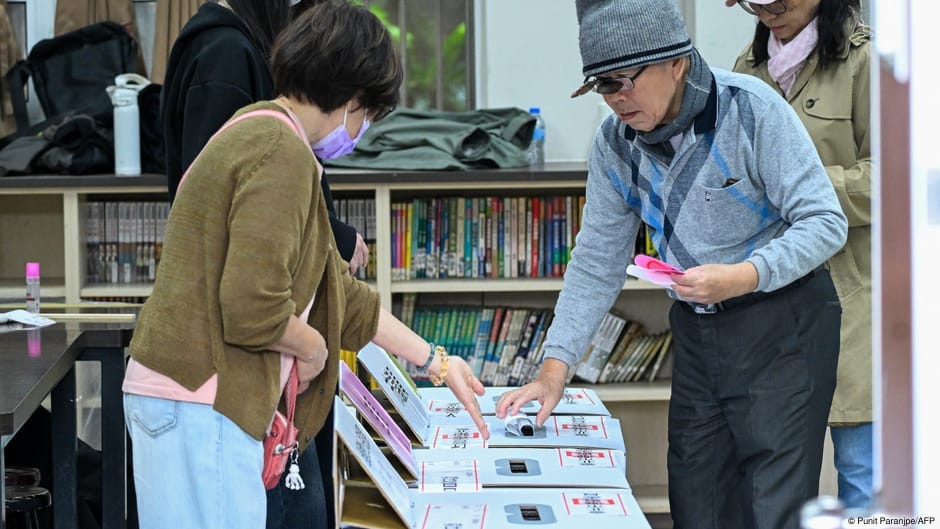
Voters across Taiwan have cast ballots in local elections that serve as a test of public sentiment between the ruling Democratic Progressive Party and the Kuomintang, drawing intense scrutiny from Beijing.
 🏮China & Taiwan
Photo: DW English
Key points
- Voters elected mayors and county chiefs across 22 Taiwanese cities and counties.
- The high-profile Taipei mayoral race pitted DPP candidate Puma Shen against KMT incumbent Chiang Wan-an.
- Beijing monitored the polls closely amid ongoing territorial claims and warnings over disinformation.
Polling stations closed across Taiwan on Saturday as voters finished choosing mayors and county chiefs for 22 cities and counties in contests that could influence national political trajectories ahead of the 2028 presidential race. The election pits candidates from President Lai Ching-te's ruling Democratic Progressive Party (DPP) against the opposition Nationalist Party, or Kuomintang (KMT), which traditionally favors warmer relations with Beijing. While municipal campaigns focused primarily on local concerns such as transportation, childcare, and environmental policy, the outcomes carry significant national and cross-strait implications.
Attention has concentrated heavily on the high-profile race for the mayor of Taipei, where DPP candidate Puma Shen faces incumbent Chiang Wan-an of the KMT. Mr. Shen, who entered the contest as an underdog despite drawing large crowds, is wanted by Chinese police for alleged separatist activities—allegations he has dismissed. If successful, he would become the capital's first progressive mayor in nearly three decades, a result political analysts suggest would be viewed unfavorably by Beijing.
China, which claims the self-governing island as its territory, has monitored the voting closely and warned the public against foreign disinformation campaigns. The KMT historically holds an advantage in local administration, having secured 14 of 22 municipal seats in the previous cycle compared to five for the DPP. Saturday's results are expected to help shape candidate selections for the 2028 presidential election, potentially influencing the political futures of figures like Mr. Chiang and opposition leaders.
The stakes
The governing DPP stands to gain momentum and validate its urban strategy if it captures key strongholds like Taipei, whereas a strong KMT showing would reinforce its local dominance and help position its leadership for the next presidential contest. For Beijing, the results will signal the efficacy of its political messaging and pressure campaigns against Taiwan's democratic institutions.
Two readings
- Supporters view the high turnout and competitive races as a vibrant triumph for Taiwanese democracy in the face of persistent external pressure and intimidation from Beijing.
- Critics and opposition strategists argue that local governance should remain focused on municipal delivery rather than becoming a referendum on cross-strait geopolitics.
Source DW English — dw.com/en/polls-close-in-taiwan-s-closely-watched-local-elections/a… ↗
Read next
 ✒️Opinion & Analysis
ICJ Rules Myanmar Military Committed Genocide Against Rohingya
The International Court of Justice has found Myanmar's military guilty of genocide against the Rohingya, a ruling that damages the international standing of both Aung San…
 🕯️Democracy & Rights
Chinese teachers face rising parental pressure over personal life choices
Chinese educators are encountering a surge in unreasonable demands from parents, including complaints regarding teachers' pregnancy and maternity leave.
 🛡️War & Security
Ukraine Restricts Media Coverage of Infrastructure Damage Amid Russian Strikes
President Volodymyr Zelenskyy has issued a decree prohibiting media outlets from reporting on the impact of Russian strikes against critical infrastructure and the status…
 🇪🇺Europe
US Air Force Repels Unauthorized Drone Incursion at RAF Lakenheath
U.S. security forces at a British air base successfully countered a group of unidentified drones, amid growing concerns over potential foreign state involvement.
 ⚖️Law & Policy
India Government Proposes 50% Increase in Parliamentary Seats and Women's Reservation
The Indian government plans to introduce legislation to expand the Lok Sabha to 850 seats and mandate a 33% reservation for women in legislative bodies.
 ⚖️Law & Policy
India’s ruling alliance nears two-thirds majority for sweeping parliamentary expansion and delimitation bills
The National Democratic Alliance is nearing a two-thirds majority in Parliament to pass landmark legislation expanding the Lok Sabha by 50 percent and implementing a 33 p…