China Accelerates Integration of DF-61 ICBM into Rocket Force Operations
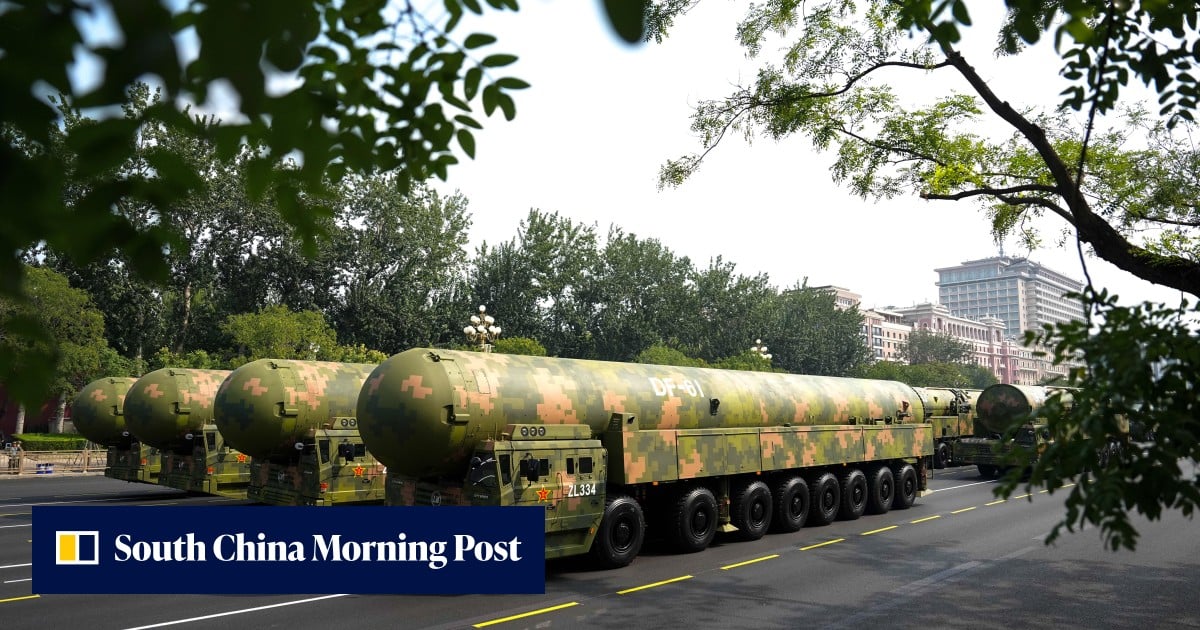
State media reports suggest the People's Liberation Army is deploying its newest intercontinental ballistic missile, the DF-61, into active service at an accelerated pace.
 🏮China & Taiwan
Photo: SCMP China
Key points
- DF-61 missile enters training faster than previous models
- PLA Rocket Force streamlining integration protocols
- Modernization effort signals shift in strategic military readiness
China’s latest land-based intercontinental ballistic missile, the DF-61, has transitioned into routine military training significantly faster than its predecessors, according to reports from state broadcaster CCTV. This rapid adoption suggests that the People’s Liberation Army (PLA) has streamlined its protocols for incorporating advanced strategic weaponry into its operational nuclear arsenal.
Shao Yongling, a former researcher with the PLA Rocket Force, noted that the progression of the DF-61 from its initial public unveiling to active training exercises indicates a shift in military readiness. The accelerated timeline reflects a broader push within the Chinese defense establishment to modernize its nuclear deterrent and ensure that new hardware can be utilized by frontline units with minimal delay.
The integration speed of the DF-61 serves as a key indicator of the PLA's evolving logistical and technical capabilities. By shortening the gap between development and deployment, the military aims to enhance the survivability and responsiveness of its strategic forces amidst shifting global security dynamics.
The stakes
The successful rapid deployment of the DF-61 strengthens China's nuclear deterrent posture, potentially altering the strategic calculus for regional and global rivals. While the PLA gains increased operational flexibility and modernization, the move risks heightening tensions with international powers concerned about the pace of China's nuclear expansion and the potential for an accelerated arms race.
Two readings
- Supporters view the rapid integration as a necessary modernization effort to maintain a credible, reliable, and technologically advanced nuclear deterrent against external threats.
- Critics argue that the accelerated deployment of advanced ICBMs signals an aggressive expansion of nuclear capabilities that undermines regional stability and complicates international disarmament efforts.
Source SCMP China — scmp.com/news/china/military/article/3373696/china-getting-faster-i… ↗
Read next
 ✒️Opinion & Analysis
ICJ Rules Myanmar Military Committed Genocide Against Rohingya
The International Court of Justice has found Myanmar's military guilty of genocide against the Rohingya, a ruling that damages the international standing of both Aung San…
 🕯️Democracy & Rights
Chinese teachers face rising parental pressure over personal life choices
Chinese educators are encountering a surge in unreasonable demands from parents, including complaints regarding teachers' pregnancy and maternity leave.
 🛡️War & Security
Ukraine Restricts Media Coverage of Infrastructure Damage Amid Russian Strikes
President Volodymyr Zelenskyy has issued a decree prohibiting media outlets from reporting on the impact of Russian strikes against critical infrastructure and the status…
 🇪🇺Europe
US Air Force Repels Unauthorized Drone Incursion at RAF Lakenheath
U.S. security forces at a British air base successfully countered a group of unidentified drones, amid growing concerns over potential foreign state involvement.
 ⚖️Law & Policy
India Government Proposes 50% Increase in Parliamentary Seats and Women's Reservation
The Indian government plans to introduce legislation to expand the Lok Sabha to 850 seats and mandate a 33% reservation for women in legislative bodies.
 ⚖️Law & Policy
India’s ruling alliance nears two-thirds majority for sweeping parliamentary expansion and delimitation bills
The National Democratic Alliance is nearing a two-thirds majority in Parliament to pass landmark legislation expanding the Lok Sabha by 50 percent and implementing a 33 p…