Russia Employs 'Energy Encirclement' Strategy Against Major Ukrainian Cities
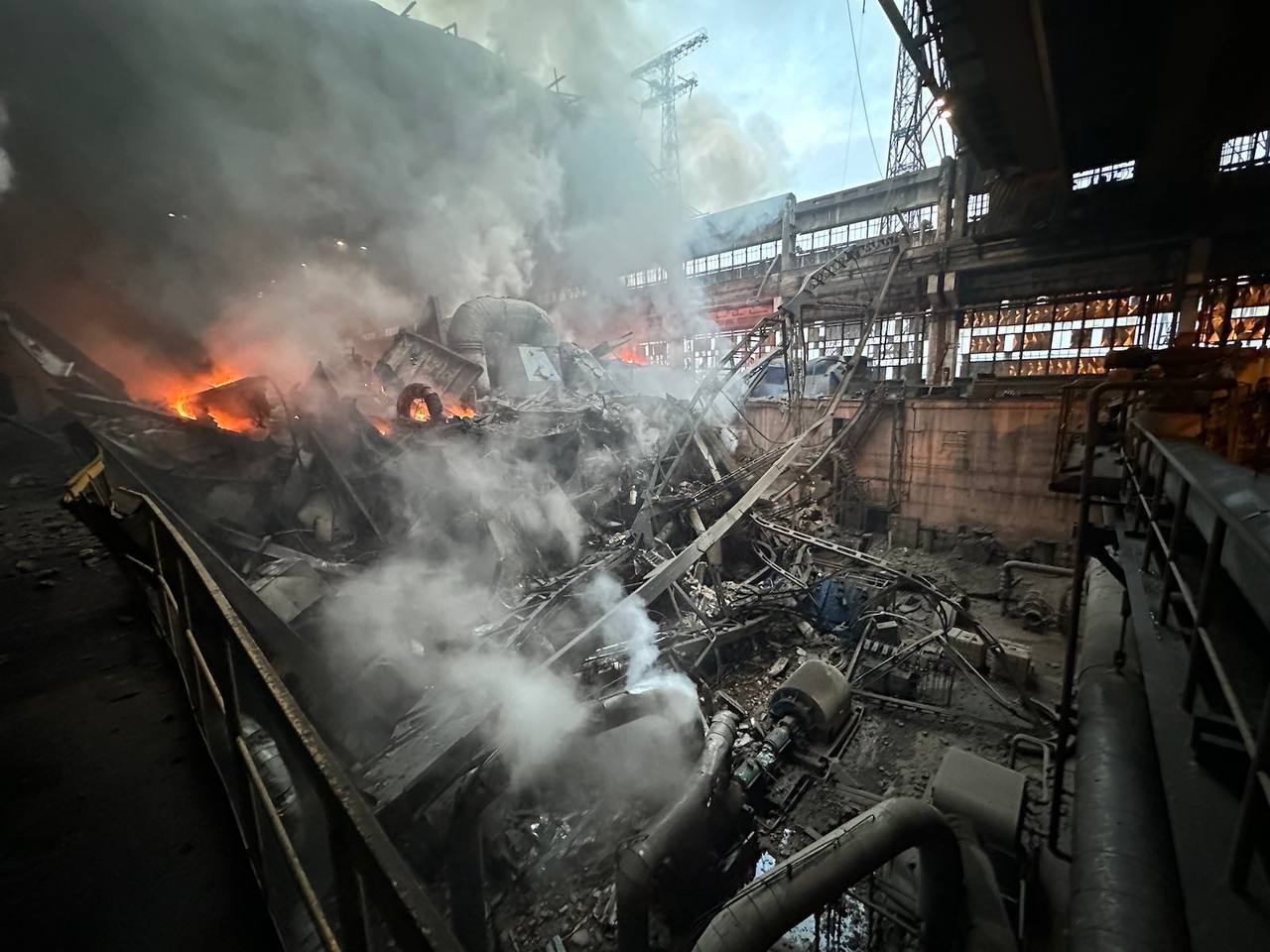
Russian forces are systematically targeting energy infrastructure in Ukrainian cities to isolate them from the national power grid, causing prolonged blackouts.
 🛡️War & Security
Photo: Euromaidan Press
Key points
- Russia is targeting substations to isolate cities from the national grid.
- Repair efforts are hindered by repeated strikes on energy workers.
- The strategy is currently being applied to Dnipro and Odesa following its use in Kyiv.
Russian military forces have shifted their strategy toward the systematic isolation of major Ukrainian cities from the national power grid, a tactic described by energy experts as "energy encirclement." According to Volodymyr Omelchenko of the Razumkov Center, the campaign involves a two-phase approach: first, destroying local power generation facilities, and second, striking the external substations that link these urban centers to the broader unified grid.
This methodology, previously deployed against Kyiv, is currently being applied to Dnipro and Odesa. In Kyiv, repeated strikes on thermal and combined heat and power plants, including CHP-5 and CHP-6, have severely diminished the capital's internal generation capacity. Recent attacks in Dnipropetrovsk Oblast, including a major strike on 4 November, left hundreds of thousands of customers without electricity, with some regions experiencing outages lasting several days.
The recovery process is further hindered by deliberate targeting of repair crews. Energy workers are frequently forced to abandon restoration efforts to seek shelter from ongoing drone attacks, significantly delaying the return of power to affected areas. This strategy aims to create long-term regional instability by ensuring that infrastructure remains in a state of perpetual disrepair.
The stakes
The success of this strategy threatens the long-term viability of major Ukrainian urban centers, potentially forcing mass displacement and crippling local economies. If Russia continues to successfully isolate cities from the national grid, the Ukrainian government faces an escalating humanitarian crisis and an increasing reliance on limited emergency generation, while Russia secures a strategic advantage by degrading the country's domestic resilience.
Two readings
- Supporters of the strategy view these strikes as a necessary military objective to degrade the logistical and industrial capabilities that support the Ukrainian war effort.
- Critics and human rights observers characterize the campaign as a deliberate attempt to inflict suffering on the civilian population by targeting critical infrastructure during the winter months.
Source Euromaidan Press — euromaidanpress.com/2026/11/29/why-do-ukrainian-cities-now-sit-in-the-d… ↗
Read next
 ✒️Opinion & Analysis
ICJ Rules Myanmar Military Committed Genocide Against Rohingya
The International Court of Justice has found Myanmar's military guilty of genocide against the Rohingya, a ruling that damages the international standing of both Aung San…
 🕯️Democracy & Rights
Chinese teachers face rising parental pressure over personal life choices
Chinese educators are encountering a surge in unreasonable demands from parents, including complaints regarding teachers' pregnancy and maternity leave.
 🏮China & Taiwan
Beijing Reaffirms Reunification Stance Following Taiwan Local Election Results
China’s Taiwan Affairs Office declared that the island’s reunification with the mainland remains inevitable, despite recent shifts in Taiwan's local political landscape.
 🇪🇺Europe
US Air Force Repels Unauthorized Drone Incursion at RAF Lakenheath
U.S. security forces at a British air base successfully countered a group of unidentified drones, amid growing concerns over potential foreign state involvement.
 ⚖️Law & Policy
India Government Proposes 50% Increase in Parliamentary Seats and Women's Reservation
The Indian government plans to introduce legislation to expand the Lok Sabha to 850 seats and mandate a 33% reservation for women in legislative bodies.
 ⚖️Law & Policy
India’s ruling alliance nears two-thirds majority for sweeping parliamentary expansion and delimitation bills
The National Democratic Alliance is nearing a two-thirds majority in Parliament to pass landmark legislation expanding the Lok Sabha by 50 percent and implementing a 33 p…