Scholars examine ideology and administrative failures behind campus protests
A new collection of academic testimony edits firsthand accounts analyzing the political ideology, campus administration failures, and student experiences surrounding post-October 7 university protests.
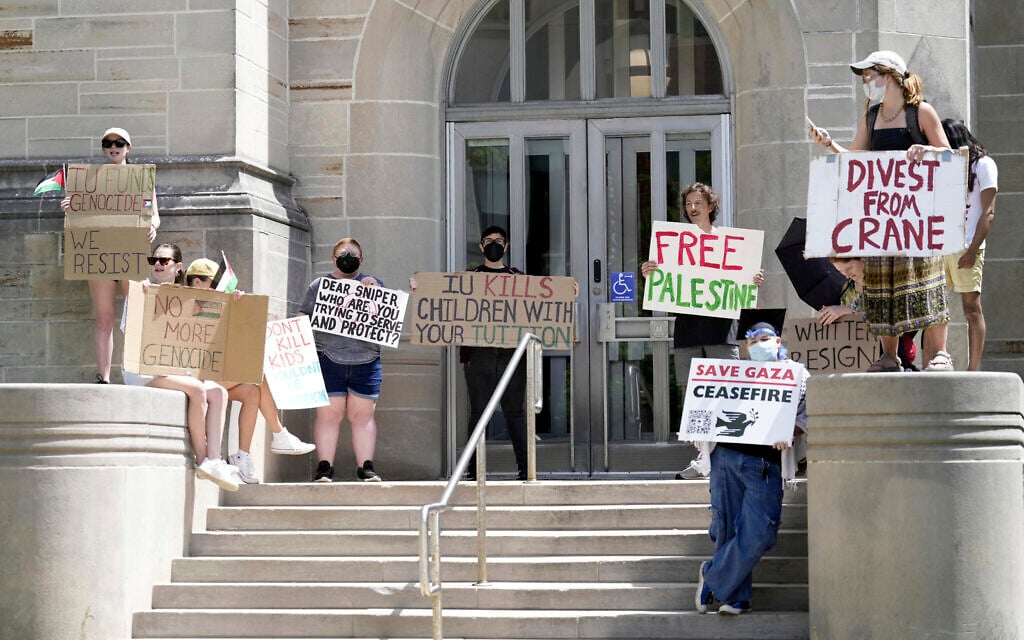 🕯️Democracy & Rights
Photo: Times of Israel
Key points
- New book 'Toward the Last Encampment' collects academic testimony on campus protests.
- The volume examines administrative failures and ideology behind post-October 7 demonstrations.
- Essays highlight the resilience of Jewish students and challenges to campus free speech.
Academic researchers and university administrators are confronting the underlying ideologies and institutional responses driving campus protests in the wake of the October 7 attacks, according to a newly published collection of firsthand accounts edited by Alvin Rosenfeld titled Toward the Last Encampment. The volume compiles essays from scholars examining how student activism materialized across higher education institutions, the nature of the political discourse surrounding the demonstrations, and the specific challenges faced by Jewish students on campus.
The publication documents the widespread emergence of pop-up tent encampments across academic grounds, highlighting what contributors identify as systemic administrative shortcomings in managing the demonstrations. Through personal testimonies and institutional analysis, the book explores how debates over Middle Eastern foreign policy rapidly transformed into broader campus conflicts involving free expression, university codes of conduct, and student safety.
Contributors argue that the demonstrations extended beyond traditional political protest, reflecting deeply entrenched ideological frameworks that reshaped university environments. The collection emphasizes the resilience demonstrated by Jewish student populations amidst rising campus tensions, while detailing the difficulties university leaders encountered in balancing institutional neutrality with the protection of civil discourse.
The stakes
The academic examination of campus protests directly influences how universities revise speech policies, discipline frameworks, and security measures. If these institutional assessments gain traction, higher education administrators may adopt stricter enforcement guidelines regarding encampments, altering the landscape of student political expression and campus safety protocols nationwide.
Two readings
- Supporters view the scholarly compilation as a vital historical record exposing institutional weakness and addressing rising hostility on campus.
- Critics contend that such analyses risk oversimplifying complex student-led political movements and may be used to justify restrictions on academic freedom and peaceful assembly.
Source Times of Israel — timesofisrael.com/were-not-in-a-fight-about-facts-scholars-analyze-… ↗
Read next
 ✒️Opinion & Analysis
ICJ Rules Myanmar Military Committed Genocide Against Rohingya
The International Court of Justice has found Myanmar's military guilty of genocide against the Rohingya, a ruling that damages the international standing of both Aung San…
 🛡️War & Security
Ukraine Restricts Media Coverage of Infrastructure Damage Amid Russian Strikes
President Volodymyr Zelenskyy has issued a decree prohibiting media outlets from reporting on the impact of Russian strikes against critical infrastructure and the status…
 🏮China & Taiwan
Beijing Reaffirms Reunification Stance Following Taiwan Local Election Results
China’s Taiwan Affairs Office declared that the island’s reunification with the mainland remains inevitable, despite recent shifts in Taiwan's local political landscape.
 🇪🇺Europe
US Air Force Repels Unauthorized Drone Incursion at RAF Lakenheath
U.S. security forces at a British air base successfully countered a group of unidentified drones, amid growing concerns over potential foreign state involvement.
 ⚖️Law & Policy
India Government Proposes 50% Increase in Parliamentary Seats and Women's Reservation
The Indian government plans to introduce legislation to expand the Lok Sabha to 850 seats and mandate a 33% reservation for women in legislative bodies.
 ⚖️Law & Policy
India’s ruling alliance nears two-thirds majority for sweeping parliamentary expansion and delimitation bills
The National Democratic Alliance is nearing a two-thirds majority in Parliament to pass landmark legislation expanding the Lok Sabha by 50 percent and implementing a 33 p…