Pakistani Farmers Sue German Firms Over Climate-Linked Flood Damages
A group of Pakistani farmers is suing two major German industrial firms, seeking compensation for catastrophic 2022 floods they attribute to global emissions.
 🕯️Democracy & Rights
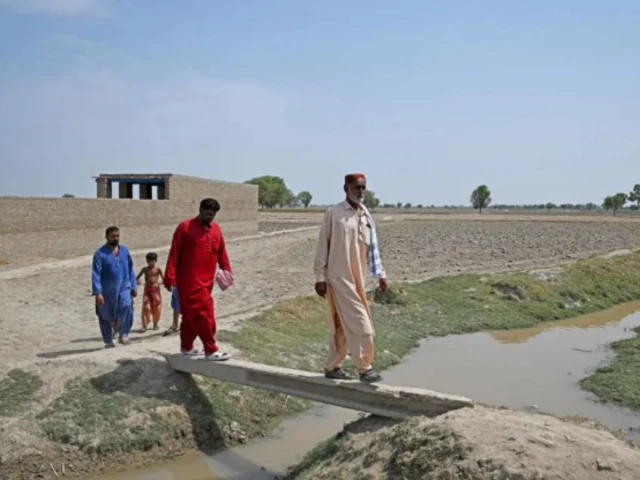
Photo: Tribune Pakistan
Key points
- Pakistani farmers are suing RWE and Heidelberg Materials for climate-related damages.
- The lawsuit claims corporate emissions exacerbated the 2022 floods in Pakistan.
- Defendants argue the claims are unfounded and that climate policy should not be handled in civil courts.
A group of 39 farmers from Pakistan’s Sindh province has initiated legal action against German energy giant RWE and cement manufacturer Heidelberg Materials. The plaintiffs, who suffered severe losses during the 2022 floods that submerged one-third of Pakistan, argue that the companies’ historical greenhouse gas emissions significantly contributed to the climate-driven intensity of the disaster.
The lawsuit, filed in Germany, represents a growing trend of climate litigation aimed at holding private corporations accountable for environmental impacts. While the defendants, RWE and Heidelberg Materials, have dismissed the claims as unfounded, the legal team representing the farmers contends that these corporations were aware of climate risks for decades yet failed to implement sufficient mitigation strategies.
For the affected villagers, the litigation is a pursuit of financial restitution for lost livestock, destroyed crops, and ruined homes. Many of the litigants remain in debt following the 2022 floods, which left approximately 1,700 people dead and impacted 30 million residents across the country. The case relies on the argument that global emissions do not respect national borders and that major polluters should bear responsibility for the resulting damage in vulnerable nations.
The stakes
If the court rules in favor of the farmers, it would establish a landmark legal precedent, potentially opening the door for widespread civil liability for corporations regarding climate change impacts. A victory could force major emitters to pay compensation to communities in the Global South, fundamentally altering the financial risk profile for heavy industry, while a defeat would likely reinforce the current legal barriers that protect companies from retroactive liability for emissions.
Two readings
- Supporters view the case as a vital step toward climate justice, arguing that those who profit from high-emission activities must be held accountable for the destruction they cause in climate-vulnerable regions.
- Critics and the defendant firms argue that civil courts are not the appropriate venue for setting climate policy and that holding companies retroactively liable for legally permitted emissions contradicts established regulatory frameworks.
Source Tribune Pakistan — tribune.com.pk/story/2639430/pakistan-farmers-in-long-fight-to-make-ger… ↗
Read next
 ✒️Opinion & Analysis
ICJ Rules Myanmar Military Committed Genocide Against Rohingya
The International Court of Justice has found Myanmar's military guilty of genocide against the Rohingya, a ruling that damages the international standing of both Aung San…
 🛡️War & Security
Ukraine Restricts Media Coverage of Infrastructure Damage Amid Russian Strikes
President Volodymyr Zelenskyy has issued a decree prohibiting media outlets from reporting on the impact of Russian strikes against critical infrastructure and the status…
 🏮China & Taiwan
Beijing Reaffirms Reunification Stance Following Taiwan Local Election Results
China’s Taiwan Affairs Office declared that the island’s reunification with the mainland remains inevitable, despite recent shifts in Taiwan's local political landscape.
 🇪🇺Europe
US Air Force Repels Unauthorized Drone Incursion at RAF Lakenheath
U.S. security forces at a British air base successfully countered a group of unidentified drones, amid growing concerns over potential foreign state involvement.
 ⚖️Law & Policy
India Government Proposes 50% Increase in Parliamentary Seats and Women's Reservation
The Indian government plans to introduce legislation to expand the Lok Sabha to 850 seats and mandate a 33% reservation for women in legislative bodies.
 ⚖️Law & Policy
India’s ruling alliance nears two-thirds majority for sweeping parliamentary expansion and delimitation bills
The National Democratic Alliance is nearing a two-thirds majority in Parliament to pass landmark legislation expanding the Lok Sabha by 50 percent and implementing a 33 p…