South Korean Educators Partner With U.S. College to Strengthen Democratic Civic Engagement
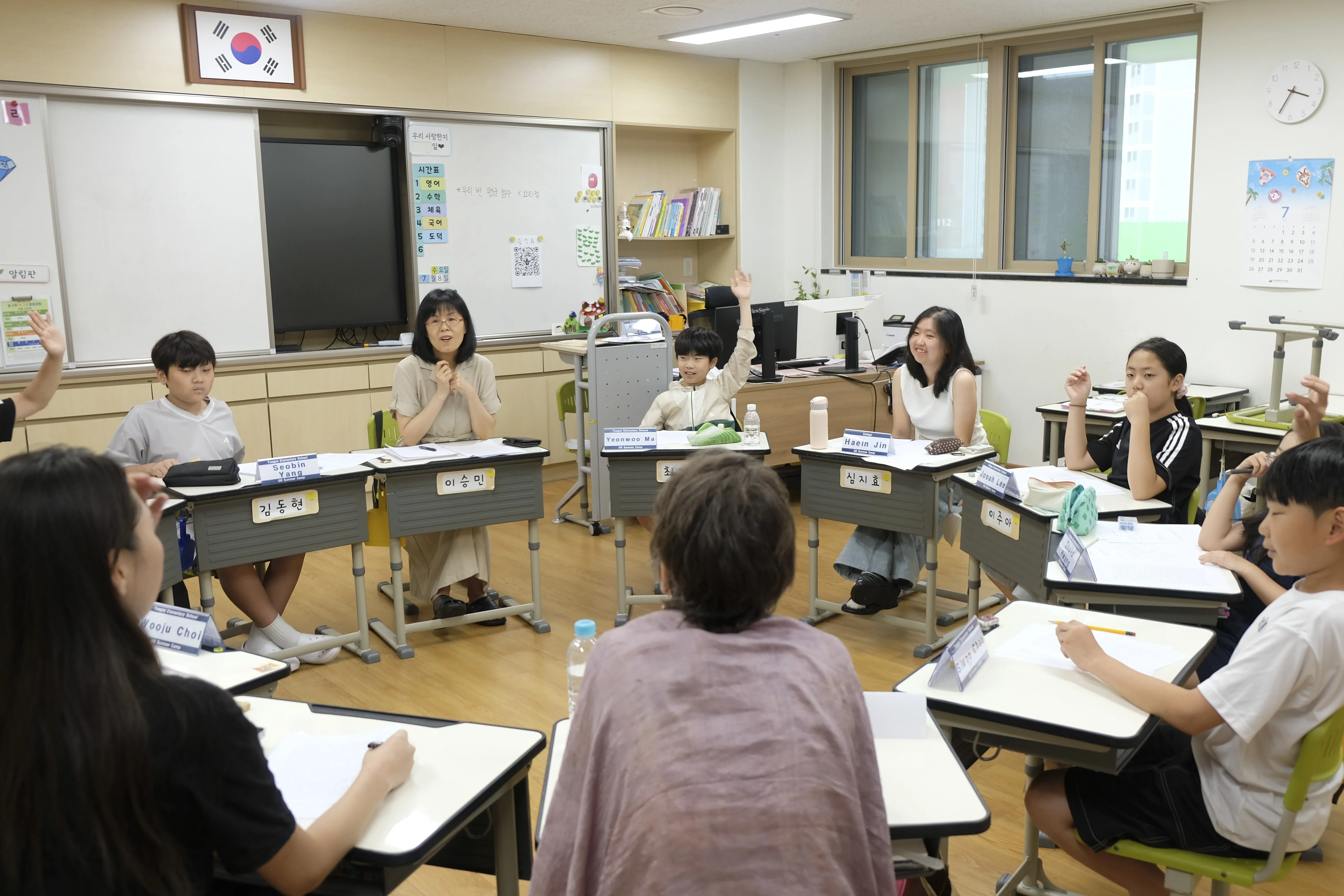
Educators in South Korea are collaborating with a U.S. institution to integrate liberal arts and civic participation into their curriculum to bolster democratic resilience.
 🕯️Democracy & Rights
Photo: NPR World
Key points
- South Korean educators seek to bolster democracy through liberal arts partnerships.
- The project emphasizes civic participation to prevent democratic erosion.
- The initiative focuses on long-term societal resilience rather than immediate policy shifts.
South Korean educators are initiating a partnership with a United States college, aiming to utilize liberal arts education and civic engagement as tools to fortify the nation's democratic foundations. The initiative seeks to address concerns regarding the erosion of democratic values by fostering a more informed and participatory citizenry through academic collaboration.
By emphasizing critical thinking and social involvement, proponents of the program hope to revitalize the civic fabric of the country. This effort is framed as a proactive measure to ensure that democratic institutions remain robust in the face of modern political challenges and societal polarization.
The collaboration highlights a growing interest in cross-cultural educational exchanges as a means to address domestic political instability. By adopting pedagogical strategies rooted in liberal education, the organizers intend to cultivate a generation capable of navigating complex political landscapes with a focus on collective democratic health.
The stakes
If successful, this initiative could provide a blueprint for other nations seeking to use education as a hedge against democratic backsliding. The primary beneficiaries are the students and the broader South Korean public, who may gain improved tools for political discourse; however, the long-term impact remains contingent on how effectively these foreign academic models can be integrated into the existing local political culture.
Two readings
- Supporters view the partnership as a vital investment in civic literacy that will empower citizens to defend democratic institutions against internal and external pressures.
- Critics may argue that importing foreign educational frameworks risks overlooking unique local historical contexts and could be perceived as an ineffective solution to deep-seated political divisions.
Source NPR World — npr.org/2026/11/09/g-s1-151519/why-a-south-korean-city-is-turning-t… ↗
Read next
 ✒️Opinion & Analysis
ICJ Rules Myanmar Military Committed Genocide Against Rohingya
The International Court of Justice has found Myanmar's military guilty of genocide against the Rohingya, a ruling that damages the international standing of both Aung San…
 🛡️War & Security
Ukraine Restricts Media Coverage of Infrastructure Damage Amid Russian Strikes
President Volodymyr Zelenskyy has issued a decree prohibiting media outlets from reporting on the impact of Russian strikes against critical infrastructure and the status…
 🏮China & Taiwan
Beijing Reaffirms Reunification Stance Following Taiwan Local Election Results
China’s Taiwan Affairs Office declared that the island’s reunification with the mainland remains inevitable, despite recent shifts in Taiwan's local political landscape.
 🇪🇺Europe
US Air Force Repels Unauthorized Drone Incursion at RAF Lakenheath
U.S. security forces at a British air base successfully countered a group of unidentified drones, amid growing concerns over potential foreign state involvement.
 ⚖️Law & Policy
India Government Proposes 50% Increase in Parliamentary Seats and Women's Reservation
The Indian government plans to introduce legislation to expand the Lok Sabha to 850 seats and mandate a 33% reservation for women in legislative bodies.
 ⚖️Law & Policy
India’s ruling alliance nears two-thirds majority for sweeping parliamentary expansion and delimitation bills
The National Democratic Alliance is nearing a two-thirds majority in Parliament to pass landmark legislation expanding the Lok Sabha by 50 percent and implementing a 33 p…