Study of Ancient Peru Reveals Societal Resilience During Climate Crises
A new analysis of over 1,500 ancient Peruvian skeletons indicates that societies maintained social order despite severe environmental disasters.
 🕯️Democracy & Rights
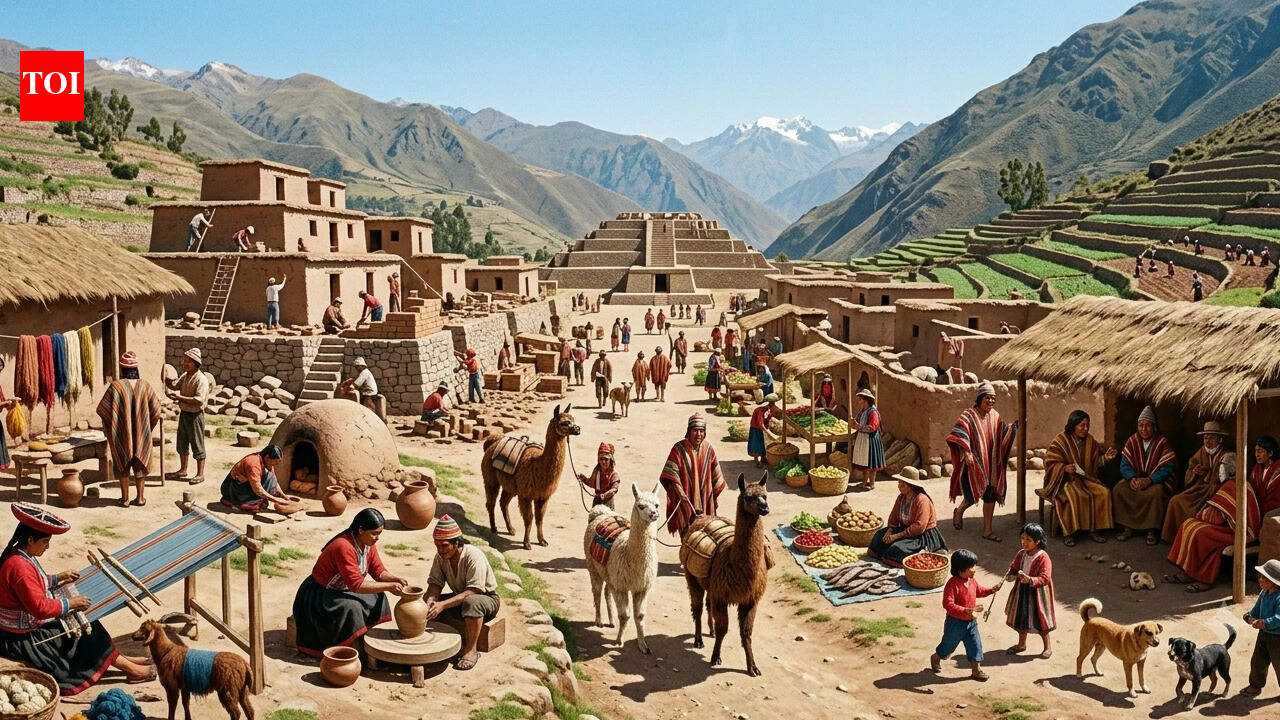
Photo: Times of India
Key points
- Analysis of 1,500 skeletons shows low levels of everyday violence during climate disasters.
- Mass human sacrifices occurred independently of civil social behavior.
- Ancient Peruvian societies demonstrated adaptive strategies to manage ecological crises.
A comprehensive examination of more than 1,500 skeletal remains from ancient Peru suggests that historical populations managed to avoid widespread internal violence even when faced with extreme climate events, such as the flooding caused by El Niño. Researchers focused on how these communities navigated resource scarcity and environmental instability, finding that daily life remained largely peaceful despite the significant pressure placed on food supplies.
The study highlights a distinct separation between systemic ritual practices and interpersonal conflict. While evidence of mass human sacrifices was identified, these events did not correlate with an increase in routine societal violence. This indicates that ancient Peruvian governance and social structures may have utilized ritualized responses to manage crises rather than descending into chaotic civil unrest.
These findings offer a new perspective on how early civilizations prioritized social cohesion during periods of ecological stress. By separating ceremonial actions from the broader social fabric, these societies demonstrated a capacity for creative adaptation that preserved order even under intense environmental duress.
The stakes
The findings challenge the assumption that climate-induced resource scarcity inevitably leads to societal collapse or widespread violence. If these historical models hold, it suggests that institutional responses and cultural frameworks are more critical in maintaining stability than the environmental conditions themselves, potentially shifting how modern policymakers view the link between climate change and civil security.
Two readings
- Supporters view the data as evidence that human societies possess an inherent capacity for resilience and organized crisis management in the face of extreme environmental disruption.
- Critics argue that applying ancient archaeological patterns to modern geopolitical contexts is speculative and fails to account for the complexities of contemporary globalized economies and political systems.
Source Times of India — timesofindia.indiatimes.com/science/earth/scientists-studied-over-1500-… ↗
Read next
 ✒️Opinion & Analysis
ICJ Rules Myanmar Military Committed Genocide Against Rohingya
The International Court of Justice has found Myanmar's military guilty of genocide against the Rohingya, a ruling that damages the international standing of both Aung San…
 🛡️War & Security
Ukraine Restricts Media Coverage of Infrastructure Damage Amid Russian Strikes
President Volodymyr Zelenskyy has issued a decree prohibiting media outlets from reporting on the impact of Russian strikes against critical infrastructure and the status…
 🏮China & Taiwan
Beijing Reaffirms Reunification Stance Following Taiwan Local Election Results
China’s Taiwan Affairs Office declared that the island’s reunification with the mainland remains inevitable, despite recent shifts in Taiwan's local political landscape.
 🇪🇺Europe
US Air Force Repels Unauthorized Drone Incursion at RAF Lakenheath
U.S. security forces at a British air base successfully countered a group of unidentified drones, amid growing concerns over potential foreign state involvement.
 ⚖️Law & Policy
India Government Proposes 50% Increase in Parliamentary Seats and Women's Reservation
The Indian government plans to introduce legislation to expand the Lok Sabha to 850 seats and mandate a 33% reservation for women in legislative bodies.
 ⚖️Law & Policy
India’s ruling alliance nears two-thirds majority for sweeping parliamentary expansion and delimitation bills
The National Democratic Alliance is nearing a two-thirds majority in Parliament to pass landmark legislation expanding the Lok Sabha by 50 percent and implementing a 33 p…