China Bars Bloomberg Reporter From Summit After Question to Trump
Chinese officials blocked a Bloomberg TV journalist from attending a trilateral meeting in Shenzhen after she called out an unscripted question during a prior bilateral event.
 🕯️Democracy & Rights
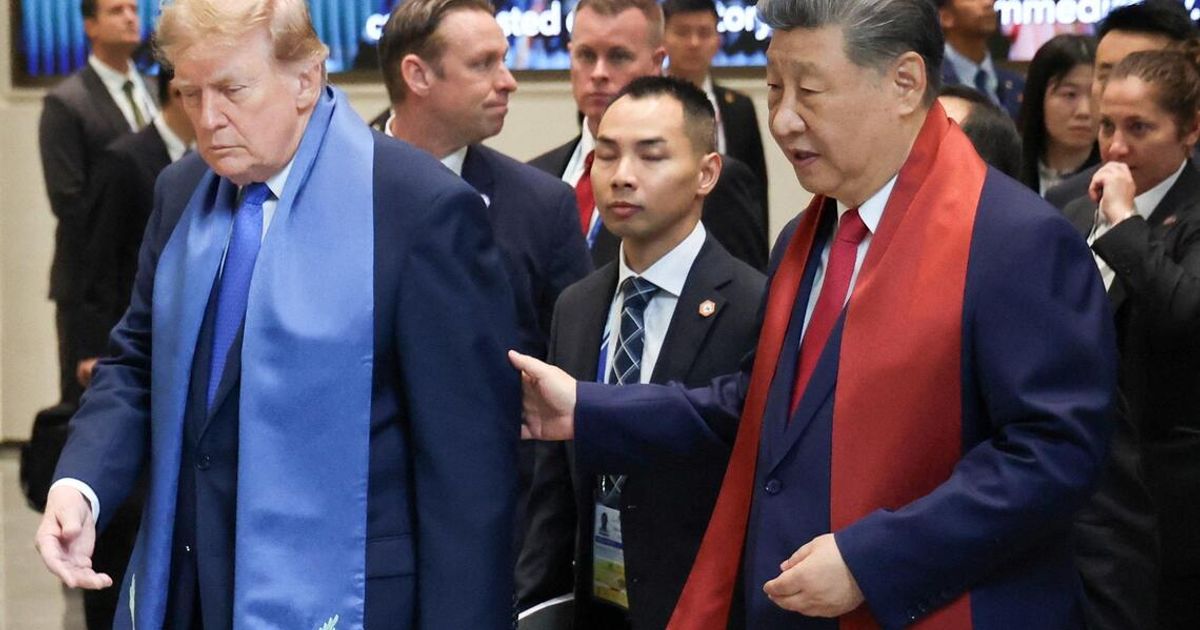
Photo: Straits Times Asia
Key points
- Chinese authorities excluded Bloomberg reporter Annmarie Hordern from a Shenzhen summit after she shouted a question to Donald Trump.
- U.S. officials advocated for press access, but Chinese organizers insisted on barring the journalist for violating local decorum rules.
- The incident highlights broader differences between Western press practices and Beijing's tight control over political media coverage.
Chinese officials barred Bloomberg TV reporter Annmarie Hordern from a trilateral meeting involving President Donald Trump, Chinese leader Xi Jinping, and Russian President Vladimir Putin in Shenzhen on November 19, according to a White House official.
The decision followed an earlier event where Hordern called out a question to Trump regarding former Nvidia chief executive Jensen Huang during his bilateral talks with Xi. Chinese authorities notified the press pool that shouting questions is considered deeply offensive and grounds for exclusion, subsequently denying Hordern access despite advocacy from American officials. Jacqui Heinrich, president of the White House Correspondents’ Association, publicly commended the administration for attempting to secure reporter access.
The exclusion underscores Beijing's strict management of media access at high-level diplomatic summits. A similar altercation occurred during a 2022 summit in Bali, where a pool reporter questioning President Joe Biden on human rights was physically pulled away by security staff before U.S. aides intervened. Neither China’s Foreign Ministry nor Bloomberg News issued formal comments regarding the Shenzhen incident.
The stakes
The episode highlights ongoing friction over diplomatic press protocols between Western media standards and Beijing's tightly controlled political environment. For foreign correspondents, tighter access restrictions risk limiting independent oversight of international summits, while host governments retain control over domestic coverage and official messaging.
Two readings
- Supporters of the host rules argue that strict decorum maintains professional diplomatic proceedings and prevents disruptive behavior during sensitive international summits.
- Media freedom advocates contend that barring reporters for asking unscripted questions undermines press access and enables authoritarian control over public information.
Source Straits Times Asia — straitstimes.com/asia/east-asia/china-bars-bloomberg-reporter-from-… ↗
Read next
 ✒️Opinion & Analysis
ICJ Rules Myanmar Military Committed Genocide Against Rohingya
The International Court of Justice has found Myanmar's military guilty of genocide against the Rohingya, a ruling that damages the international standing of both Aung San…
 🛡️War & Security
Ukraine Restricts Media Coverage of Infrastructure Damage Amid Russian Strikes
President Volodymyr Zelenskyy has issued a decree prohibiting media outlets from reporting on the impact of Russian strikes against critical infrastructure and the status…
 🏮China & Taiwan
Beijing Reaffirms Reunification Stance Following Taiwan Local Election Results
China’s Taiwan Affairs Office declared that the island’s reunification with the mainland remains inevitable, despite recent shifts in Taiwan's local political landscape.
 🇪🇺Europe
US Air Force Repels Unauthorized Drone Incursion at RAF Lakenheath
U.S. security forces at a British air base successfully countered a group of unidentified drones, amid growing concerns over potential foreign state involvement.
 ⚖️Law & Policy
India Government Proposes 50% Increase in Parliamentary Seats and Women's Reservation
The Indian government plans to introduce legislation to expand the Lok Sabha to 850 seats and mandate a 33% reservation for women in legislative bodies.
 ⚖️Law & Policy
India’s ruling alliance nears two-thirds majority for sweeping parliamentary expansion and delimitation bills
The National Democratic Alliance is nearing a two-thirds majority in Parliament to pass landmark legislation expanding the Lok Sabha by 50 percent and implementing a 33 p…