United Nations Report Reveals Five Women Killed Every Hour by Family
A new United Nations report shows that approximately 47,000 women and girls were killed by intimate partners or family members globally in 2025.
 🕯️Democracy & Rights
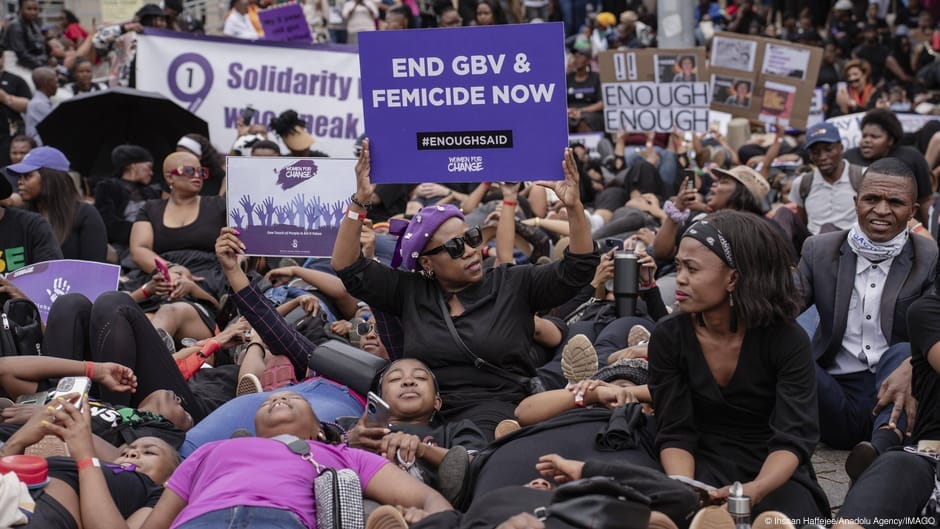
Photo: DW English
Key points
- 47,000 women and girls killed by family or partners in 2025
- Africa recorded the highest regional total with 22,100 deaths
- Femicide rates are falling slower than general global homicide rates
An official report released by the United Nations on Tuesday indicates that around 47,000 women and girls globally—averaging five every hour—lost their lives to intimate partners or family members in 2025. The data, compiled from 122 countries and territories ahead of the International Day for the Elimination of Violence against Women, accounts for roughly 60 percent of all intentional homicides targeting women last year.
Regional breakdowns in the study show that Africa registered the highest absolute number of fatalities at 22,100. Asia followed with 15,100 victims, the Americas recorded 7,400, Europe noted 2,100, and Oceania documented 300. While overall global homicide rates have experienced a downward trend, the study highlights that femicide rates are declining at a significantly slower pace.
UNODC director Monica Juma stated that institutional failures, dangerous attitudes, and entrenched social norms foster an environment where violence against female relatives remains tolerated. UN Women executive director Sima Bahous urged immediate global intervention to guarantee that warning signs receive attention, survivors obtain protection, and offenders face legal consequences.
The stakes
Governments and judicial systems face mounting pressure to overhaul protection frameworks and eliminate barriers preventing women from accessing justice. Failure to act risks maintaining systemic impunity, whereas robust enforcement could fundamentally reshape public safety policies worldwide.
Two readings
- Supporters view the report as a vital baseline for strengthening international human rights treaties, tightening domestic legislation, and holding states accountable for systemic failures in domestic abuse prevention.
- Critics argue that broad statistical overviews overlook specific regional legal deficiencies and fail to provide enforceable mechanisms for governments lagging behind in judicial reform.
Source DW English — dw.com/en/five-women-killed-every-hour-by-family-members-or-partner… ↗
Read next
 ✒️Opinion & Analysis
ICJ Rules Myanmar Military Committed Genocide Against Rohingya
The International Court of Justice has found Myanmar's military guilty of genocide against the Rohingya, a ruling that damages the international standing of both Aung San…
 🛡️War & Security
Ukraine Restricts Media Coverage of Infrastructure Damage Amid Russian Strikes
President Volodymyr Zelenskyy has issued a decree prohibiting media outlets from reporting on the impact of Russian strikes against critical infrastructure and the status…
 🏮China & Taiwan
Beijing Reaffirms Reunification Stance Following Taiwan Local Election Results
China’s Taiwan Affairs Office declared that the island’s reunification with the mainland remains inevitable, despite recent shifts in Taiwan's local political landscape.
 🇪🇺Europe
US Air Force Repels Unauthorized Drone Incursion at RAF Lakenheath
U.S. security forces at a British air base successfully countered a group of unidentified drones, amid growing concerns over potential foreign state involvement.
 ⚖️Law & Policy
India Government Proposes 50% Increase in Parliamentary Seats and Women's Reservation
The Indian government plans to introduce legislation to expand the Lok Sabha to 850 seats and mandate a 33% reservation for women in legislative bodies.
 ⚖️Law & Policy
India’s ruling alliance nears two-thirds majority for sweeping parliamentary expansion and delimitation bills
The National Democratic Alliance is nearing a two-thirds majority in Parliament to pass landmark legislation expanding the Lok Sabha by 50 percent and implementing a 33 p…