Ebola Response Stalls in DR Congo Amid Cultural Clashes and Distrust
Health workers in the Democratic Republic of Congo face violent resistance as local communities reject Ebola containment protocols that conflict with ancestral burial traditions.
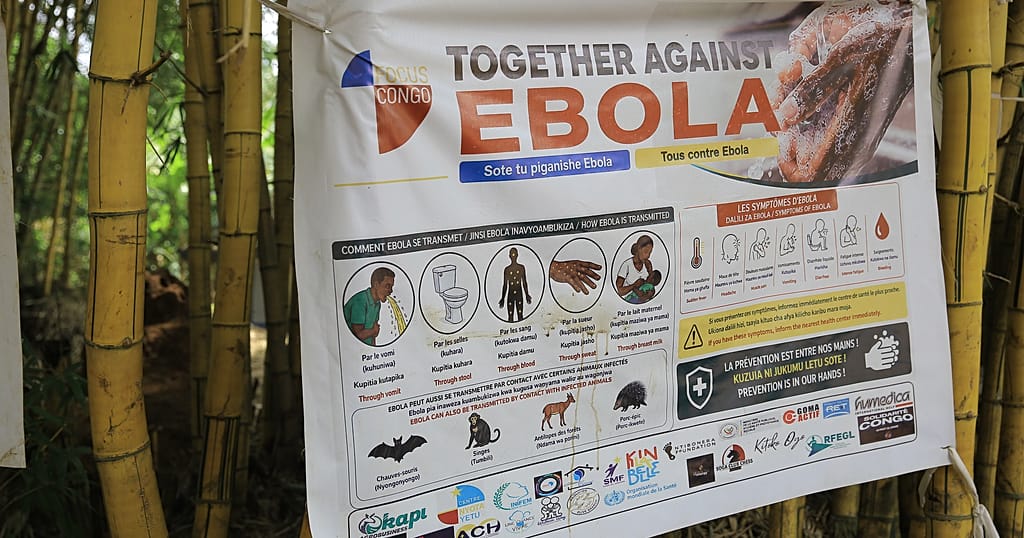 🕯️Democracy & Rights
Photo: Africanews
Key points
- Local communities in North Kivu are resisting mandatory, state-led Ebola burial protocols.
- Cultural traditions requiring family-led burials are clashing with medical requirements for sealed body bags.
- Widespread distrust of the Congolese government and a history of armed conflict are fueling violence against health workers.
Efforts to contain an Ebola outbreak in the eastern Democratic Republic of Congo are encountering significant resistance as local populations clash with health authorities over mandatory burial protocols. In the rural community of Bulambo-Isale, residents have actively blocked ambulances carrying victims, citing a deep-seated distrust of government-led interventions and a desire to adhere to traditional funeral rites.
The conflict centers on the requirement to bury victims in sealed body bags, a measure intended to curb the spread of the highly contagious virus. However, for the Nande people and other local groups, these protocols violate cultural mandates requiring families to inter their own dead within ancestral soil. Many residents view the presence of hazmat-clad workers—often perceived as outsiders who do not speak local languages—as an intrusive and suspicious imposition by a government they already associate with corruption.
Local leaders and residents note that the top-down approach has fueled conspiracy theories, with some questioning the existence of the virus itself. The situation is further exacerbated by the region's long history of armed conflict, which has left the population skeptical of state initiatives. As health workers report daily threats, including physical attacks and the use of weapons, the disconnect between medical necessity and cultural preservation continues to hinder the containment of the epidemic.
The stakes
If the current impasse persists, the virus is likely to continue spreading unchecked, resulting in higher mortality rates and regional instability. The government risks losing all remaining credibility in the region, while local communities face the continued threat of a deadly pathogen, potentially leading to a breakdown in public health infrastructure and increased violence against aid workers.
Two readings
- Supporters of the current protocols argue that strict adherence to medical safety guidelines is the only way to prevent a catastrophic health crisis and that cultural sensitivities cannot override the imperative to save lives.
- Critics contend that the government's failure to engage with community leaders and incorporate local customs into the response strategy has alienated the population, making the medical intervention counterproductive and fueling public hostility.
Source Africanews — africanews.com/2026/11/26/ebola-fight-runs-up-against-customs-rites-… ↗
Read next
 ✒️Opinion & Analysis
ICJ Rules Myanmar Military Committed Genocide Against Rohingya
The International Court of Justice has found Myanmar's military guilty of genocide against the Rohingya, a ruling that damages the international standing of both Aung San…
 🛡️War & Security
Ukraine Restricts Media Coverage of Infrastructure Damage Amid Russian Strikes
President Volodymyr Zelenskyy has issued a decree prohibiting media outlets from reporting on the impact of Russian strikes against critical infrastructure and the status…
 🏮China & Taiwan
Beijing Reaffirms Reunification Stance Following Taiwan Local Election Results
China’s Taiwan Affairs Office declared that the island’s reunification with the mainland remains inevitable, despite recent shifts in Taiwan's local political landscape.
 🇪🇺Europe
US Air Force Repels Unauthorized Drone Incursion at RAF Lakenheath
U.S. security forces at a British air base successfully countered a group of unidentified drones, amid growing concerns over potential foreign state involvement.
 ⚖️Law & Policy
India Government Proposes 50% Increase in Parliamentary Seats and Women's Reservation
The Indian government plans to introduce legislation to expand the Lok Sabha to 850 seats and mandate a 33% reservation for women in legislative bodies.
 ⚖️Law & Policy
India’s ruling alliance nears two-thirds majority for sweeping parliamentary expansion and delimitation bills
The National Democratic Alliance is nearing a two-thirds majority in Parliament to pass landmark legislation expanding the Lok Sabha by 50 percent and implementing a 33 p…