UN Member States Urge Tajikistan to Halt Human Rights Abuses and Repression
United Nations member states have pressed Tajikistan during a periodic review to release detained journalists and activists, halt political repression, and address systemic human rights violations.
 🕯️Democracy & Rights
Photo: Human Rights Watch
Key points
- UN member states pressed Tajikistan on human rights during its periodic review.
- Delegations demanded the release of detained journalists and activists, alongside accountability for Gorno-Badakhshan crackdowns.
- Tajikistan faced criticism over civil society closures and its decision to withdraw from the ICC.
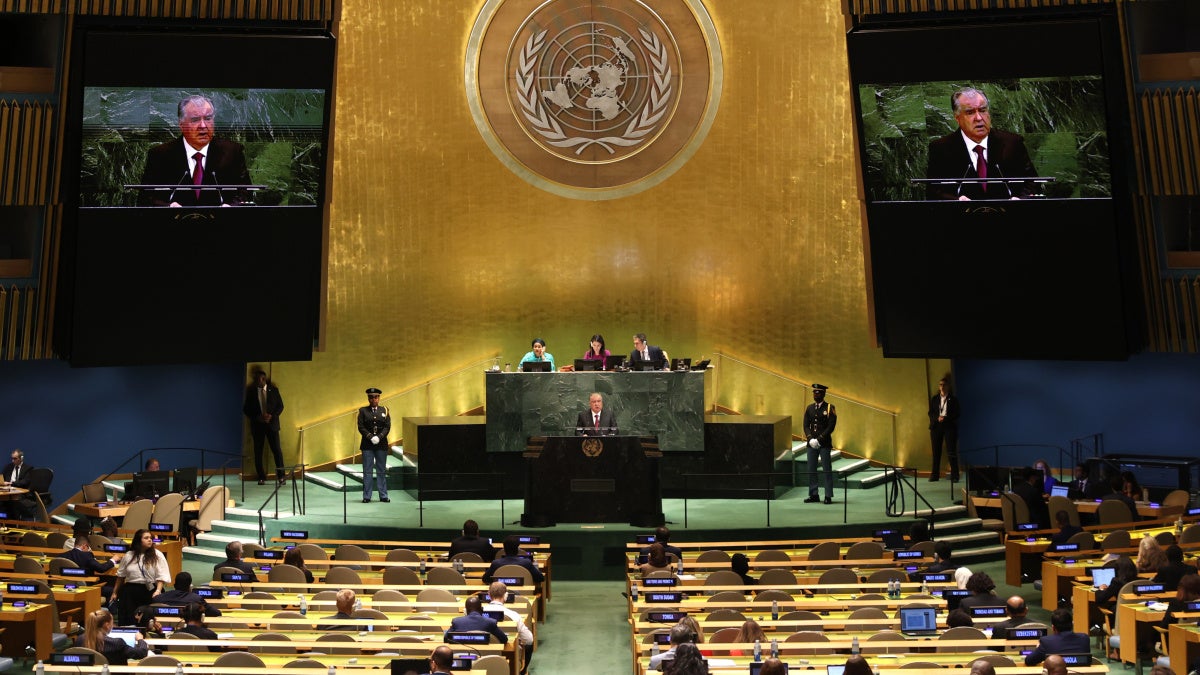
During a United Nations periodic review session on November 5, 2026, international member states urged the government of Tajikistan to implement urgent reforms to protect fundamental freedoms and halt widespread crackdowns on political opposition. Representatives criticized authorities for failing to fulfill commitments made during previous evaluations, pointing to a sharp deterioration in civil liberties, arbitrary detentions, and the systematic dismantling of independent civil society organizations since 2021.
Delegations from countries including Germany, France, and the Netherlands voiced serious alarm over ongoing abuses, demanding the unconditional release of imprisoned journalists, human rights defenders, and lawyers. Particular concern was directed at the violent suppression of protests in the Gorno-Badakhshan autonomous region, where security forces reportedly killed dozens of civilians and handed down harsh prison sentences following closed trials. Several states also called on Dushanbe to reform counterterrorism laws, criminalize domestic violence, and reverse recent moves to withdraw from the International Criminal Court.
While acknowledging positive steps such as the ratification of the disability rights convention and the adoption of a national human rights strategy, international critics emphasized that official actions routinely contradict stated commitments. Human Rights Watch noted that the government has forced hundreds of nongovernmental organizations to close and engaged in transnational repression against exiles, undermining its standing within the international community.
The stakes
If Tajikistan complies with the peer review recommendations, civil society groups and independent media could regain legal space to operate, while political dissidents might find relief from state-backed persecution. Conversely, outright rejection of these UN guidelines risks deepening Dushanbe's international isolation and accelerating domestic authoritarian control.
Two readings
- Supporters view the peer review as a vital diplomatic framework to press Dushanbe toward necessary human rights reforms and compliance with international standards.
- Critics argue that international peer pressure remains largely toothless against authoritarian regimes that routinely ignore external oversight while tightening domestic control.
Source Human Rights Watch — hrw.org/news/2026/11/10/tajikistan-un-members-urge-stronger-rights-… ↗
Read next
 ✒️Opinion & Analysis
ICJ Rules Myanmar Military Committed Genocide Against Rohingya
The International Court of Justice has found Myanmar's military guilty of genocide against the Rohingya, a ruling that damages the international standing of both Aung San…
 🛡️War & Security
Ukraine Restricts Media Coverage of Infrastructure Damage Amid Russian Strikes
President Volodymyr Zelenskyy has issued a decree prohibiting media outlets from reporting on the impact of Russian strikes against critical infrastructure and the status…
 🏮China & Taiwan
Beijing Reaffirms Reunification Stance Following Taiwan Local Election Results
China’s Taiwan Affairs Office declared that the island’s reunification with the mainland remains inevitable, despite recent shifts in Taiwan's local political landscape.
 🇪🇺Europe
US Air Force Repels Unauthorized Drone Incursion at RAF Lakenheath
U.S. security forces at a British air base successfully countered a group of unidentified drones, amid growing concerns over potential foreign state involvement.
 ⚖️Law & Policy
India Government Proposes 50% Increase in Parliamentary Seats and Women's Reservation
The Indian government plans to introduce legislation to expand the Lok Sabha to 850 seats and mandate a 33% reservation for women in legislative bodies.
 ⚖️Law & Policy
India’s ruling alliance nears two-thirds majority for sweeping parliamentary expansion and delimitation bills
The National Democratic Alliance is nearing a two-thirds majority in Parliament to pass landmark legislation expanding the Lok Sabha by 50 percent and implementing a 33 p…