Pakistan Supreme Court Acquits Brothers After Two Decades on Death Row
The Supreme Court of Pakistan has overturned the death sentences of two brothers convicted of blasphemy, citing medical evidence of mental illness.
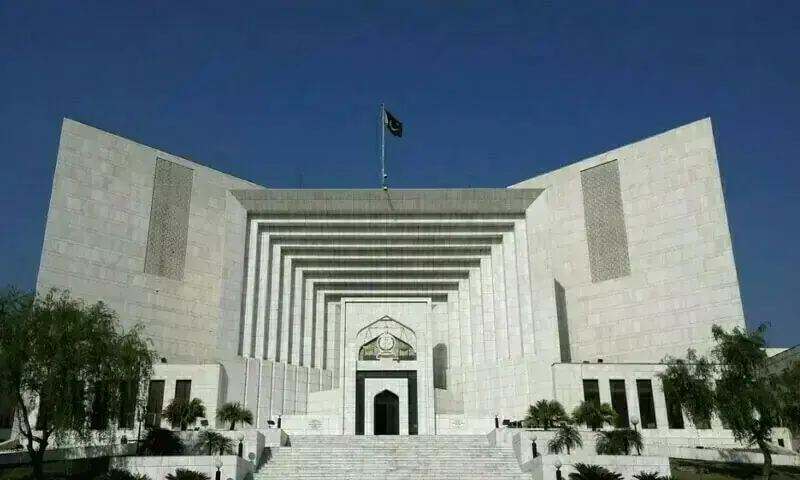 🕯️Democracy & Rights
Photo: Dawn
Key points
- Supreme Court overturns 2006 death sentences for blasphemy.
- Acquittal based on psychiatric diagnosis of bipolar disorder.
- Court emphasizes distinction between medical and legal insanity.
The Supreme Court of Pakistan has acquitted Liaqat Ali and Umar Draz, two brothers who spent nearly 20 years imprisoned after being sentenced to death for blasphemy. A three-judge bench, led by Chief Justice Yahya Afridi, set aside the 2015 Lahore High Court ruling that had previously upheld the brothers' 2006 convictions. The court’s decision hinged on psychiatric evaluations that raised significant doubts regarding the appellants' mental capacity at the time of the alleged offenses.
The legal proceedings centered on documents recovered in 2006 that contained blasphemous assertions. While the brothers initially faced charges under Section 295-C of the Pakistan Penal Code, their defense focused on the argument that they lacked the necessary mens rea due to mental unsoundness. The Supreme Court prioritized recent findings from specialized medical boards, which diagnosed the brothers with bipolar affective disorder, over earlier assessments that had deemed them fit for trial.
Justice Ishtiaq Ibrahim, who authored the judgment, emphasized that the unanimous findings of expert psychiatric boards outweighed initial medical reports. The court concluded that the appellants' chronic condition prevented them from fully comprehending their actions, necessitating the benefit of the doubt. While concurring with the acquittal, Justice Shakeel Ahmad noted the distinction between medical and legal insanity, urging that judicial processes must balance strict statutory requirements with humanitarian considerations.
The stakes
The ruling highlights the intersection of Pakistan's rigid blasphemy laws and modern psychiatric standards. By prioritizing medical evidence over traditional interpretations of criminal culpability, the court has set a precedent that could impact future cases involving defendants with mental health challenges, though it leaves the broader, highly sensitive debate over the blasphemy statutes themselves largely unchanged.
Two readings
- Supporters of the ruling argue that it upholds human rights and the principle of justice by preventing the execution of individuals who lacked the mental capacity to understand their actions.
- Critics of the decision may contend that the acquittal undermines the severity of the blasphemy laws and fear that psychiatric defenses could be used to evade accountability in sensitive religious cases.
Source Dawn — dawn.com/news/2042919/siblings-acquitted-in-blasphemy-case-after-20… ↗
Read next
 ✒️Opinion & Analysis
ICJ Rules Myanmar Military Committed Genocide Against Rohingya
The International Court of Justice has found Myanmar's military guilty of genocide against the Rohingya, a ruling that damages the international standing of both Aung San…
 🛡️War & Security
Ukraine Restricts Media Coverage of Infrastructure Damage Amid Russian Strikes
President Volodymyr Zelenskyy has issued a decree prohibiting media outlets from reporting on the impact of Russian strikes against critical infrastructure and the status…
 🏮China & Taiwan
Beijing Reaffirms Reunification Stance Following Taiwan Local Election Results
China’s Taiwan Affairs Office declared that the island’s reunification with the mainland remains inevitable, despite recent shifts in Taiwan's local political landscape.
 🇪🇺Europe
US Air Force Repels Unauthorized Drone Incursion at RAF Lakenheath
U.S. security forces at a British air base successfully countered a group of unidentified drones, amid growing concerns over potential foreign state involvement.
 ⚖️Law & Policy
India Government Proposes 50% Increase in Parliamentary Seats and Women's Reservation
The Indian government plans to introduce legislation to expand the Lok Sabha to 850 seats and mandate a 33% reservation for women in legislative bodies.
 ⚖️Law & Policy
India’s ruling alliance nears two-thirds majority for sweeping parliamentary expansion and delimitation bills
The National Democratic Alliance is nearing a two-thirds majority in Parliament to pass landmark legislation expanding the Lok Sabha by 50 percent and implementing a 33 p…