South Africa Faces Public Debate Over Halaal Certification and Religious Freedom
Viral social media criticism regarding the prevalence of halaal-certified food in South Africa has sparked a national conversation about religious expression, constitutional rights, and market forces.
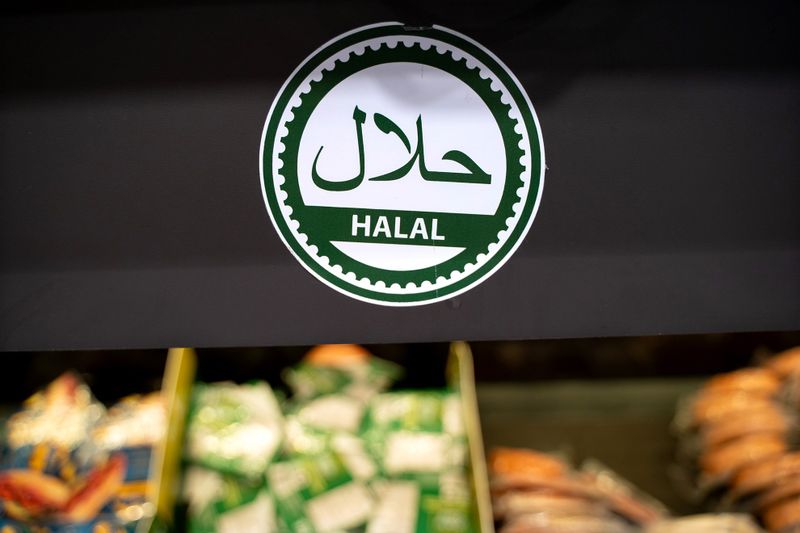 🕯️Democracy & Rights
Photo: Daily Maverick
Key points
- Viral social media discourse has challenged the prevalence of halaal-certified food in South Africa.
- Constitutional experts affirm that South Africa has no official religion and protects the right to religious practice.
- Market analysts attribute the growth of halaal products to corporate efforts to meet consumer demand rather than government policy.
A recent viral social media campaign has ignited a contentious debate in South Africa regarding the widespread availability of halaal-certified food products. The controversy, initiated by a popular TikTok video, centers on claims that the prevalence of such products imposes Islamic dietary standards on a population that is predominantly non-Muslim. Critics of the certification process have characterized the trend as an undue influence on the national food supply, despite the country's secular constitutional framework.
Legal experts and religious scholars emphasize that South Africa’s Constitution guarantees freedom of religion and the right to practice one's faith, which includes access to culturally appropriate food. According to the South African National Halaal Authority, halaal certification is a voluntary practice used by businesses to verify that products meet specific Islamic requirements. Anthropologists note that the growth in certified products is largely driven by corporate strategy rather than government mandate, as major retailers seek to capture the Muslim consumer market by streamlining supply chains to meet established religious standards.
The debate highlights a broader tension between public perceptions of national identity and the realities of a pluralistic, consumer-driven society. While some view the expansion of halaal products as an encroachment on secular or Christian values, analysts argue that the trend is a reflection of globalized industrial practices where companies seek efficiency by standardizing production to comply with international market demands.
The stakes
The outcome of this debate impacts the regulatory environment for food certification and the social cohesion of South Africa's diverse religious groups. If the backlash leads to policy shifts, businesses may face increased pressure to abandon voluntary certifications, potentially alienating Muslim consumers and challenging the principle of religious freedom in the marketplace.
Two readings
- Supporters of the criticism argue that the prevalence of halaal certification forces non-Muslims to inadvertently participate in religious practices they do not subscribe to, viewing it as a symbolic imposition.
- Critics of the backlash argue that the movement is rooted in Islamophobia and a misunderstanding of market dynamics, asserting that voluntary certification is a fundamental right of religious expression and consumer choice.
Source Daily Maverick — dailymaverick.co.za/article/2026-11-08-is-halaal-food-becoming-more… ↗
Read next
 ✒️Opinion & Analysis
ICJ Rules Myanmar Military Committed Genocide Against Rohingya
The International Court of Justice has found Myanmar's military guilty of genocide against the Rohingya, a ruling that damages the international standing of both Aung San…
 🛡️War & Security
Ukraine Restricts Media Coverage of Infrastructure Damage Amid Russian Strikes
President Volodymyr Zelenskyy has issued a decree prohibiting media outlets from reporting on the impact of Russian strikes against critical infrastructure and the status…
 🏮China & Taiwan
Beijing Reaffirms Reunification Stance Following Taiwan Local Election Results
China’s Taiwan Affairs Office declared that the island’s reunification with the mainland remains inevitable, despite recent shifts in Taiwan's local political landscape.
 🇪🇺Europe
US Air Force Repels Unauthorized Drone Incursion at RAF Lakenheath
U.S. security forces at a British air base successfully countered a group of unidentified drones, amid growing concerns over potential foreign state involvement.
 ⚖️Law & Policy
India Government Proposes 50% Increase in Parliamentary Seats and Women's Reservation
The Indian government plans to introduce legislation to expand the Lok Sabha to 850 seats and mandate a 33% reservation for women in legislative bodies.
 ⚖️Law & Policy
India’s ruling alliance nears two-thirds majority for sweeping parliamentary expansion and delimitation bills
The National Democratic Alliance is nearing a two-thirds majority in Parliament to pass landmark legislation expanding the Lok Sabha by 50 percent and implementing a 33 p…