South African Community Groups Advocate for Traditional Food Sovereignty
Grassroots organizations in South Africa are promoting indigenous farming and traditional diets to combat the health and environmental impacts of ultra-processed foods.
 🕯️Democracy & Rights
Photo: Daily Maverick
Key points
- Grassroots groups are promoting traditional diets to counter high rates of diet-related diseases.
- Activists are using Section 27 of the South African Constitution to advocate for the right to food.
- The movement emphasizes agroecology and the preservation of indigenous seeds over industrial monocultures.
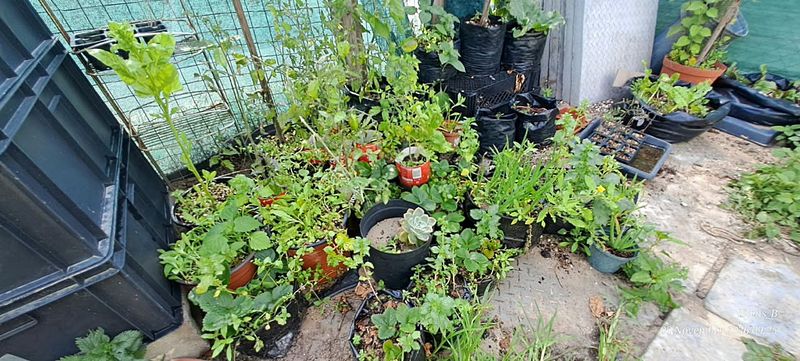
Community-led movements across South Africa are increasingly challenging the dominance of ultra-processed food systems by reviving indigenous agricultural practices and traditional dietary habits. Organizations like the EarthLore Foundation and the Food Agency Cape Town (FACT) are working with rural and urban residents to restore local food cultures, emphasizing the use of ancestral seeds, sustainable agroecology, and community-shared meals.
Advocates argue that this shift is essential for public health and environmental sustainability. According to data from the Global Health Advocacy Incubator, ultra-processed products constitute nearly 40% of the daily energy intake for low-income South Africans, contributing significantly to rising rates of obesity and non-communicable diseases such as diabetes. By contrast, traditional food systems rely on locally sourced, minimally processed ingredients that require less packaging and transportation.
The initiative also intersects with constitutional rights, as activists like Nomonde Buthelezi educate communities on Section 27 of the South African Constitution, which guarantees the right to food. Through school-based eco-clubs and community gardening programs, these groups aim to demystify organic farming, making it accessible to those who previously relied on cheaper, mass-produced commodities.
The stakes
If these grassroots efforts succeed, they could reduce dependency on global industrial food chains, lower the prevalence of diet-related illnesses, and strengthen local food security. However, these communities face significant hurdles, including limited land access, the high cost of organic alternatives, and the pervasive nature of affordable processed food markets.
Two readings
- Supporters view the movement as a vital exercise in food sovereignty that empowers marginalized populations and protects biodiversity against the harms of industrial monocultures.
- Critics or skeptics often point to the logistical difficulty of scaling these local solutions to feed rapidly urbanizing populations that rely on the convenience and low cost of mass-produced food.
Source Daily Maverick — dailymaverick.co.za/article/2026-11-08-south-africans-tuck-into-tra… ↗
Read next
 ✒️Opinion & Analysis
ICJ Rules Myanmar Military Committed Genocide Against Rohingya
The International Court of Justice has found Myanmar's military guilty of genocide against the Rohingya, a ruling that damages the international standing of both Aung San…
 🛡️War & Security
Ukraine Restricts Media Coverage of Infrastructure Damage Amid Russian Strikes
President Volodymyr Zelenskyy has issued a decree prohibiting media outlets from reporting on the impact of Russian strikes against critical infrastructure and the status…
 🏮China & Taiwan
Beijing Reaffirms Reunification Stance Following Taiwan Local Election Results
China’s Taiwan Affairs Office declared that the island’s reunification with the mainland remains inevitable, despite recent shifts in Taiwan's local political landscape.
 🇪🇺Europe
US Air Force Repels Unauthorized Drone Incursion at RAF Lakenheath
U.S. security forces at a British air base successfully countered a group of unidentified drones, amid growing concerns over potential foreign state involvement.
 ⚖️Law & Policy
India Government Proposes 50% Increase in Parliamentary Seats and Women's Reservation
The Indian government plans to introduce legislation to expand the Lok Sabha to 850 seats and mandate a 33% reservation for women in legislative bodies.
 ⚖️Law & Policy
India’s ruling alliance nears two-thirds majority for sweeping parliamentary expansion and delimitation bills
The National Democratic Alliance is nearing a two-thirds majority in Parliament to pass landmark legislation expanding the Lok Sabha by 50 percent and implementing a 33 p…