Netanyahu and Eisenkot to Hold Coalition Talks Following Rotation Proposal
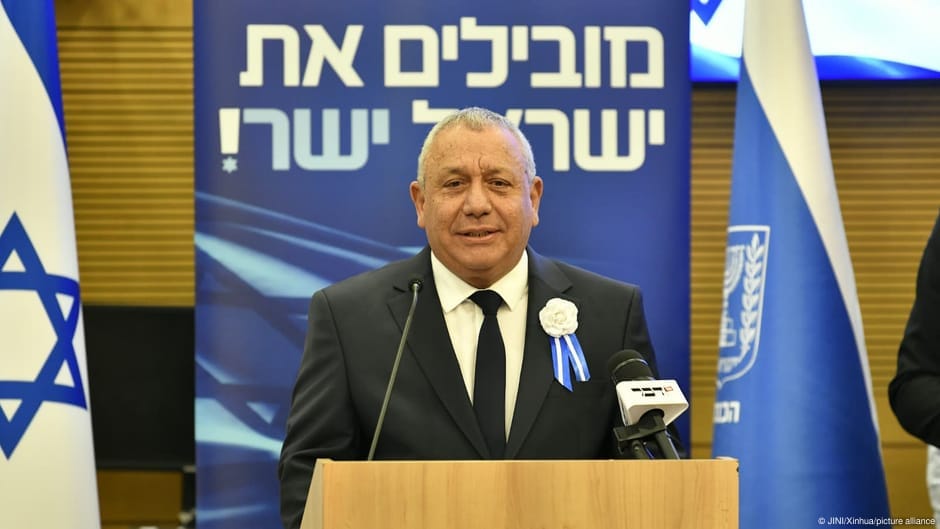
Israeli Prime Minister Benjamin Netanyahu and rival Gadi Eisenkot are set to negotiate a potential unity government following a surprise offer of a rotating premiership.
 🗳️Elections
Photo: DW English
Key points
- Netanyahu proposes rotating premiership with Eisenkot
- Talks scheduled in Herzliya following inconclusive elections
- Raam party leader labels Hamas a terrorist organization
Caretaker Prime Minister Benjamin Netanyahu and opposition leader Gadi Eisenkot have scheduled high-level coalition talks for Sunday morning in Herzliya. The meeting follows a public proposal from Netanyahu, who suggested a power-sharing agreement that would allow Eisenkot to serve as prime minister first, while Netanyahu would take the role of alternate prime minister for the initial phase of the term.
The overture marks a significant shift in the aftermath of Israel’s recent inconclusive elections, which failed to grant a clear majority to either major political bloc. President Isaac Herzog had previously tasked Eisenkot with the mandate to form a government, a process complicated by the need to balance the interests of ultra-Orthodox factions and the inclusion of Arab-Israeli parties.
Negotiations have been further influenced by recent developments within the Arab-Israeli political sphere. Mansour Abbas, leader of the Raam party, recently designated Hamas as a terrorist organization, effectively removing a major barrier for his party's inclusion in a potential coalition government. Eisenkot had previously established such a declaration as a non-negotiable condition for any prospective governing partners.
The stakes
The successful formation of a unity government would end the current period of political gridlock and prevent the possibility of further elections. If the deal proceeds, Eisenkot secures the premiership, while Netanyahu avoids being ousted from power, though both leaders face the challenge of reconciling deep ideological differences within their prospective coalition partners.
Two readings
- Supporters view the potential unity government as a necessary step to ensure national stability and move past the stalemate of repeated electoral cycles.
- Critics argue that such power-sharing arrangements prioritize political survival over ideological consistency and may lead to a fragile administration prone to internal collapse.
Source DW English — dw.com/en/israel-netanyahu-eisenkot-to-meet-for-coalition-talks-aft… ↗
Read next
 ✒️Opinion & Analysis
ICJ Rules Myanmar Military Committed Genocide Against Rohingya
The International Court of Justice has found Myanmar's military guilty of genocide against the Rohingya, a ruling that damages the international standing of both Aung San…
 🕯️Democracy & Rights
Chinese teachers face rising parental pressure over personal life choices
Chinese educators are encountering a surge in unreasonable demands from parents, including complaints regarding teachers' pregnancy and maternity leave.
 🛡️War & Security
Ukraine Restricts Media Coverage of Infrastructure Damage Amid Russian Strikes
President Volodymyr Zelenskyy has issued a decree prohibiting media outlets from reporting on the impact of Russian strikes against critical infrastructure and the status…
 🏮China & Taiwan
Beijing Reaffirms Reunification Stance Following Taiwan Local Election Results
China’s Taiwan Affairs Office declared that the island’s reunification with the mainland remains inevitable, despite recent shifts in Taiwan's local political landscape.
 🇪🇺Europe
US Air Force Repels Unauthorized Drone Incursion at RAF Lakenheath
U.S. security forces at a British air base successfully countered a group of unidentified drones, amid growing concerns over potential foreign state involvement.
 ⚖️Law & Policy
India Government Proposes 50% Increase in Parliamentary Seats and Women's Reservation
The Indian government plans to introduce legislation to expand the Lok Sabha to 850 seats and mandate a 33% reservation for women in legislative bodies.