European Leaders Clash Over Representation in Potential Ukraine Peace Negotiations
European leaders gathered in Dublin are scrambling to select a unified representative for upcoming Ukraine peace talks following diplomatic pressure from the United States. Internal disagreements over who should occupy the single allotted European seat have sparked public divisions among member states.
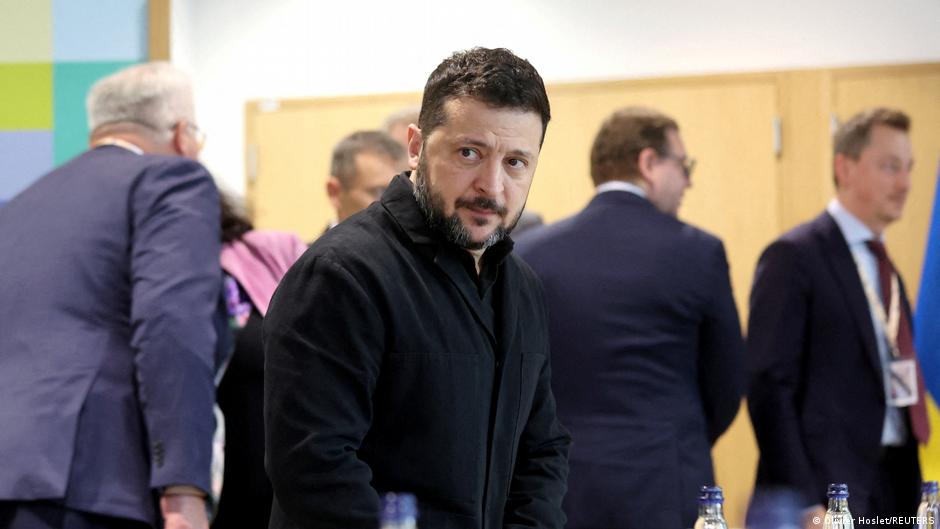 🇪🇺Europe
Photo: DW English
Key points
- European leaders are divided over who should occupy a single European seat in upcoming Ukraine peace talks.
- US envoys briefed Ukrainian President Volodymyr Zelenskyy in Dublin following direct talks with Russian President Vladimir Putin.
- Leaders expressed deep concern that Washington might accept Russian demands regarding European security and NATO expansion.
European leaders meeting at the European Political Community summit in Dublin are facing mounting pressure to designate a single representative for upcoming Ukraine peace talks. The urgency follows statements from US special envoy Steve Witkoff indicating that European stakeholders will be included in forthcoming discussions, though current plans allocate Europe only one seat compared to two for the United States. The diplomatic scramble comes in the wake of recent meetings in Moscow and Abu Dhabi between US advisers Jared Kushner and Steve Witkoff and Russian President Vladimir Putin, followed by a debrief with Ukrainian President Volodymyr Zelenskyy in Dublin.
Discussions in Dublin exposed sharp internal divisions over who should speak for the bloc. EU foreign policy chief Kaja Kallas and EU Council President Antonio Costa have both been tipped as potential representatives, yet numerous national leaders are pushing for personal involvement. Italian Prime Minister Giorgia Meloni criticized the lack of unity in a letter to Costa, warning that a disorganized stance only aids adversaries. Meanwhile, German Chancellor Friedrich Merz insisted that Europeans must have a seat alongside Ukraine, the US, and Russia, while simultaneously dismissing the necessity of appointing a specialized envoy.
Underpinning the anxiety in Dublin is the fear that Washington might accommodate Russian demands regarding European security architecture and the NATO alliance in exchange for diplomatic progress. Russian President Vladimir Putin has previously outlined hardline positions, including demands that Ukraine permanently forgo NATO membership and that the alliance reverse expansions that included Finland and Sweden. Estonian Prime Minister Kristen Michal warned that engaging directly with Moscow on defense matters plays into a Russian trap, as leaders grapple with how to unify their diplomatic approach while simultaneously addressing a €70 billion funding gap for Ukraine's economy.
The stakes
If European leaders fail to unite behind a single negotiator, the continent risks being sidelined in negotiations that will shape its own security architecture. A fragmented approach empowers Washington and Moscow to dictate the terms of any settlement, potentially compromising European defense arrangements and long-term stability.
Two readings
- Supporters of swift consensus argue that appointing a high-profile figure like Kaja Kallas or Antonio Costa immediately projects strength and ensures the continent's vital security interests remain central to any diplomatic settlement.
- Critics contend that rushing to name a single envoy while national leaders demand individual seats exposes fatal weaknesses in the bloc's foreign policy apparatus, playing directly into Russian efforts to divide the West.
Source DW English — dw.com/en/eu-leaders-tussle-over-who-to-send-to-ukraine-russia-peac… ↗
Read next
 ✒️Opinion & Analysis
ICJ Rules Myanmar Military Committed Genocide Against Rohingya
The International Court of Justice has found Myanmar's military guilty of genocide against the Rohingya, a ruling that damages the international standing of both Aung San…
 🕯️Democracy & Rights
Chinese teachers face rising parental pressure over personal life choices
Chinese educators are encountering a surge in unreasonable demands from parents, including complaints regarding teachers' pregnancy and maternity leave.
 🛡️War & Security
Ukraine Restricts Media Coverage of Infrastructure Damage Amid Russian Strikes
President Volodymyr Zelenskyy has issued a decree prohibiting media outlets from reporting on the impact of Russian strikes against critical infrastructure and the status…
 🏮China & Taiwan
Beijing Reaffirms Reunification Stance Following Taiwan Local Election Results
China’s Taiwan Affairs Office declared that the island’s reunification with the mainland remains inevitable, despite recent shifts in Taiwan's local political landscape.
 ⚖️Law & Policy
India Government Proposes 50% Increase in Parliamentary Seats and Women's Reservation
The Indian government plans to introduce legislation to expand the Lok Sabha to 850 seats and mandate a 33% reservation for women in legislative bodies.
 ⚖️Law & Policy
India’s ruling alliance nears two-thirds majority for sweeping parliamentary expansion and delimitation bills
The National Democratic Alliance is nearing a two-thirds majority in Parliament to pass landmark legislation expanding the Lok Sabha by 50 percent and implementing a 33 p…