Protests Erupt Across Europe Over Wages, Public Services, and Military Spending
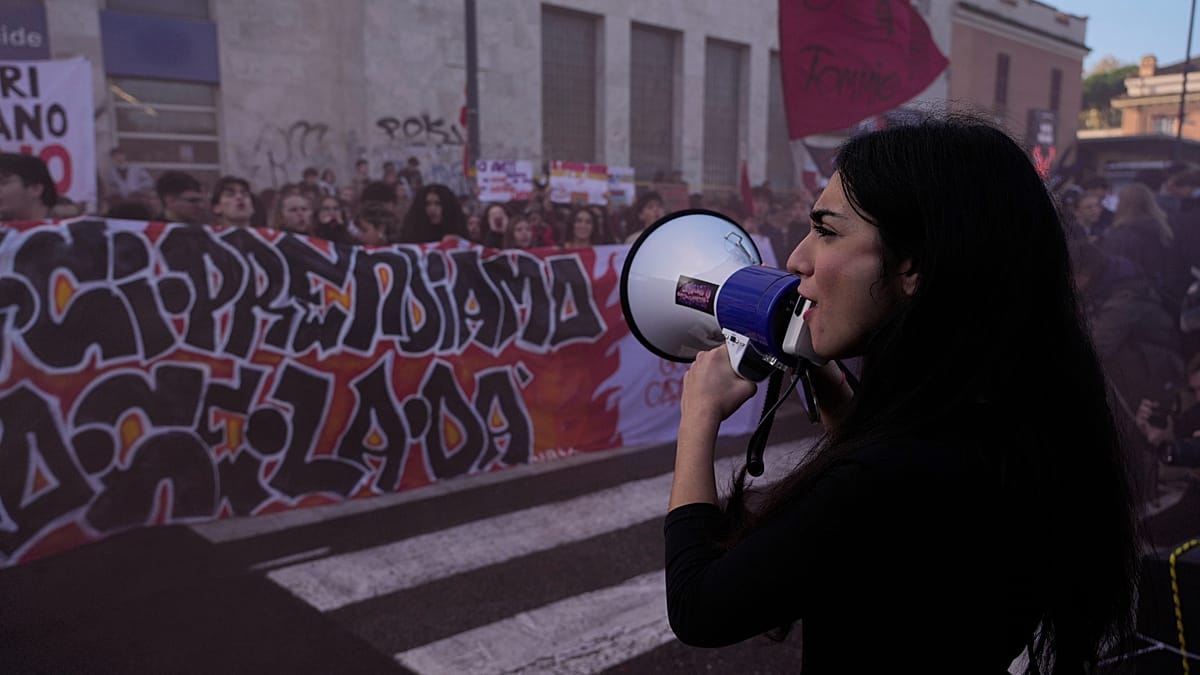
Thousands of workers and students across Europe held demonstrations on Friday to demand higher wages and increased investment in public services over military expenditures.
 🇪🇺Europe
Photo: Euronews
Key points
- Widespread protests in Italy, Germany, Croatia, and Austria demand higher wages and social spending.
- Italian labor unions staged a 24-hour strike, impacting transport and public services.
- Demonstrators are increasingly calling for a shift in government budgets from military spending to education and welfare.
Widespread protests took place across multiple European nations on Friday as citizens rallied against stagnant wages, rising living costs, and government spending priorities. Demonstrators in Italy, Croatia, Austria, and Germany called for greater state investment in education, healthcare, and welfare, often contrasting these needs with current levels of military funding.
In Italy, the General Confederation of Labour (CGIL) organized a 24-hour national strike that impacted over 100 locations, including disruptions to public transport and health facilities. Opposition political leaders joined the rallies, utilizing the platform to criticize the administration of Prime Minister Giorgia Meloni regarding social spending and worker protections.
Simultaneously, student-led movements in Croatia and Austria demanded a shift in national budgets away from defense and toward public services. In Germany, protesters voiced opposition to the potential reinstatement of mandatory military service, echoing concerns raised during previous demonstrations in late October.
The stakes
If these protests lead to sustained policy shifts, governments may be forced to reallocate funds from defense budgets toward social welfare and public infrastructure to appease public unrest. Failure to address these demands risks deepening political polarization and potential electoral losses for incumbent administrations facing pressure from both labor unions and student organizations.
Two readings
- Supporters view the demonstrations as a necessary democratic expression to hold governments accountable for the erosion of living standards and the neglect of essential public services.
- Critics argue that the protests, particularly those opposing military spending, fail to account for the current geopolitical security climate and could destabilize national defense readiness.
Source Euronews — euronews.com/2026/11/20/thousands-protest-across-europe-demanding-b… ↗
Read next
 ✒️Opinion & Analysis
ICJ Rules Myanmar Military Committed Genocide Against Rohingya
The International Court of Justice has found Myanmar's military guilty of genocide against the Rohingya, a ruling that damages the international standing of both Aung San…
 🕯️Democracy & Rights
Chinese teachers face rising parental pressure over personal life choices
Chinese educators are encountering a surge in unreasonable demands from parents, including complaints regarding teachers' pregnancy and maternity leave.
 🛡️War & Security
Ukraine Restricts Media Coverage of Infrastructure Damage Amid Russian Strikes
President Volodymyr Zelenskyy has issued a decree prohibiting media outlets from reporting on the impact of Russian strikes against critical infrastructure and the status…
 🏮China & Taiwan
Beijing Reaffirms Reunification Stance Following Taiwan Local Election Results
China’s Taiwan Affairs Office declared that the island’s reunification with the mainland remains inevitable, despite recent shifts in Taiwan's local political landscape.
 ⚖️Law & Policy
India Government Proposes 50% Increase in Parliamentary Seats and Women's Reservation
The Indian government plans to introduce legislation to expand the Lok Sabha to 850 seats and mandate a 33% reservation for women in legislative bodies.
 ⚖️Law & Policy
India’s ruling alliance nears two-thirds majority for sweeping parliamentary expansion and delimitation bills
The National Democratic Alliance is nearing a two-thirds majority in Parliament to pass landmark legislation expanding the Lok Sabha by 50 percent and implementing a 33 p…