Friedrich Merz Links EU Budget Approval to Mandatory Support for Ukraine
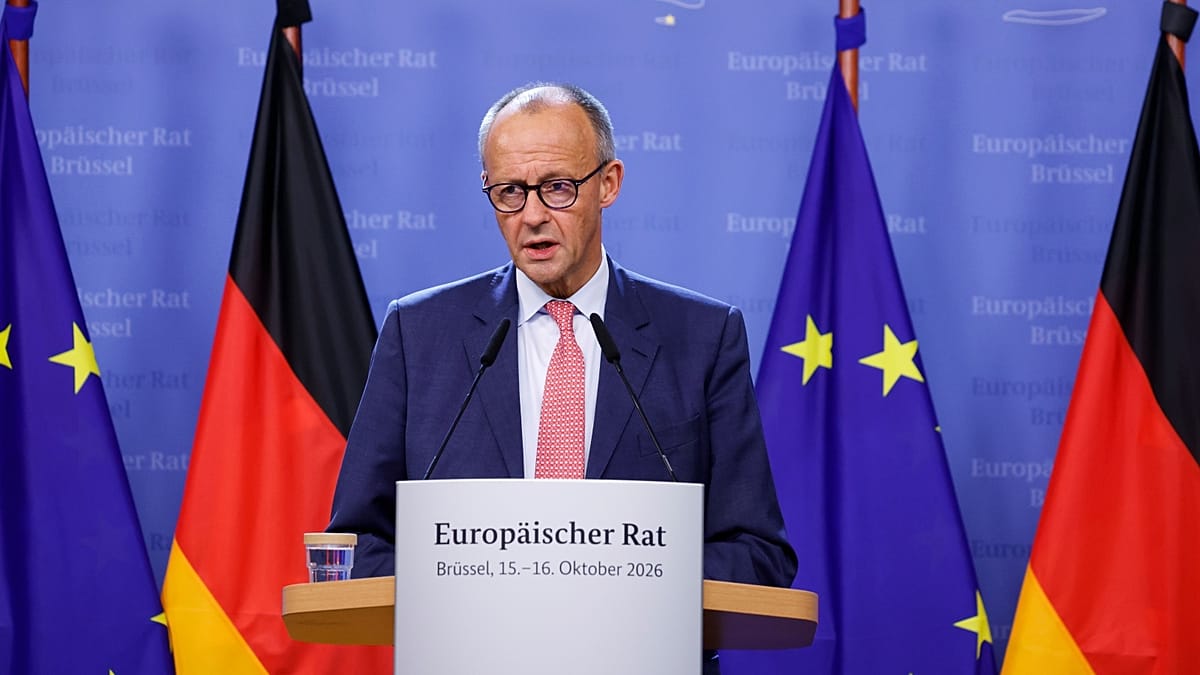
German Chancellor Friedrich Merz declared that agreement on the EU's multi-annual budget depends on a binding collective commitment to finance Ukraine, linking two contentious financial tracks.
 🇪🇺Europe
Photo: Euronews
Key points
- Friedrich Merz conditions EU budget on Ukraine funding guarantees
- Kyiv faces a projected €70 billion shortfall for its 2027 budget
- Frugal states push for unified burden-sharing against cohesion camp resistance
German Chancellor Friedrich Merz has conditioned any agreement on the European Union's upcoming budget on guarantees for fresh financial support for Ukraine, a move that intertwines two politically volatile issues and deepens existing divisions among member states.
In a letter to European Council President António Costa, Merz insisted that a unified commitment to close Kyiv's projected €70 billion budget shortfall for 2027 is a necessary prerequisite for resolving the bloc's seven-year financial framework. The European Union has previously pledged to cover two-thirds of this deficit, amounting to approximately €45 billion, through a financing instrument that remains to be defined. Furthermore, the German chancellor argued that the multi-annual budget must secure long-term financing for Ukraine from 2028 onward, while also addressing accrued interest liabilities from an existing €90 billion support loan.
The push by Germany and allied donor nations, including Denmark, Finland, the Netherlands, and Sweden, to merge the budget and Ukraine funding has provoked friction with the bloc's cohesion camp. Countries such as Slovakia, Hungary, the Czech Republic, and Bulgaria have signaled resistance to participating in joint borrowing initiatives, leading diplomats aligned with the frugal states to demand a unified burden-sharing approach across all member governments.
The stakes
If the linkage between the EU budget and Ukraine financing succeeds, cohesion-focused member states risk losing preferred spending allocations unless they contribute to Kyiv's security needs, fundamentally reshaping internal EU fiscal negotiations. Conversely, separating the issues could protect domestic budget priorities but threatens to leave Ukraine facing a severe funding cliff, altering the continent's long-term security architecture.
Two readings
- Supporters argue that European security is indivisible, making fair burden-sharing and mandatory financial solidarity essential components of any credible multi-year EU budget.
- Critics contend that binding distinct fiscal files together creates an artificial impasse, complicating delicate negotiations and making a comprehensive bloc-wide agreement nearly impossible to reach.
Source Euronews — euronews.com/2026/11/09/no-deal-on-ukraine-aid-then-no-deal-on-eu-b… ↗
Read next
 ✒️Opinion & Analysis
ICJ Rules Myanmar Military Committed Genocide Against Rohingya
The International Court of Justice has found Myanmar's military guilty of genocide against the Rohingya, a ruling that damages the international standing of both Aung San…
 🕯️Democracy & Rights
Chinese teachers face rising parental pressure over personal life choices
Chinese educators are encountering a surge in unreasonable demands from parents, including complaints regarding teachers' pregnancy and maternity leave.
 🛡️War & Security
Ukraine Restricts Media Coverage of Infrastructure Damage Amid Russian Strikes
President Volodymyr Zelenskyy has issued a decree prohibiting media outlets from reporting on the impact of Russian strikes against critical infrastructure and the status…
 🏮China & Taiwan
Beijing Reaffirms Reunification Stance Following Taiwan Local Election Results
China’s Taiwan Affairs Office declared that the island’s reunification with the mainland remains inevitable, despite recent shifts in Taiwan's local political landscape.
 ⚖️Law & Policy
India Government Proposes 50% Increase in Parliamentary Seats and Women's Reservation
The Indian government plans to introduce legislation to expand the Lok Sabha to 850 seats and mandate a 33% reservation for women in legislative bodies.
 ⚖️Law & Policy
India’s ruling alliance nears two-thirds majority for sweeping parliamentary expansion and delimitation bills
The National Democratic Alliance is nearing a two-thirds majority in Parliament to pass landmark legislation expanding the Lok Sabha by 50 percent and implementing a 33 p…