German Automakers Face Plant Stoppages as IG Metall Strikes Expand
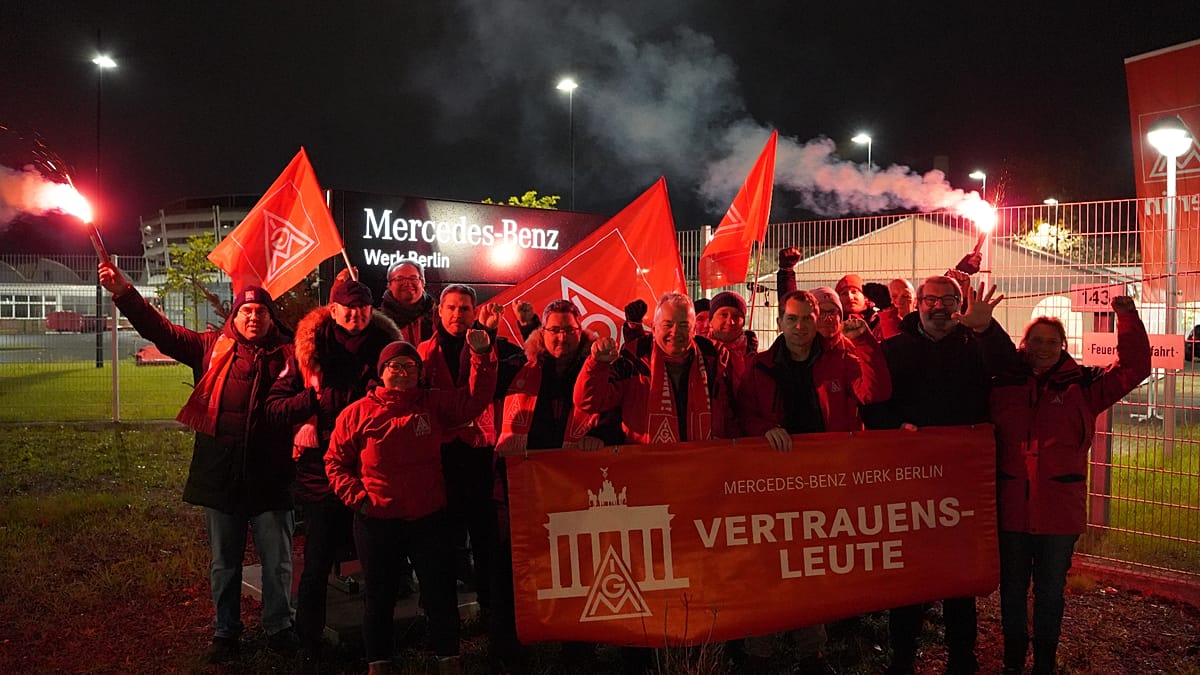
Tens of thousands of German industrial workers launched 24-hour warning strikes across multiple automotive and manufacturing sites following a breakdown in sector-wide wage negotiations.
 🇪🇺Europe
Photo: Euronews
Key points
- IG Metall launched 24-hour strikes affecting Mercedes-Benz, BMW, and Siemens Gamesa sites.
- Union demands a 5% pay rise over one year, rejecting employer counter-offers.
- Major automakers separately pursue deep cost-cutting measures, wage freezes, and structural savings.
Industrial action across Germany escalated significantly this week as the IG Metall union organized 24-hour walkouts affecting major manufacturing facilities run by Mercedes-Benz, BMW, and other key industrial firms. The fresh disruptions followed earlier nationwide protests that drew over 150,000 participants, stemming from the failure of three successive rounds of collective bargaining between union representatives and employers.
The labor dispute centers on compensation demands for roughly 3.7 million employees nationwide. The union is pressing for a 5 percent wage increase over a one-year period. In contrast, employers countered with a proposed 1.3 percent salary increase beginning in July 2028, alongside a one-off payment scheduled for July 2027. Union officials rejected the proposal, arguing that the terms would erode purchasing power amid ongoing inflation pressures.
Production lines at several key locations, including Mercedes-Benz facilities in Bremen and Hamburg as well as wind turbine manufacturer Siemens Gamesa, experienced total halts as night shifts walked off the job. Additional protests are scheduled to expand into Berlin and the union's central district, covering regions such as Hesse, Rhineland-Palatinate, and Thuringia.
Concurrently, individual automakers are navigating separate severe structural disputes. Volkswagen is pursuing a two-year wage freeze and increased schedule flexibility for roughly 120,000 staff members. Meanwhile, Mercedes-Benz aims to secure €800 million in domestic annual savings through benefit reductions and extended hours without added pay, and BMW previously targeted nearly 8,000 voluntary job cuts.
The stakes
If prolonged, these coordinated strikes threaten to severely impair Germany’s critical automotive supply chains and manufacturing output at a time when major domestic carmakers are already struggling with international competitiveness and cost-cutting mandates. Workers risk immediate wage losses, while automakers face mounting pressure to balance escalating labor demands against weakened profitability and declining capital investment within the country.
Two readings
- Supporters view the strikes as a necessary and justified defense of workers' living standards against inadequate employer offers amid persistent inflation.
- Critics argue that aggressive wage demands and rigid labor policies risk accelerating the deindustrialization of Germany by making local automotive production economically unviable.
Source Euronews — euronews.com/2026/11/23/mercedes-bmw-hit-by-24-hour-strikes-as-germ… ↗
Read next
 ✒️Opinion & Analysis
ICJ Rules Myanmar Military Committed Genocide Against Rohingya
The International Court of Justice has found Myanmar's military guilty of genocide against the Rohingya, a ruling that damages the international standing of both Aung San…
 🕯️Democracy & Rights
Chinese teachers face rising parental pressure over personal life choices
Chinese educators are encountering a surge in unreasonable demands from parents, including complaints regarding teachers' pregnancy and maternity leave.
 🛡️War & Security
Ukraine Restricts Media Coverage of Infrastructure Damage Amid Russian Strikes
President Volodymyr Zelenskyy has issued a decree prohibiting media outlets from reporting on the impact of Russian strikes against critical infrastructure and the status…
 🏮China & Taiwan
Beijing Reaffirms Reunification Stance Following Taiwan Local Election Results
China’s Taiwan Affairs Office declared that the island’s reunification with the mainland remains inevitable, despite recent shifts in Taiwan's local political landscape.
 ⚖️Law & Policy
India Government Proposes 50% Increase in Parliamentary Seats and Women's Reservation
The Indian government plans to introduce legislation to expand the Lok Sabha to 850 seats and mandate a 33% reservation for women in legislative bodies.
 ⚖️Law & Policy
India’s ruling alliance nears two-thirds majority for sweeping parliamentary expansion and delimitation bills
The National Democratic Alliance is nearing a two-thirds majority in Parliament to pass landmark legislation expanding the Lok Sabha by 50 percent and implementing a 33 p…