German Automakers and Unions Clash Over Historic Labor Agreements
Volkswagen and other German car manufacturers are demanding significant wage freezes and restructuring, challenging the nation's long-standing tradition of labor co-determination.
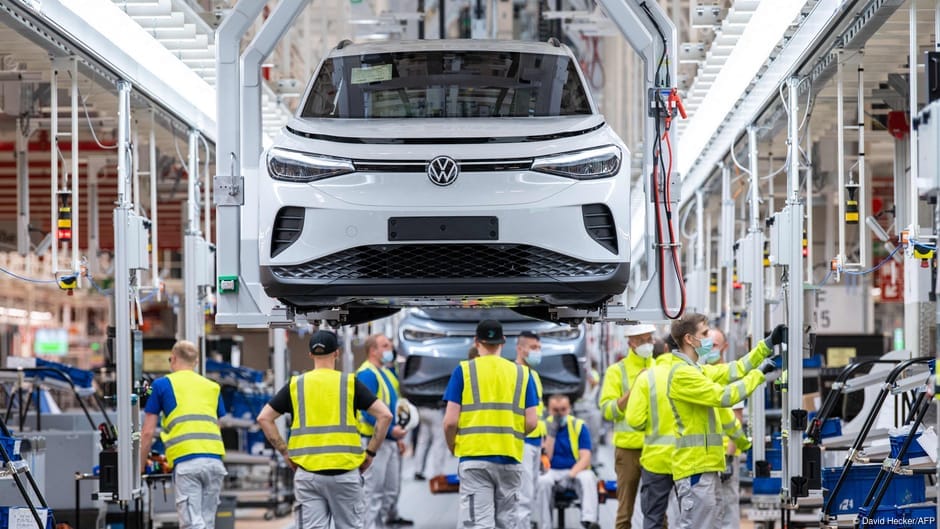 🇪🇺Europe
Photo: DW English
Key points
- Volkswagen and major automakers are seeking wage freezes and longer hours to cut costs.
- Labor unions are responding with warning strikes against proposed factory closures and restructuring.
- The German model of co-determination is under pressure from global competition and the shift to electric vehicles.
Negotiations between Volkswagen and labor representatives have commenced amid a climate of intense industrial pressure, signaling a potential end to the cooperative power-sharing model that has defined the German automotive sector for decades. Management is currently pushing for a two-year wage freeze alongside the elimination of various bonuses and allowances, while also threatening to withhold future investment from domestic production sites.
The current friction stems from the industry's struggle to remain competitive against international rivals, particularly in the electric vehicle market. Companies like Volkswagen and Mercedes are increasingly prioritizing cost-efficiency over the traditional German manufacturing model, with management asserting that production locations must be chosen based on cost-effectiveness rather than historical labor agreements. This shift has placed labor unions, including IG Metall, in a defensive position as they attempt to protect jobs while facing demands for longer working hours without additional pay.
The historical framework of "co-determination," which includes government-backed worker representation on supervisory boards, is being tested by these economic realities. Following significant job losses—over 123,000 between 2019 and 2025—unions have resorted to warning strikes to counter management's restructuring plans, which have previously included threats of factory closures and further attrition of tens of thousands of positions.
The stakes
If management succeeds in dismantling these labor agreements, the German automotive sector will likely see a significant reduction in labor costs at the expense of worker benefits and job security. A victory for the companies would signal a broader shift toward a more globalized, cost-driven production strategy, potentially weakening the political influence of worker councils and eroding the premium wage standards that have historically distinguished German auto workers.
Two readings
- Supporters of the management approach argue that strict cost-cutting and flexible labor practices are essential for survival against cheaper international competition and the high cost of the electric vehicle transition.
- Critics and union representatives contend that abandoning the co-determination model undermines the social contract, risking the long-term stability of the German industrial base and the livelihoods of its workforce.
Source DW English — dw.com/en/german-auto-workers-on-back-foot-as-costs-competition-bit… ↗
Read next
 ✒️Opinion & Analysis
ICJ Rules Myanmar Military Committed Genocide Against Rohingya
The International Court of Justice has found Myanmar's military guilty of genocide against the Rohingya, a ruling that damages the international standing of both Aung San…
 🕯️Democracy & Rights
Chinese teachers face rising parental pressure over personal life choices
Chinese educators are encountering a surge in unreasonable demands from parents, including complaints regarding teachers' pregnancy and maternity leave.
 🛡️War & Security
Ukraine Restricts Media Coverage of Infrastructure Damage Amid Russian Strikes
President Volodymyr Zelenskyy has issued a decree prohibiting media outlets from reporting on the impact of Russian strikes against critical infrastructure and the status…
 🏮China & Taiwan
Beijing Reaffirms Reunification Stance Following Taiwan Local Election Results
China’s Taiwan Affairs Office declared that the island’s reunification with the mainland remains inevitable, despite recent shifts in Taiwan's local political landscape.
 ⚖️Law & Policy
India Government Proposes 50% Increase in Parliamentary Seats and Women's Reservation
The Indian government plans to introduce legislation to expand the Lok Sabha to 850 seats and mandate a 33% reservation for women in legislative bodies.
 ⚖️Law & Policy
India’s ruling alliance nears two-thirds majority for sweeping parliamentary expansion and delimitation bills
The National Democratic Alliance is nearing a two-thirds majority in Parliament to pass landmark legislation expanding the Lok Sabha by 50 percent and implementing a 33 p…