German Presidential Candidate Ilse Aigner Begins Bundestag Party Talks Ahead of January Vote
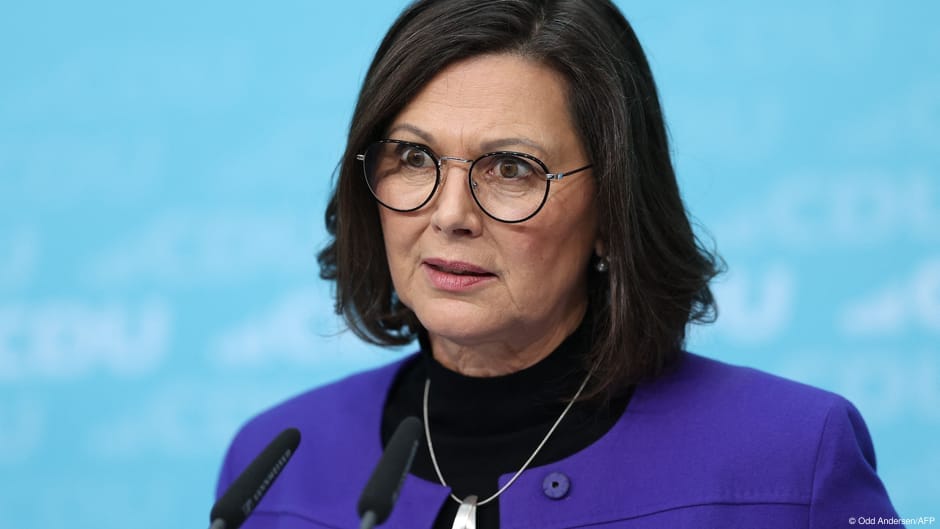
Ilse Aigner, nominated by the CDU/CSU as the leading candidate for the German presidency, has commenced a round of meetings with parliamentary groups in the Bundestag. The vote is scheduled for January 30.
 🇪🇺Europe
Photo: DW English
Key points
- Ilse Aigner begins Bundestag meetings ahead of January 30 vote
- Candidate backed by CDU/CSU, SPD, and Greens
- Excludes far-right AfD following critical remarks
Ilse Aigner, the presidential candidate nominated by the center-right CDU/CSU bloc, arrived at the Bundestag to initiate formal consultations with major political parties. Her candidacy has garnered backing from both the Social Democrats and the Greens, virtually guaranteeing her success in the upcoming parliamentary ballot on January 30, where she is set to succeed current President Frank-Walter Steinmeier.
While the German presidency functions primarily as a ceremonial post rather than an executive office, the selection process remains a significant barometer of cross-party alignment. Aigner stated she would exclude the far-right Alternative for Germany from her meetings following hostile remarks from the party's leadership, while she received no formal invitation from the Left party.
The scheduling of Aigner's parliamentary visits coincides with broader international diplomatic engagements involving Berlin. Chancellor Friedrich Merz hosted Hungarian Prime Minister Peter Magyar in Berlin, while German Foreign Minister Johann Wadephul addressed ongoing international security matters alongside G7 counterparts, casting skepticism on recent diplomatic overtures regarding the war in Ukraine.
The stakes
A smooth confirmation process for Aigner will deliver a political victory for the governing coalition and center-right leadership, solidifying a consensus candidate for the nation's highest moral office. A failure to build broader parliamentary harmony could highlight lingering ideological fractures within the legislature ahead of the January vote.
Two readings
- Supporters read the broad multi-party backing of Aigner as a stabilizing endorsement of democratic continuity and institutional integrity.
- Critics within opposition factions view the exclusion of certain parties from consultation as an exclusionary approach to a role meant to represent the entire citizenry.
Source DW English — dw.com/en/germany-news-president-candidate-aigner-to-meet-parties-i… ↗
Read next
 ✒️Opinion & Analysis
ICJ Rules Myanmar Military Committed Genocide Against Rohingya
The International Court of Justice has found Myanmar's military guilty of genocide against the Rohingya, a ruling that damages the international standing of both Aung San…
 🕯️Democracy & Rights
Chinese teachers face rising parental pressure over personal life choices
Chinese educators are encountering a surge in unreasonable demands from parents, including complaints regarding teachers' pregnancy and maternity leave.
 🛡️War & Security
Ukraine Restricts Media Coverage of Infrastructure Damage Amid Russian Strikes
President Volodymyr Zelenskyy has issued a decree prohibiting media outlets from reporting on the impact of Russian strikes against critical infrastructure and the status…
 🏮China & Taiwan
Beijing Reaffirms Reunification Stance Following Taiwan Local Election Results
China’s Taiwan Affairs Office declared that the island’s reunification with the mainland remains inevitable, despite recent shifts in Taiwan's local political landscape.
 ⚖️Law & Policy
India Government Proposes 50% Increase in Parliamentary Seats and Women's Reservation
The Indian government plans to introduce legislation to expand the Lok Sabha to 850 seats and mandate a 33% reservation for women in legislative bodies.
 ⚖️Law & Policy
India’s ruling alliance nears two-thirds majority for sweeping parliamentary expansion and delimitation bills
The National Democratic Alliance is nearing a two-thirds majority in Parliament to pass landmark legislation expanding the Lok Sabha by 50 percent and implementing a 33 p…