Poland Confronts Wave of Online Disinformation After Krakow Mass Shooting
Following a mass shooting in Krakow that left six dead, Polish authorities launched a formal investigation as fabricated images and manipulated social media accounts spread rapidly online.
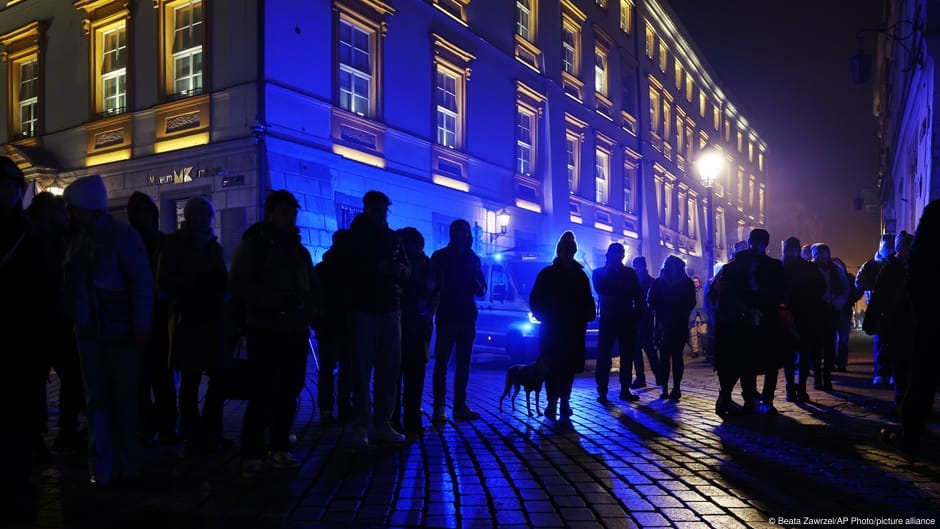 🇪🇺Europe
Photo: DW English
Key points
- Formal investigation launched after Krakow mass shooting
- Viral images of suspect confirmed as AI-generated
- Fabricated Telegram posts used to spread false narratives
Poland's national prosecutor's office announced a formal investigation following a shooting spree in Krakow's Old Town that left six victims dead, alongside three family members allegedly killed by the gunman prior to the main attack. The assailant was shot and detained by police before subsequently dying in hospital.
As officials began gathering evidence, an information vacuum online spurred widespread digital fabrication. Fact-checking organizations revealed that viral photos purporting to show the suspect were heavily generated by artificial intelligence tools, confirmed through detectors such as Hive Moderation and Google SynthID. Further analysis uncovered fabricated Telegram channels retroactively edited with timestamps and Ukrainian symbols to manufacture false geopolitical narratives surrounding the perpetrator.
Additional social media claims misidentified police evidence collection vehicles as the gunman's personal arsenal, misinterpreting military insignia and license plates. These coordinated tactics highlighted how breaking violence is routinely exploited to inject synthetic disinformation into public discourse.
The stakes
Public trust and institutional integrity hang in the balance as automated disinformation threatens to distort criminal investigations and inflame political tensions. If unchecked, manufactured narratives can rapidly misinform the public and complicate security responses.
Two readings
- Supporters of tighter platform regulation argue that rapid fact-checking and automated content warnings are essential to stop the viral spread of synthetic media during national crises.
- Critics of sweeping digital controls warn that heavy-handed moderation risks stifling legitimate reporting and public debate under the guise of combating disinformation.
Source DW English — dw.com/en/fact-check-online-disinformation-rife-after-krakow-mass-s… ↗
Read next
 ✒️Opinion & Analysis
ICJ Rules Myanmar Military Committed Genocide Against Rohingya
The International Court of Justice has found Myanmar's military guilty of genocide against the Rohingya, a ruling that damages the international standing of both Aung San…
 🕯️Democracy & Rights
Chinese teachers face rising parental pressure over personal life choices
Chinese educators are encountering a surge in unreasonable demands from parents, including complaints regarding teachers' pregnancy and maternity leave.
 🛡️War & Security
Ukraine Restricts Media Coverage of Infrastructure Damage Amid Russian Strikes
President Volodymyr Zelenskyy has issued a decree prohibiting media outlets from reporting on the impact of Russian strikes against critical infrastructure and the status…
 🏮China & Taiwan
Beijing Reaffirms Reunification Stance Following Taiwan Local Election Results
China’s Taiwan Affairs Office declared that the island’s reunification with the mainland remains inevitable, despite recent shifts in Taiwan's local political landscape.
 ⚖️Law & Policy
India Government Proposes 50% Increase in Parliamentary Seats and Women's Reservation
The Indian government plans to introduce legislation to expand the Lok Sabha to 850 seats and mandate a 33% reservation for women in legislative bodies.
 ⚖️Law & Policy
India’s ruling alliance nears two-thirds majority for sweeping parliamentary expansion and delimitation bills
The National Democratic Alliance is nearing a two-thirds majority in Parliament to pass landmark legislation expanding the Lok Sabha by 50 percent and implementing a 33 p…