EU Budget Standoff: Four Nations Resist German Demands for Ukraine Funding
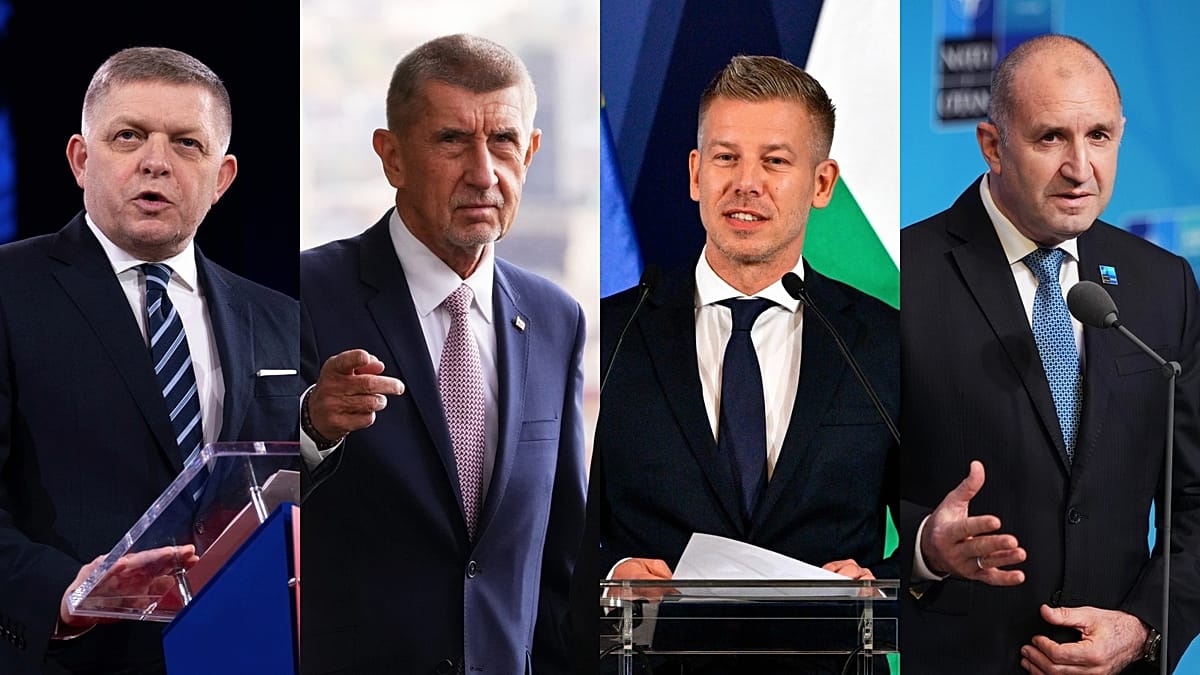
Leaders from Slovakia, the Czech Republic, Hungary, and Bulgaria have rejected German Chancellor Friedrich Merz’s attempt to link EU budget approval to new financial aid for Ukraine.
 🇪🇺Europe
Photo: Euronews
Key points
- German Chancellor Friedrich Merz links EU budget approval to new Ukraine aid.
- Slovakia, Hungary, Czech Republic, and Bulgaria reject the conditionality.
- Disagreement centers on the use of joint EU debt to cover Ukraine's financial shortfall.
A growing diplomatic rift has emerged within the European Union as leaders from Slovakia, the Czech Republic, Hungary, and Bulgaria push back against German Chancellor Friedrich Merz’s ultimatum. Merz recently informed European Council President António Costa that he views fresh financial support for Ukraine as an essential prerequisite for approving the bloc's next long-term budget. The German Chancellor argues that the financial burden of supporting Kyiv must be shared more equitably among all member states.
Slovak Prime Minister Robert Fico has been the most vocal critic, characterizing the German position as a "textbook case of blackmail" and threatening to exercise his veto power. While the EU has proposed a plan to cover a significant portion of Ukraine's projected €70 billion shortfall for next year, the funding mechanism remains undefined, with joint debt issuance being the primary option under consideration.
Hungary and Bulgaria have echoed concerns regarding the proposal, citing domestic fiscal constraints and high public deficits as barriers to committing to new, collective debt instruments. Hungarian Prime Minister Péter Magyar and Bulgarian Prime Minister Rumen Radev have both signaled that while they remain committed to supporting Ukraine through alternative means, they oppose tying these financial obligations to the broader EU budget negotiations.
The stakes
The standoff threatens to paralyze the EU's long-term budget process, potentially delaying essential cohesion and agricultural funding for the entire bloc. If the impasse continues, Germany may face a domestic political crisis regarding its fiscal priorities, while the four dissenting nations risk further isolation within European institutions and a potential reduction in their own access to EU development funds.
Two readings
- Supporters of the German position argue that European security is indivisible and that all member states must contribute fairly to the financial burden of the war in Ukraine.
- Critics view the linkage as an undemocratic attempt to bypass national sovereignty, arguing that the EU budget and military aid packages should remain distinct policy issues.
Source Euronews — euronews.com/2026/11/10/eu-budget-battle-erupts-as-four-countries-d… ↗
Read next
 ✒️Opinion & Analysis
ICJ Rules Myanmar Military Committed Genocide Against Rohingya
The International Court of Justice has found Myanmar's military guilty of genocide against the Rohingya, a ruling that damages the international standing of both Aung San…
 🕯️Democracy & Rights
Chinese teachers face rising parental pressure over personal life choices
Chinese educators are encountering a surge in unreasonable demands from parents, including complaints regarding teachers' pregnancy and maternity leave.
 🛡️War & Security
Ukraine Restricts Media Coverage of Infrastructure Damage Amid Russian Strikes
President Volodymyr Zelenskyy has issued a decree prohibiting media outlets from reporting on the impact of Russian strikes against critical infrastructure and the status…
 🏮China & Taiwan
Beijing Reaffirms Reunification Stance Following Taiwan Local Election Results
China’s Taiwan Affairs Office declared that the island’s reunification with the mainland remains inevitable, despite recent shifts in Taiwan's local political landscape.
 ⚖️Law & Policy
India Government Proposes 50% Increase in Parliamentary Seats and Women's Reservation
The Indian government plans to introduce legislation to expand the Lok Sabha to 850 seats and mandate a 33% reservation for women in legislative bodies.
 ⚖️Law & Policy
India’s ruling alliance nears two-thirds majority for sweeping parliamentary expansion and delimitation bills
The National Democratic Alliance is nearing a two-thirds majority in Parliament to pass landmark legislation expanding the Lok Sabha by 50 percent and implementing a 33 p…