Netanyahu Offers Gadi Eisenkot First Turn as Prime Minister in Proposed Unity Government
Israeli Prime Minister Benjamin Netanyahu announced he is willing to let Yashar party leader Gadi Eisenkot serve first as prime minister in a rotation agreement. The proposal aims to break Israel's political deadlock following the October 27 election.
 🕌Middle East
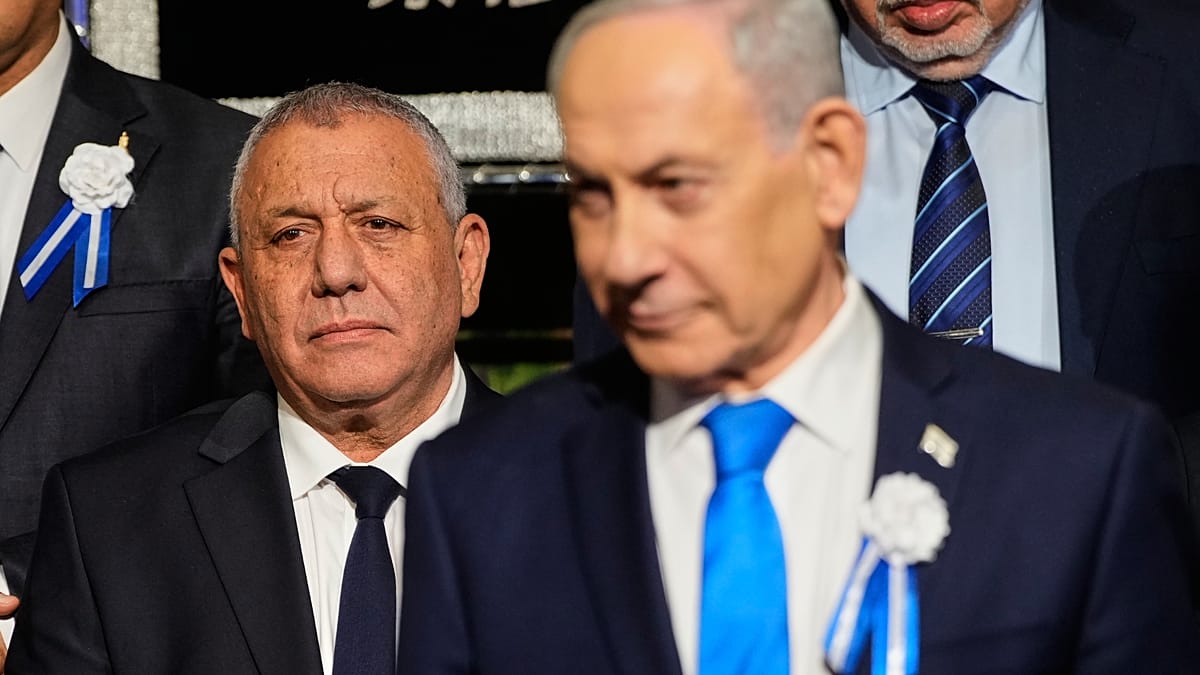
Photo: Euronews
Key points
- Netanyahu offers Eisenkot first turn as prime minister in a rotation deal
- Eisenkot has until December 6 to form a government after securing 67 recommendations
- Opposition leaders rejected the offer, while far-right Finance Minister Smotrich backed it
Israeli Prime Minister Benjamin Netanyahu stated on Saturday that he is prepared to allow Yashar party leader Gadi Eisenkot to serve first as prime minister in a power-sharing unity government. Netanyahu asserted that while the leader of the largest party should ordinarily head the executive, the gravity of current national security threats compelled him to set aside standard protocol and accept the arrangement, which would position himself as acting prime minister and deputy prime minister.
Neither Netanyahu's bloc nor Eisenkot's prospective alliance secured a parliamentary majority in the October 27 election, leaving the Knesset deadlocked. President Isaac Herzog subsequently tasked Eisenkot with forming a government by December 6 after receiving recommendations from 67 lawmakers. Eisenkot has reached preliminary deals with the Democrats and Yisrael Beiteinu, bringing his four-party alliance to 48 seats in the 120-seat Knesset, short of the 61 required for a majority, while Netanyahu's bloc holds 53 seats.
Reaction across the political spectrum was sharply divided. Opposition figures, including B'Yachad deputy leader Yair Lapid and Democrats leader Yair Golan, rejected the initiative as a political maneuver, demanding that an Eisenkot-led administration be sworn in prior to any expansion talks. Conversely, far-right Finance Minister Bezalel Smotrich endorsed the proposal, confirming his involvement in preliminary discussions and urging centrist and left-wing lawmakers to abandon efforts to establish a minority government.
The stakes
If the rotation agreement proceeds, it could resolve Israel's prolonged government formation crisis and establish a broad coalition, though it risks alienating hardline factions and opposition figures who distrust the underlying legal and political motivations of the compromise.
Two readings
- Supporters view the concession as a patriotic compromise necessary to form a stable executive capable of managing severe national security threats.
- Critics dismiss the offer as a tactical maneuver designed to retain political influence and navigate ongoing legal challenges.
Source Euronews — euronews.com/2026/11/28/netanyahu-willing-to-let-eisenkot-serve-fir… ↗
Read next
 ✒️Opinion & Analysis
ICJ Rules Myanmar Military Committed Genocide Against Rohingya
The International Court of Justice has found Myanmar's military guilty of genocide against the Rohingya, a ruling that damages the international standing of both Aung San…
 🕯️Democracy & Rights
Chinese teachers face rising parental pressure over personal life choices
Chinese educators are encountering a surge in unreasonable demands from parents, including complaints regarding teachers' pregnancy and maternity leave.
 🛡️War & Security
Ukraine Restricts Media Coverage of Infrastructure Damage Amid Russian Strikes
President Volodymyr Zelenskyy has issued a decree prohibiting media outlets from reporting on the impact of Russian strikes against critical infrastructure and the status…
 🏮China & Taiwan
Beijing Reaffirms Reunification Stance Following Taiwan Local Election Results
China’s Taiwan Affairs Office declared that the island’s reunification with the mainland remains inevitable, despite recent shifts in Taiwan's local political landscape.
 🇪🇺Europe
US Air Force Repels Unauthorized Drone Incursion at RAF Lakenheath
U.S. security forces at a British air base successfully countered a group of unidentified drones, amid growing concerns over potential foreign state involvement.
 ⚖️Law & Policy
India Government Proposes 50% Increase in Parliamentary Seats and Women's Reservation
The Indian government plans to introduce legislation to expand the Lok Sabha to 850 seats and mandate a 33% reservation for women in legislative bodies.