Strategic Defeat Looms Despite Tactical Victories in Iran Conflict, Analysis Suggests
U.S. Defense Secretary Pete Hegseth's call for military colleges to study strategic failures brings renewed focus to the ongoing conflict with Iran. A new strategic assessment argues that despite tactical successes, the campaign is sliding toward a broader political defeat.
 ✒️Opinion & Analysis
Photo: Just Security
Key points
- Defense Secretary Pete Hegseth overhauled senior service colleges to focus on studying strategic failures.
- U.S. and Israeli forces have achieved significant tactical and battlefield successes against Iran.
- Analysts warn that shifting political objectives risk turning tactical wins into a broader strategic defeat.
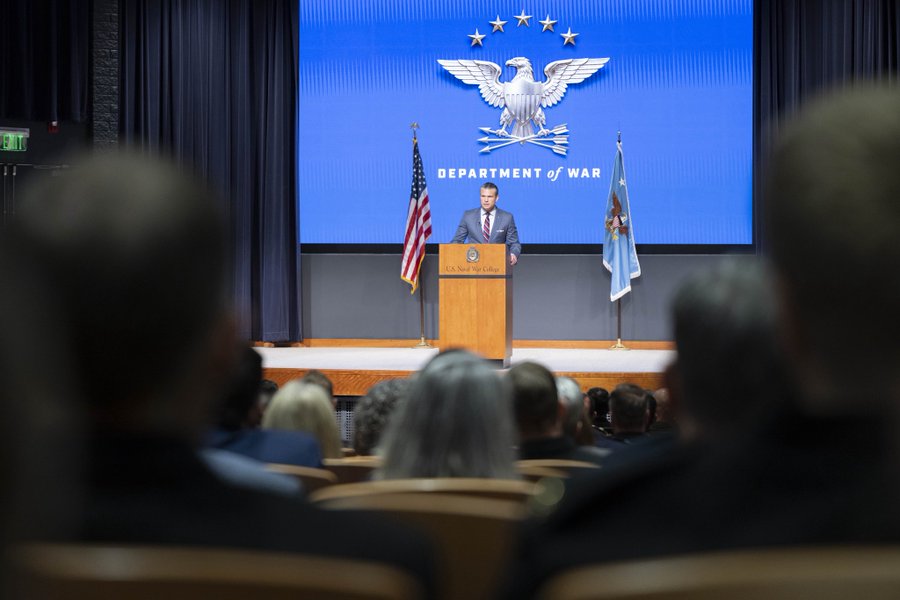
Defense Secretary Pete Hegseth announced a sweeping overhaul of senior service colleges during an address at the United States Naval War College, stressing that military education must confront historical and current strategic failures. Hegseth asserted that institutional curricula have previously sidestepped politically sensitive missteps to focus strictly on operational victory.
Following this mandate to rigorously analyze national setbacks, security analysts have turned their attention to the joint military campaign launched by the United States and Israel against Iran. While military planners point to widespread tactical successes—including the elimination of Supreme Leader Ali Khamenei, the establishment of aerial dominance, and severe degradation of Iranian armed forces—critics argue these achievements mask a troubling lack of clear political objectives.
Historical precedents, such as past asymmetric conflicts where tactical superiority failed to secure political outcomes, underscore the friction between battlefield execution and grand strategy. Observers note that shifting stated objectives by Washington, ranging from explicit regime change to narrower non-proliferation goals, complicate any straightforward measurement of success or failure.
The stakes
If current trajectories hold, the United States risks achieving military dominance at the expense of its long-term regional and geopolitical goals, altering the balance of power in the Middle East without securing stable political arrangements.
Two readings
- Supporters read the ongoing military campaign as a decisive operational success that has successfully neutralized critical leadership and degraded hostile capabilities.
- Critics read the conflict as a strategic miscalculation characterized by shifting political aims and an absence of a viable path toward long-term stability.
Source Just Security — justsecurity.org/165342/iran-war-case-study-likely-strategic-defeat… ↗
Read next
 🕯️Democracy & Rights
Chinese teachers face rising parental pressure over personal life choices
Chinese educators are encountering a surge in unreasonable demands from parents, including complaints regarding teachers' pregnancy and maternity leave.
 🛡️War & Security
Ukraine Restricts Media Coverage of Infrastructure Damage Amid Russian Strikes
President Volodymyr Zelenskyy has issued a decree prohibiting media outlets from reporting on the impact of Russian strikes against critical infrastructure and the status…
 🏮China & Taiwan
Beijing Reaffirms Reunification Stance Following Taiwan Local Election Results
China’s Taiwan Affairs Office declared that the island’s reunification with the mainland remains inevitable, despite recent shifts in Taiwan's local political landscape.
 🇪🇺Europe
US Air Force Repels Unauthorized Drone Incursion at RAF Lakenheath
U.S. security forces at a British air base successfully countered a group of unidentified drones, amid growing concerns over potential foreign state involvement.
 ⚖️Law & Policy
India Government Proposes 50% Increase in Parliamentary Seats and Women's Reservation
The Indian government plans to introduce legislation to expand the Lok Sabha to 850 seats and mandate a 33% reservation for women in legislative bodies.
 ⚖️Law & Policy
India’s ruling alliance nears two-thirds majority for sweeping parliamentary expansion and delimitation bills
The National Democratic Alliance is nearing a two-thirds majority in Parliament to pass landmark legislation expanding the Lok Sabha by 50 percent and implementing a 33 p…