Governmental Policy and the Persistence of Stubble Burning in Northern India
Farmers in Punjab and neighboring states continue to burn crop residue as a low-cost method to prepare fields for winter wheat, significantly degrading air quality in the Indo-Gangetic Plain.
 ⚖️Law & Policy
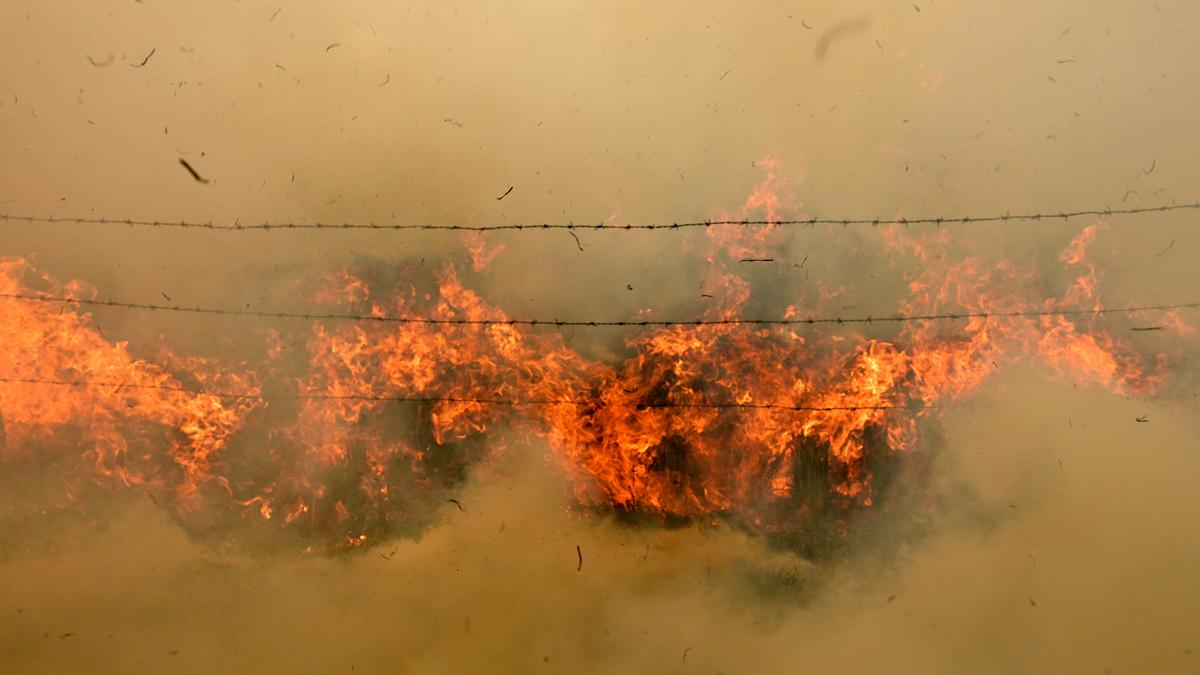
Photo: The Hindu National
Key points
- Farmers burn rice stubble as a cost-effective method for soil preparation.
- Meteorological inversion layers trap pollutants, worsening air quality in Delhi.
- Systemic marketing failures contribute to the continued reliance on burning.
As temperatures drop each November, the Indo-Gangetic Plain faces a severe air quality crisis, exacerbated by the practice of stubble burning. Farmers in Punjab, Haryana, Rajasthan, and Uttar Pradesh frequently set fire to rice chaff to clear fields for the upcoming Rabi wheat season. This method remains the most economically viable option for agricultural producers despite the environmental consequences.
The seasonal haze is intensified by meteorological conditions, specifically the formation of an inversion layer that traps pollutants near the ground. While year-round sources like industrial power plants, construction dust, and vehicular emissions contribute to the poor air quality, the addition of smoke from agricultural burning creates a hazardous environment for residents in Delhi and surrounding urban centers.
Recent academic research suggests that the persistence of this practice is linked to systemic failures in agricultural marketing and government policy. Rather than providing cost-effective alternatives for residue management, current frameworks often leave farmers with few options other than burning to meet planting timelines.
The stakes
If the current reliance on stubble burning continues, the region will face ongoing public health crises and environmental degradation. Farmers gain short-term financial stability by avoiding expensive manual or mechanical clearing, while the broader public loses due to the severe health impacts of toxic air. Effective policy changes would require government intervention to subsidize alternative disposal methods, shifting the financial burden away from individual farmers.
Two readings
- Supporters of current agricultural practices argue that farmers are unfairly scapegoated for a broader pollution problem that includes industrial and urban emissions.
- Critics contend that the government's failure to implement sustainable infrastructure and support systems forces a cycle of environmental damage that threatens regional public health.
Source The Hindu National — thehindu.com/sci-tech/energy-and-environment/how-governmentality-ex… ↗
Read next
 ✒️Opinion & Analysis
ICJ Rules Myanmar Military Committed Genocide Against Rohingya
The International Court of Justice has found Myanmar's military guilty of genocide against the Rohingya, a ruling that damages the international standing of both Aung San…
 🕯️Democracy & Rights
Chinese teachers face rising parental pressure over personal life choices
Chinese educators are encountering a surge in unreasonable demands from parents, including complaints regarding teachers' pregnancy and maternity leave.
 🛡️War & Security
Ukraine Restricts Media Coverage of Infrastructure Damage Amid Russian Strikes
President Volodymyr Zelenskyy has issued a decree prohibiting media outlets from reporting on the impact of Russian strikes against critical infrastructure and the status…
 🏮China & Taiwan
Beijing Reaffirms Reunification Stance Following Taiwan Local Election Results
China’s Taiwan Affairs Office declared that the island’s reunification with the mainland remains inevitable, despite recent shifts in Taiwan's local political landscape.
 🇪🇺Europe
US Air Force Repels Unauthorized Drone Incursion at RAF Lakenheath
U.S. security forces at a British air base successfully countered a group of unidentified drones, amid growing concerns over potential foreign state involvement.
 🕯️Democracy & Rights
Malaysia to Display Artworks Recovered in 1MDB Corruption Scandal
The Malaysian National Art Gallery will exhibit four pieces of art previously linked to the 1MDB financial scandal, following their successful repatriation to the country…